A Peak District gritstone house is a house built from gritstone, a hard, coarse sandstone, found in the Dark Peak of Derbyshire and nearby areas. It has thick walls of dark stone, a roof of heavy stone slabs, and plain stone-mullioned windows.
Gritstone is very durable but weathers dark, especially where soot from the industrial towns once settled. The limestone of the White Peak gives paler houses, but the gritstone houses of the moors and edges are the most characteristic.
c. 1600-1900
Regional building traditions have no single start date, so the band shows the main period of building. Periods are drawn at equal width, so the line is not to scale.
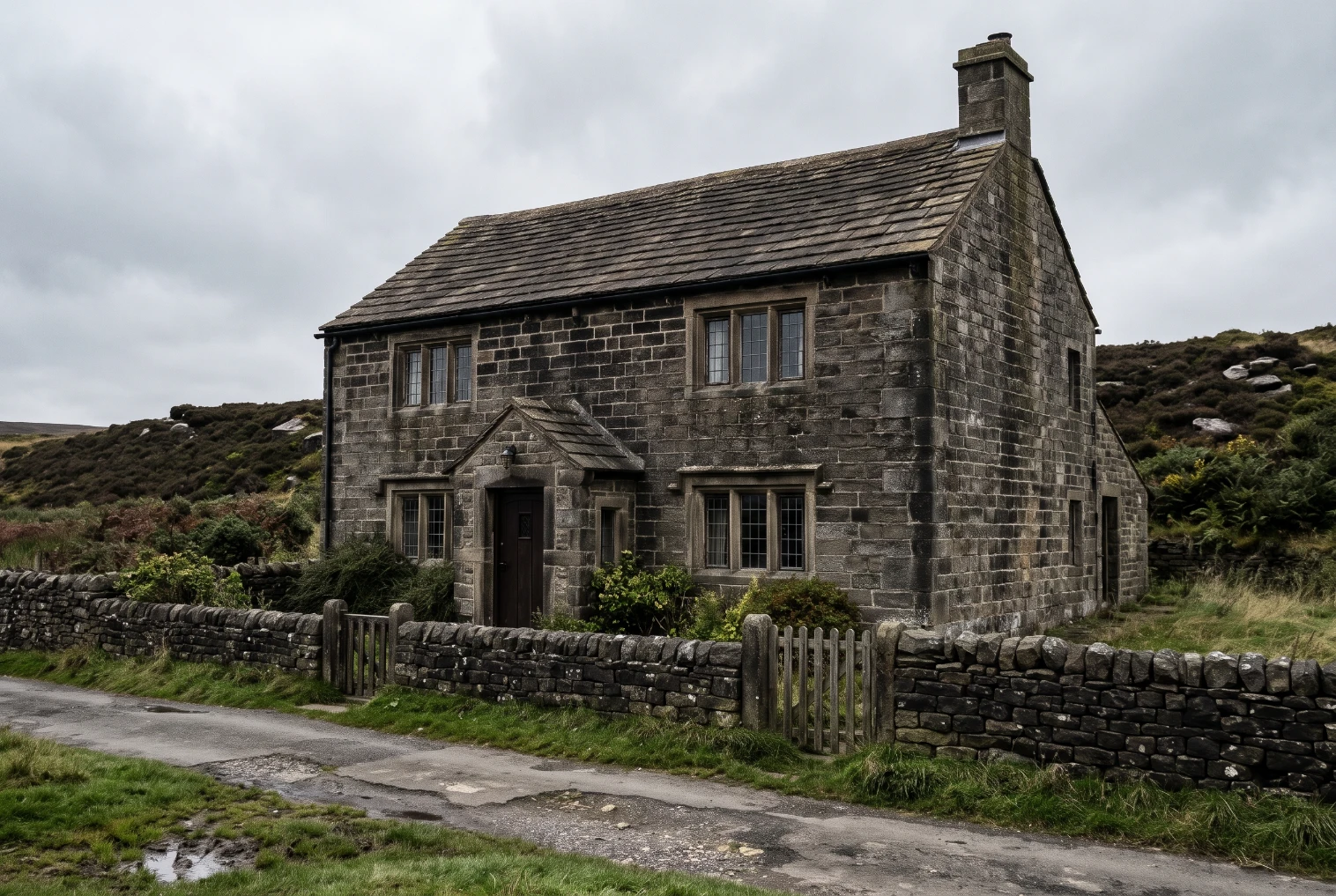
How to recognise it
| Feature | What to look for |
|---|---|
| Walls | Coursed gritstone blocks, grey to brown or black with age, often thick and plain. |
| Roof | Heavy stone slates or flags, with a low pitch to carry the weight. |
| Windows | Stone-mullioned windows with plain lintels and sills. |
| Doorway | A plain stone surround, sometimes with a datestone above. |
| Chimneys | Stone stacks at the gable ends. |
| Setting | Dry stone walls, farm buildings and exposed hillsides. |
Not sure what a term means? See our guides to hipped, gable and mansard roofs and ashlar and rubble stone, or browse the full architectural glossary.
Where and when they were built
Gritstone buildings were made by local masons from stone quarried nearby. Houses are often farmhouses with attached barns, and many carry datestones marking their rebuilding from the 17th century.
The Historic England guide to vernacular houses covers how regional stone determined the character of houses in the north of England. In the Peak District, the hardness of the stone favoured plain, strong forms with little carving.
Peak District gritstone, Yorkshire Dales or Cotswold stone?
- Peak District gritstone: dark, hard stone and heavy slab roofs on moors and edges.
- Yorkshire Dales stone: greyer limestone and gritstone farms nearby. See our Yorkshire Dales stone house page.
- Cotswold stone: warm, honey-coloured limestone in the south. See our Cotswold stone house page.
- Weavers cottages: many Pennine weavers lived in gritstone. See our weavers cottages page.
Sandblasting and old cleaning methods have changed the colour of some stone, so judge by the stone and the form, not just the colour.
What to check when buying one
- Stone slab roof: heavy roofs need strong timbers. Check for sagging, slipped slabs and rusty fixings.
- Exposure and damp: exposed sites suffer from wind-driven rain. See our damp and mould guide.
- Pointing: use lime mortar. Hard cement can damage the stone and trap water.
- Heating: thick stone walls and large rooms cost more to heat. Ask about insulation and heating.
- Planning and National Park rules: much of the area lies in the Peak District National Park, which controls alterations.
- Choose the right survey: use a surveyor with experience of traditional buildings. See our home survey guide.
- Listed status and conservation areas: many surviving traditional houses are listed or lie in conservation areas, and most changes need consent. See our listed buildings guide.
Sources and further reading
- Historic England: Domestic 1, Vernacular Houses Listing selection guide covering traditional regional houses
- Historic England: the National Heritage List for England Check whether a building is listed
External links open in a new tab. Last checked November 2026.
Frequently asked questions
What is gritstone?
A hard, coarse-grained sandstone, also called millstone grit, used for building in the north of England.
Why is gritstone dark?
Natural minerals and, in the past, soot from industry and fires have darkened it.
Why are the roofs so heavy?
Stone slabs are heavy, and the roof timbers are large and strong to carry them.
Can I extend a gritstone house?
Yes, but the National Park authority will usually ask for matching stone and traditional design.
Are gritstone houses listed?
Many older ones are. Check the National Heritage List for England.