A Yorkshire Dales stone house is a house or farmhouse built from the local limestone and gritstone, with thick walls, stone-flagged or slate roofs and mullioned windows. It usually stands with a barn and stone walls climbing the hillsides.
Many Dales farmhouses were rebuilt in stone from the 17th century, and carry datestones over the door. Some were built with a barn attached, a type called a laithe house, which has its own page on this site.
c. 1600-1850
Regional building traditions have no single start date, so the band shows the main period of building. Periods are drawn at equal width, so the line is not to scale.
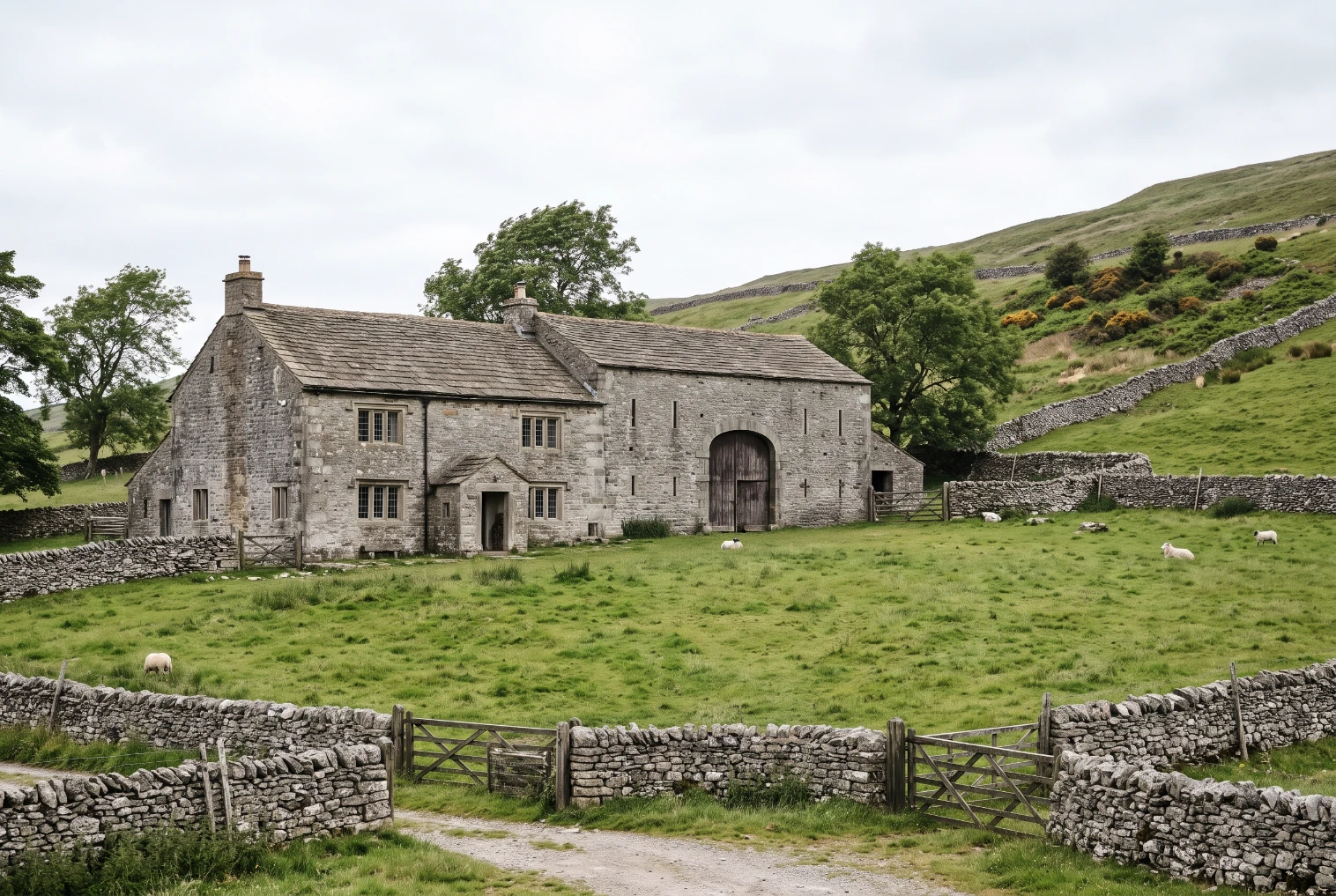
How to recognise it
| Feature | What to look for |
|---|---|
| Walls | Thick limestone or gritstone walls, in coursed or random rubble, with large quoins. |
| Roof | Heavy stone flags or slates, with a low pitch. |
| Windows | Mullioned windows with stone lintels and plain stone surrounds. |
| Datestones | Carved stones over the door, often with initials and a date. |
| Barns | Large stone barns with big arched cart doors and ventilation slits. |
| Field walls | Dry stone walls and field barns across the hillsides. |
Not sure what a term means? See our guides to ashlar and rubble stone and parts of a roof, or browse the full architectural glossary.
Where and when they were built
The Dales are rich in stone and poor in timber, so builders used stone for walls, floors and roofs. After the 17th century, farmers rebuilt their houses and barns in stone, in plain forms that suited the climate.
The Historic England listing guide on agricultural buildings and the guide to vernacular houses cover how farm buildings and houses were built in regional traditions. The Dales are known for their stone barns, which are a large part of the landscape.
Dales stone, Dales laithe house or Peak gritstone?
- Yorkshire Dales stone house: a stone farmhouse, often with a separate barn.
- Dales laithe house: a house and barn under one roof. See our Dales laithe house page.
- Peak District gritstone: a darker stone further south. See our Peak District gritstone page.
- Lake District slate: a different stone tradition in Cumbria. See our Lake District slate page.
Many Dales barns have been converted, so ask whether the building you are looking at was originally a house or a barn.
What to check when buying one
- Stone flag roof: check the structure, the condition of the flags and rusting fixings.
- Walls and pointing: repoint with lime mortar and avoid cement.
- Damp and exposure: exposed sites get driving rain. See our damp and mould guide.
- Access and services: remote sites may have private water, drainage and tracks. Check ownership and costs.
- National Park rules: much of the area lies in the Yorkshire Dales National Park, which controls alterations and conversions.
- Choose the right survey: use a surveyor with experience of traditional buildings. See our home survey guide.
- Listed status and conservation areas: many surviving traditional houses are listed or lie in conservation areas, and most changes need consent. See our listed buildings guide.
Sources and further reading
- Historic England: Domestic 1, Vernacular Houses Listing selection guide covering traditional regional houses
- Historic England: Agricultural Buildings Listing selection guide covering farm buildings
- Historic England: the National Heritage List for England Check whether a building is listed
External links open in a new tab. Last checked November 2026.
Frequently asked questions
What is a Dales farmhouse?
A traditional stone farmhouse in the Yorkshire Dales, with thick walls, stone roofs and often a barn nearby.
What is a datestone?
A carved stone over a door that records the date a house was built or rebuilt, often with the owners' initials.
Why are there so many stone barns?
Hay and animals had to be kept under cover in winter, and stone was the local material.
Can I convert a Dales barn?
Sometimes, but the National Park authority controls conversions and may refuse them.
Are Dales farmhouses listed?
Many are. Check the National Heritage List for England.