50+ Specialist Calculators
Instant Results - No Sign-Up
Free to Use
Professional tools for serious builders
Self Build UK

Build Your Own Home in the UK

Everything you need in one place - from finding your plot and securing a self-build mortgage, to planning permission, choosing your build route and moving in.

~13,000
Self-builds completed in the UK each year
20-30%
Cheaper than buying an equivalent new build
0%
VAT on eligible self-build construction costs
2-3 yrs
Typical timeline from plot to moving in
The Self-Build Journey

Six stages from blank plot to finished home

Self-build projects follow a broadly predictable path. Understanding each stage helps you plan your budget, assemble the right team, and avoid the most common pitfalls.
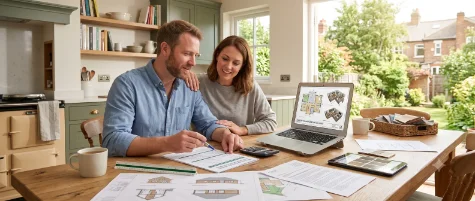
Secure finance
Stage 1
Secure Finance
Budget, mortgage, and feasibility
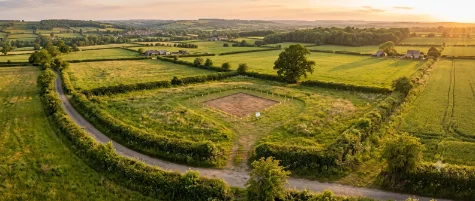
Find your plot
Stage 2
Find Your Plot
Land search, due diligence, and purchase
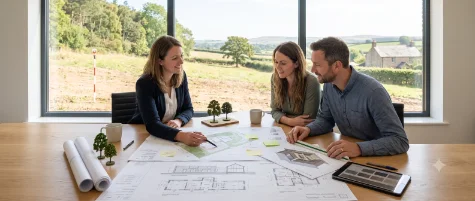
Design and planning
Stage 3
Design & Planning
Architect, drawings, and planning permission
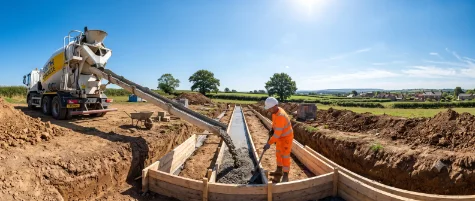
Groundworks and foundations
Stage 4
Groundworks
Site clearance, foundations, and drainage
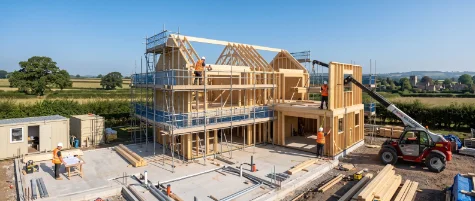
Build
Stage 5
Build
Structure, roof, services and fit-out
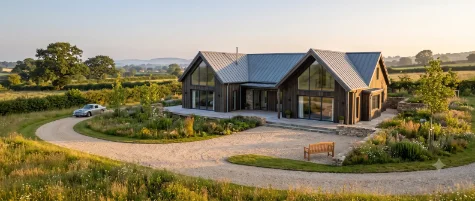
Sign off and move in
Stage 6
Sign Off & Move In
Building control, snagging, and VAT reclaim

Is self-build right for you?

Building your own home is one of the most rewarding things you can do - and one of the most complex. Done well, you end up with a home that is exactly what you want, built to a higher specification than most new builds, at a significantly lower cost per square metre than buying equivalent property.

It is not a straightforward undertaking. You need to manage a large project, make hundreds of decisions, and deal with planning authorities, building control, structural engineers, and multiple contractors over a period of two to three years. But thousands of people do it every year in the UK, and the resources on this site are designed to help you through every stage.

What self-build gives you

  • A home designed around how you actually live
  • Higher energy efficiency than most existing stock
  • Zero VAT on eligible construction costs (claimable back)
  • Typically 20-30% cheaper than buying an equivalent new build
  • Structural warranty and building control sign-off from day one
  • Stamp Duty only on the land, not the finished property value
  • Right to Build - local authorities must help you find a plot
Start Here

Three tools, in this order

Most self-builders jump straight to looking at plots. The ones who succeed start with the numbers. Each tool passes your figures to the next automatically.

In-Depth Guides

Everything you need to know, stage by stage

Detailed plain-English guides covering every part of the self-build journey - from finance to completion.

Stage Guides
Stage 1
Finance & Feasibility

Budget components, mortgage types, Help to Build, and VAT reclaim explained.

Stage 2
Finding a Plot

Where to search, plot assessment, planning checks, and making an offer.

Stage 3
Design & Planning

Architects, planning applications, Building Regulations, and structural engineering.

Stage 4
Procurement

Build routes, contracts, CIL exemption, Party Wall, and mortgage application.

Stage 5
The Build

Groundworks, foundations, superstructure, first fix, second fix, and snagging.

Stage 6
Completion

Final inspection, VAT reclaim deadline, mortgage switch, and Land Registry.

Topic Deep-Dives
Self-Build Insurance

Contract works, public liability, structural warranty - what you need and when.

VAT Reclaim Guide

HMRC VAT431NB - eligible items, 3-month deadline, and how to prepare the claim.

Party Wall Act

When it applies, notice periods, and what to do if your neighbour dissents.

CIL Exemption

Save up to £100k - apply before you break ground or lose the exemption forever.

Building Regulations

Full Plans vs Building Notice, inspection stages, Part L energy, and Scotland.

Build Routes Explained

Main contractor vs package company vs direct labour - costs, risks, and which suits you.

What does it cost to self-build in the UK?

Build costs vary enormously depending on your build route, specification, location, and whether you manage the project yourself or employ a main contractor. These are broad indicative ranges for 2025-26.

£1,500-£2,000/m²
Timber Frame - Standard Spec
Kit supplied and erected by a timber frame company. You manage the rest of the trades. Most popular self-build route in the UK. Good speed and predictability.
£1,800-£2,500/m²
Masonry - Standard to Medium Spec
Traditional brick and block construction. Slower than timber frame but familiar to most UK trades. Suits complex designs and those who prefer a traditional build feel.
£2,500-£3,500+/m²
High Spec / Passivhaus
High-performance envelope, MVHR, triple glazing, premium finishes. Higher upfront cost but dramatically lower running costs and a home built to last 100+ years.

Build costs exclude land purchase, professional fees (typically 10-15% of build cost), VAT (reclaimable on most construction costs), and landscaping. Prices are indicative 2025-26 UK averages and vary significantly by region and specification.

Featured Finance Partner
Self-Build Mortgage Specialists
Specialist self-build and custom build mortgage advice from a lender that understands stage release, plot purchase, and the full build journey. Speak to an adviser who has helped hundreds of self-builders finance their projects.
Get a Quote
Tools & Calculators

Calculators for your self-build

All the material and cost calculators you'll need across the full build - from foundations to fit-out.

Finance
Groundworks & Foundations
Structure & Walls
Roofing
Insulation & Energy
Interior & Fit-Out

The professionals you'll need

Self-build requires a larger professional team than a typical renovation. Here are the key roles - most are needed from the start, some only at specific stages.

See the full team for a new build project →

Self-Build FAQ

Do I need planning permission to self-build?
Yes, in almost all cases. A new dwelling requires full planning permission from your local planning authority. You will also need to comply with Building Regulations, which are separate from planning. On some plots, outline planning permission may already have been granted - you then need to submit a Reserved Matters application to agree the detailed design before you can start.
What is the Right to Build scheme?
Under the Self Build and Custom Housebuilding Act 2015, every local authority in England must maintain a register of people who want to self-build or custom-build a home, and must make enough serviced plots available to meet that demand within three years. Registering is free and gives you access to local plot opportunities. Wales and Scotland have similar but separate schemes.
Can I reclaim VAT on a self-build?
Yes - HMRC's DIY Housebuilders Scheme (VAT431NB) allows self-builders to reclaim VAT paid on eligible building materials after completion. You can only claim once, after you have received your completion certificate, so keep all receipts throughout the build. Professional services (architect fees, structural engineer fees etc.) and some materials are not eligible - check HMRC guidance or speak to an accountant with self-build experience.
What is a self-build mortgage and how does it work?
A self-build mortgage releases funds in stages as your build progresses, rather than as a single lump sum. Lenders typically release money at key milestones: land purchase, foundations, wall plate, wind and watertight, first fix, and completion. There are two main types - arrears-based (you fund each stage upfront then claim back) and advance-based (funds are released before each stage). Self-build mortgages require specialist lenders; a broker experienced in self-build is strongly recommended.
How long does a self-build take?
From finding a plot to moving in, most self-builds take two to three years. Planning and design alone can take 6-18 months depending on the complexity of your site and local planning authority workload. The physical build typically takes 9-18 months. Projects with a main contractor tend to be faster than those managing trades directly, but cost more. Timber frame builds are generally faster than masonry.
Do I need to pay Stamp Duty on a self-build?
You pay Stamp Duty Land Tax (SDLT) on the land purchase only, not on the finished value of the property. This can represent a significant saving compared to buying an equivalent new build. If you already own a home when you buy the plot, the higher rates for additional dwellings may apply - take advice from a solicitor with self-build experience before completing on a plot purchase.