Skip & Waste Calculator
Estimate waste volume, weight and skip size for any UK building project.
Measure the floor area of the rooms or spaces involved.
Removes walls, floors, ceilings or a structure - not just fixtures and fittings.
Foundation digs, drainage trenches, or landscaping earthworks.
Affects weight estimate. Mixed is correct for most projects.
Accounts for underestimation. 15% is typical.
Doing this as a homeowner?
Who do you actually need to hire for this?
Not sure what some of these terms mean?
Browse all →
Frequently Asked Questions
How do I know what size skip I need?
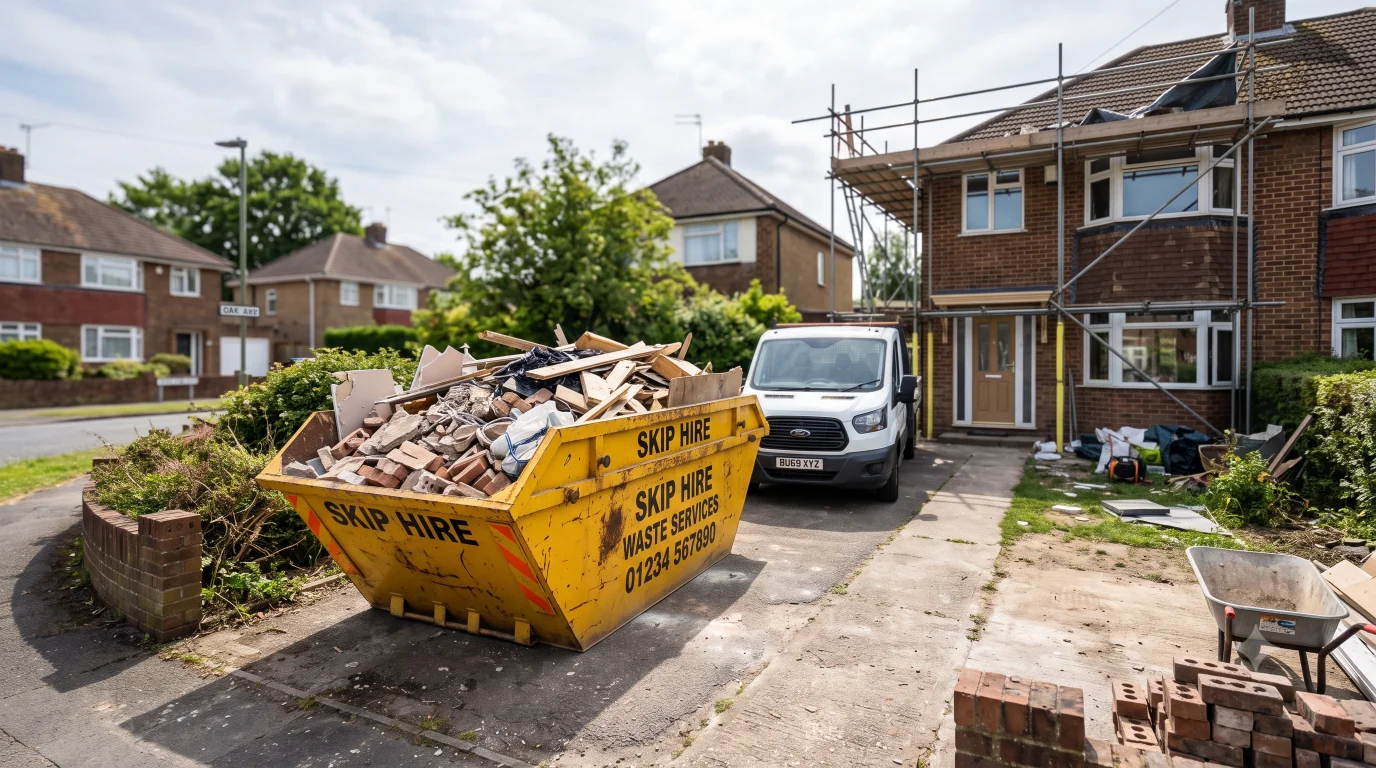
Match the skip to your estimated waste volume. A 6-yard builder's skip (the most common size) holds around 4.5 m³ and suits a typical bathroom or kitchen renovation. For larger projects such as a full house refurb or extension, an 8 or 12-yard skip is usually more appropriate. Our calculator estimates your volume based on project type and area, then recommends the right size automatically.
What is the difference between a builder's skip and a midi skip?
A midi skip (4 yard) is smaller and suits minor renovation work - typically one or two rooms. A builder's skip (6 yard) is the industry standard for most renovation projects. Mini skips (2 yard) are useful for small clearances or garden tidy-ups. For large projects with significant demolition or excavation, maxi skips (12 yard) or roll-on/off containers (16 yard) are more practical.
Do I need a permit to put a skip on the road?
Yes - if the skip is placed on a public highway (road or pavement), your skip hire company must obtain a skip permit from your local council. This typically costs £20–£80 and is usually arranged by the hire company on your behalf. If the skip sits entirely on private land (your driveway or garden), no permit is needed. Always check with your skip hire company before booking.
What can't I put in a skip?
Most skip hire companies prohibit: asbestos, tyres, batteries, paint tins, fluorescent tubes, fridges and freezers, gas cylinders, and any hazardous or clinical waste. These require specialist disposal. Soil and heavy rubble are often accepted but may attract a surcharge. Always confirm with your hire company before filling the skip - incorrect disposal of hazardous materials carries heavy fines.
Are builder's bags a better option than a skip?
Builder's bags (1-tonne polypropylene bags) can be more flexible - you only pay per bag collected, they take up less space, and they work well where access is tight or you're clearing waste gradually. For larger projects generating several tonnes of waste, a skip is usually more cost-effective and convenient than multiple bag collections.
Why does the weight matter as well as the volume?
Skips have both a volume and a weight limit. Heavy materials like soil, concrete, and bricks can exceed the weight limit before the skip is visually full - and overloaded skips cannot legally be collected. If your waste includes a lot of heavy masonry or excavated soil, check the weight limit of your chosen skip and consider splitting the waste between a smaller heavy skip and a larger light waste skip.