Ashlar is stone cut into smooth, squared blocks and laid in neat courses with very fine joints. Rubble is rough or roughly shaped stone, laid with wider mortar joints and often in uneven courses.
Ashlar was the expensive choice for the fronts of grand buildings, and rubble was the everyday choice for farmhouses, cottages and walls. Many ashlar fronts are only a thin skin over rubble behind.
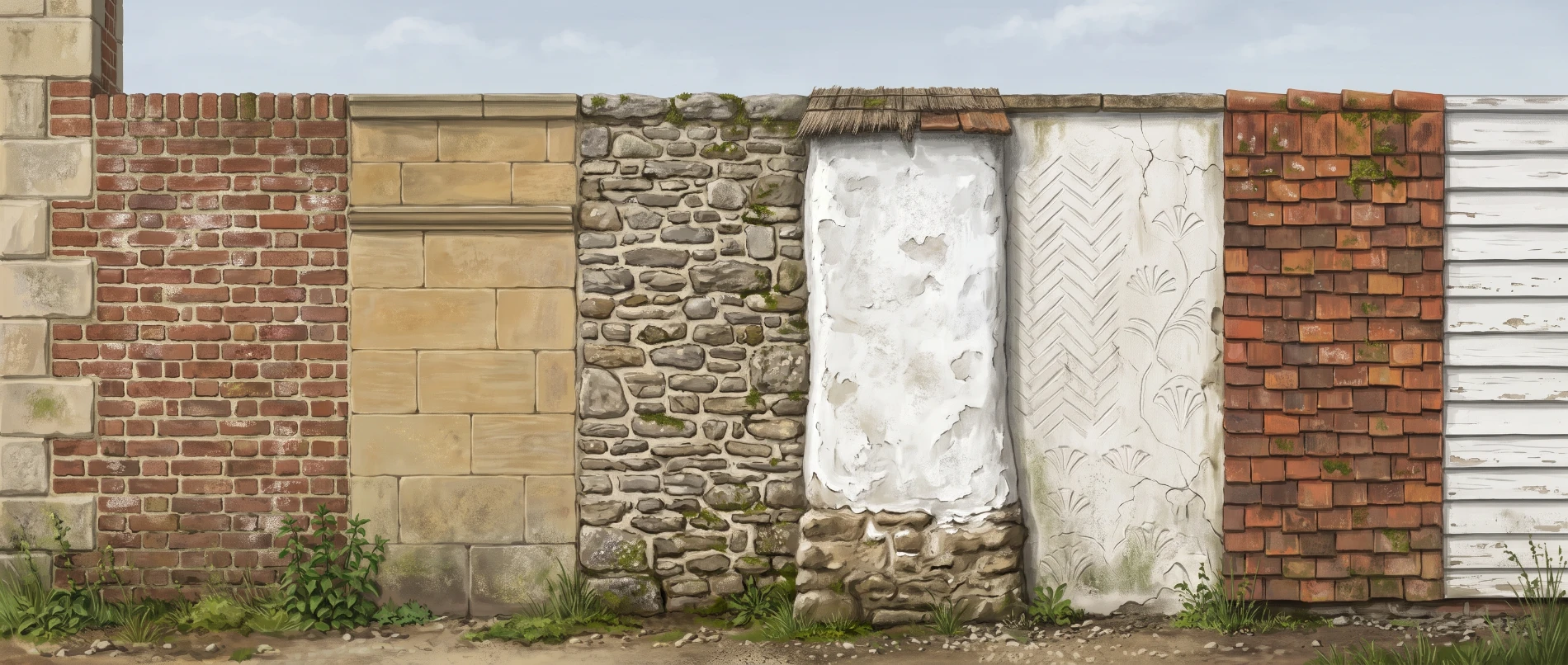
Ashlar vs rubble at a glance
| Feature | Ashlar | Rubble |
|---|---|---|
| Stone | Cut, squared blocks with smooth faces. | Rough, irregular or roughly shaped stone. |
| Joints | Very fine, often almost invisible. | Wide mortar joints, often with small stones packed in. |
| Courses | Regular and level. | Irregular, or roughly coursed. |
| Cost | High, because it needs skilled masons. | Lower, using local stone with less dressing. |
| Typical use | Grand fronts, Palladian and Georgian houses, public buildings. | Farmhouses, cottages, barns and field walls. |
| Repair | Needs skilled masons and matching stone. | Needs lime mortar repointing and care with loose stones. |
How to tell them apart
- Look at the joints. Hairline joints suggest ashlar, and wide, uneven joints suggest rubble.
- Look at the courses. Perfectly level courses of equal height suggest ashlar.
- Look at the corners. Quoins are often ashlar even on rubble walls.
- Look at the sides and back. A grand ashlar front often turns to rubble or brick round the side.
Where you will see them
- Palladian house: Classical ashlar fronts.
- Cotswold stone house: Coursed rubble and dressed stone.
- Yorkshire Dales stone house: Rubble walls.
- Greek Revival house: Smooth stone fronts.
What it means for owners
- Lime not cement. Repoint with lime mortar, because hard cement can damage soft stone.
- Use the right stone. Replacement stone should match the original in colour, texture and strength.
- Check behind the facing. Ashlar facing can come away from a rubble core, so look for bulges and open joints.
- Listed buildings. Stone repairs on listed buildings may need consent. See our listed buildings guide.
For the full set of definitions, see our wall materials and brickwork page and the architectural glossary.
Sources and further reading
- Historic England: Domestic 1, Vernacular Houses Listing guide covering traditional house types and materials
External links open in a new tab. Last checked November 2026.
Frequently asked questions
What is ashlar?
Stone cut into smooth, squared blocks and laid in regular courses with fine joints.
What is rubble stone?
Rough or roughly shaped stone used to build walls, laid with mortar.
Is ashlar better than rubble?
It is more refined and expensive, but rubble walls can be just as sound when built and kept well.
What is coursed rubble?
Rubble laid in roughly level courses, a step between random rubble and ashlar.
Can I tell if a wall is ashlar or just painted?
Look at the joints and the depth. Real ashlar has fine joints, while stucco scored to look like ashlar has lines cut into a flat surface.