The Good News: Most Routine Maintenance Is Exempt
Routine repair and maintenance of a listed building that is genuinely like-for-like - using the same materials and methods to restore the building to its existing condition - does not normally require Listed Building Consent. This is the most owner-friendly aspect of the listed building regime and is important because regular maintenance is the best way to preserve historic fabric and avoid expensive emergency repairs.
The principle is that Listed Building Consent is required for works that would affect the character of the listed building. A repair that simply restores what exists, using materials and methods that match what is already there, does not change the building's character.
The golden rule: same material, same method, same appearance. If the repair is truly like-for-like, you almost certainly do not need Listed Building Consent. If there is any change - in material, method, profile or appearance - check with your conservation officer first.
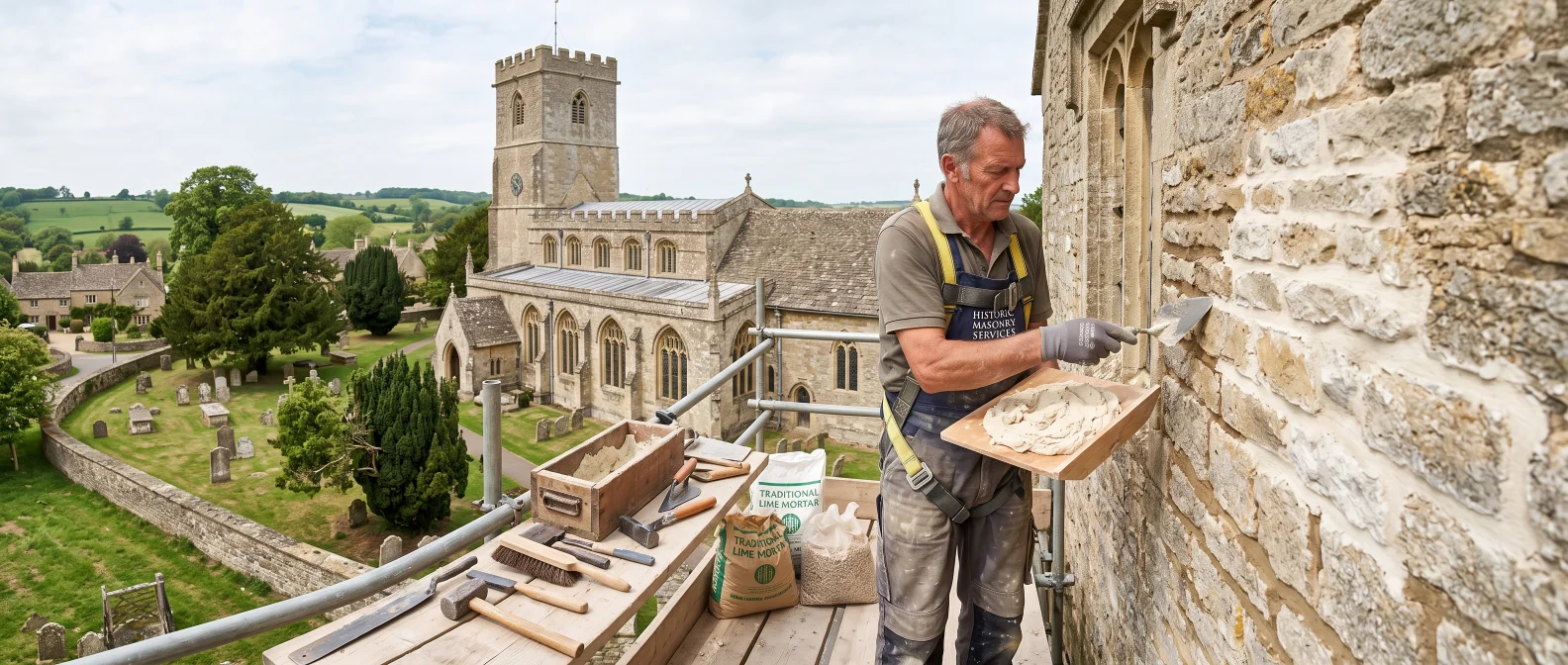
Repair Works That Are Usually Exempt
| Maintenance works | LBC needed? | Key condition |
|---|---|---|
| Repointing with matching lime mortar | Usually not | Same mix, colour, profile as original |
| Replacing individual broken tiles / slates | Usually not | Identical tile type, size and colour |
| Repairing original windows in situ | Usually not | Splicing timber, replacing glass panes - no change to profile |
| Renewing lead flashing like-for-like | Usually not | Same code lead, same profile |
| Replacing sash cords | No | Routine maintenance; no fabric change |
| Draught-proofing windows (brush seals) | No | Reversible; no damage to fabric |
| Repairing / patching lime plaster | Usually not | Same lime mix; matching hair content and texture |
| Repainting in same colour | No | Same surface, same colour - no change to appearance |
| Clearing gutters and downpipes | No | Maintenance only; no works to fabric |
| Replacing gutter sections like-for-like | Usually not | Same material, same profile - cast iron for cast iron |
| Replacing chimney pots like-for-like | Usually not | Matching pot type and size |
| Treating timber decay (consolidant, not replacement) | Usually not | Preserving existing fabric without replacement |
The Lime Rule: Never Use Cement
The single most important principle for maintaining a listed building is: never use Portland cement in any application that contacts original masonry. This applies to:
- Pointing and repointing masonry joints
- Patching renders and plasters
- Bedding stonework
- Bed and collar joints around chimney flaunching
- Any mortar application in contact with historic brick or stone
Portland cement is stronger than old bricks and soft stone. In a traditional wall, movement and stress should be accommodated by the joints (which are softer than the masonry). When cement is used, the opposite happens - the joints become rigid and the masonry itself cracks and spalls. Salt crystallisation behind impermeable cement can also destroy the faces of historic brickwork.
Using cement mortar on a listed building may itself constitute a listed building offence, and the LPA may require its removal - a costly and time-consuming process.
Appropriate Lime Mixes
Lime mortar specification requires matching the original mix to the building's age, masonry type and exposure. A conservation specialist or the SPAB technical helpline can advise on appropriate mixes. As a general guide:
- Natural Hydraulic Lime (NHL) 2 - for sheltered, internal, or soft-stone applications
- Natural Hydraulic Lime (NHL) 3.5 - for general external use on brick and most stone
- Natural Hydraulic Lime (NHL) 5 - for exposed locations; harder set than NHL 3.5
- Putty lime - for internal plasterwork and very sheltered external locations; extremely soft, very breathable
The aggregate is as important as the binder. Always use sharp sand, not building sand. Match the colour and grading to the original mortar wherever possible - this is as significant to the appearance as the lime specification.
Timber Maintenance
Original timber fabric - joists, rafters, wall plates, window frames, doors and joinery - should be retained and repaired wherever possible. Modern practice for listed buildings favours:
- Timber consolidants (epoxy-based or specialist lime-compatible) to strengthen decayed timber in situ
- Epoxy or lime-compatible fills to replace lost timber sections while retaining the original core
- Splicing of new timber into existing frames where decay is localised
- Traditional paint systems (linseed oil paints, traditional lead-based paints where appropriate and licensed) that feed and protect timber
Damp: Understanding Before Treating
Damp in traditional buildings is often misunderstood and incorrectly treated. Traditional buildings manage moisture through their fabric - walls absorb water and release it as conditions allow. This is normal behaviour, not a defect.
Common inappropriate "remedies" that harm listed buildings:
- Chemical damp-proof course injection into lime mortar walls - disrupts the moisture management system and rarely works long-term
- Cement render applied over original lime render - traps moisture behind an impermeable skin
- Polyurethane-coated paint on internal plaster - creates a moisture trap leading to plaster failure
- Tanking compounds applied to basements - hydrostatic pressure can cause catastrophic failure
Appropriate damp management for listed buildings focuses on improving drainage, repairing defects (broken gutters, cracked pointing), improving ventilation, and allowing the building to breathe. Where lime plaster has failed due to previous inappropriate works, the root cause must be addressed before replastering - never just skim over the problem.