The Crucial Difference: Inside Matters Too
One of the most common misunderstandings about listed building protection is that it only applies to the external appearance. This is wrong. The Planning (Listed Buildings and Conservation Areas) Act 1990 protects a listed building's special architectural or historic interest, which includes its interior.
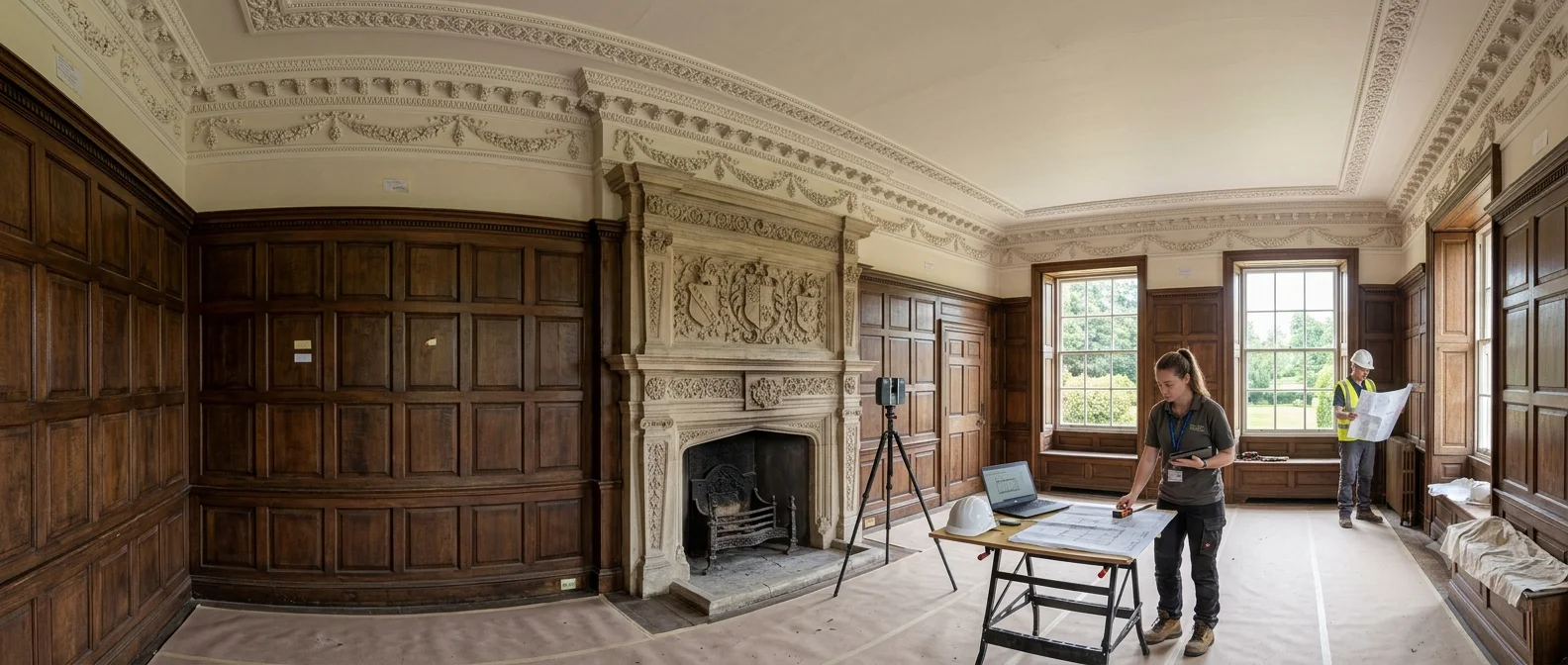
This means that a Georgian townhouse with original panelling, cornices, fireplaces and staircases is protected from internal alteration just as it is from external change - even if those internal changes would be entirely invisible from outside. The interior plan form, the hierarchy of rooms, the original fixtures and decorative elements are all part of what makes the building significant.
Internal alterations do not require planning permission (planning law only controls external development). But they do require Listed Building Consent if they affect the character of the building - and this is assessed independently by the conservation officer.
Works That Require Listed Building Consent
| Internal works | LBC needed? | Notes |
|---|---|---|
| Removing original walls | Yes | Original plan form is part of significance |
| Removing later (non-original) walls | Yes | Still affects fabric; consent required |
| Removing original fireplaces / surrounds | Yes | Often specifically noted in list entry |
| Removing cornices, ceiling roses, dado rails | Yes | Significant decorative fabric |
| Removing original staircases | Yes | Staircases often central to significance |
| Removing original panelling | Yes | One of the most serious categories of harm |
| Removing original floor boards | Yes | Especially wide-board pre-19th century floors |
| Creating new internal openings | Yes | Affects fabric and plan form |
| Installing underfloor heating (in slab) | Yes | Usually requires lifting floors |
| Installing new services through original fabric | Likely yes | Chasing cables/pipes into walls is fabric damage |
| Repainting walls same colour | Usually not | No effect on fabric or character |
| Replacing carpets / floor coverings | Usually not | Reversible; no effect on original fabric |
| Hanging pictures / shelves (small fixings) | Usually not | Minimal and reversible impact |
Identifying Original Fabric
Before planning any internal works, it is important to understand what is original and what is a later addition. Many listed buildings have had successive alterations over their history, and not all internal features date from the original build. However, all internal works require consent - it is not safe to assume that a feature is "not original" without investigation.
A building archaeologist can carry out a survey of the building's interior to establish what is original fabric and what is later. This is particularly valuable if you are planning significant internal works and want to understand the heritage significance of what you are proposing to alter.
Practical Principles for Internal Works
- Reversibility: Works that can be reversed without damage to original fabric are viewed more favourably. A kitchen that uses reversible fixings and does not damage original features is better than one that is screwed directly into historic plasterwork.
- Minimal intervention: The less original fabric affected, the more likely consent is to be granted. Surface-mounted conduit (though ugly) is less harmful than chasing cables into original plaster.
- Like-for-like repair: Repairs to original plasterwork, joinery, or flooring using matching materials and traditional methods do not normally require LBC.
- Recording: Even where works are consented, the LPA may require a photographic or drawn record to be made before and during works. This is standard practice for significant fabric.
Services and Infrastructure
Installing or upgrading services (heating, plumbing, electrical) in a listed building presents particular challenges. Surface-mounting systems on original walls avoids chasing into historic fabric but is visually intrusive. In practice, a balance must be struck:
- Surface-mounted cables in period-appropriate conduit or trunking are preferred over chasing into original plaster
- Heating pipes routed under floorboards (lifted carefully and relaid) cause less harm than pipes chased into walls
- Radiators fixed to later partition walls rather than to original fabric are better
- Where penetrations through original fabric are unavoidable, the minimum-size opening and reversible fire-stopping should be used
Specific High-Risk Elements
These elements are frequently the subject of listed building enforcement action because they are commonly removed without consent:
- Fireplaces: Many Georgian and Victorian fireplaces were removed in the mid-20th century. Their removal without LBC remains an offence even if done 40 years ago.
- Staircases: The primary staircase of a listed building is often its most significant interior feature. Any alteration to an original staircase requires LBC and will be carefully scrutinised.
- Panelling: Wall panelling is among the most vulnerable and valuable interior fabric. Its removal is among the most seriously treated listed building offences.
- Plasterwork: Original lime plaster ceilings, cornices and decorative plasterwork are irreplaceable. Damage during building works (vibration, moisture, impact) can constitute a breach even if the works themselves were consented.