Why Windows and Doors Matter So Much
Windows and doors are among the most significant features of any historic building. They define its character, mark its period, and contribute more to its appearance - internal and external - than almost any other element. For this reason, the Local Planning Authority and Historic England treat unauthorised window and door replacement as one of the most serious categories of harm to listed buildings.
The loss of original sash windows, panelled doors, original ironmongery and glazing bars is essentially irreversible. Once original fabric is removed, the building loses authenticity that cannot be recreated, only approximated.
UPVC window frames are never acceptable on a listed building. Standard aluminium frames are almost always refused. The only acceptable replacement materials are timber (matching the original) or, in some limited cases, slimline aluminium systems designed to replicate historic timber profiles.
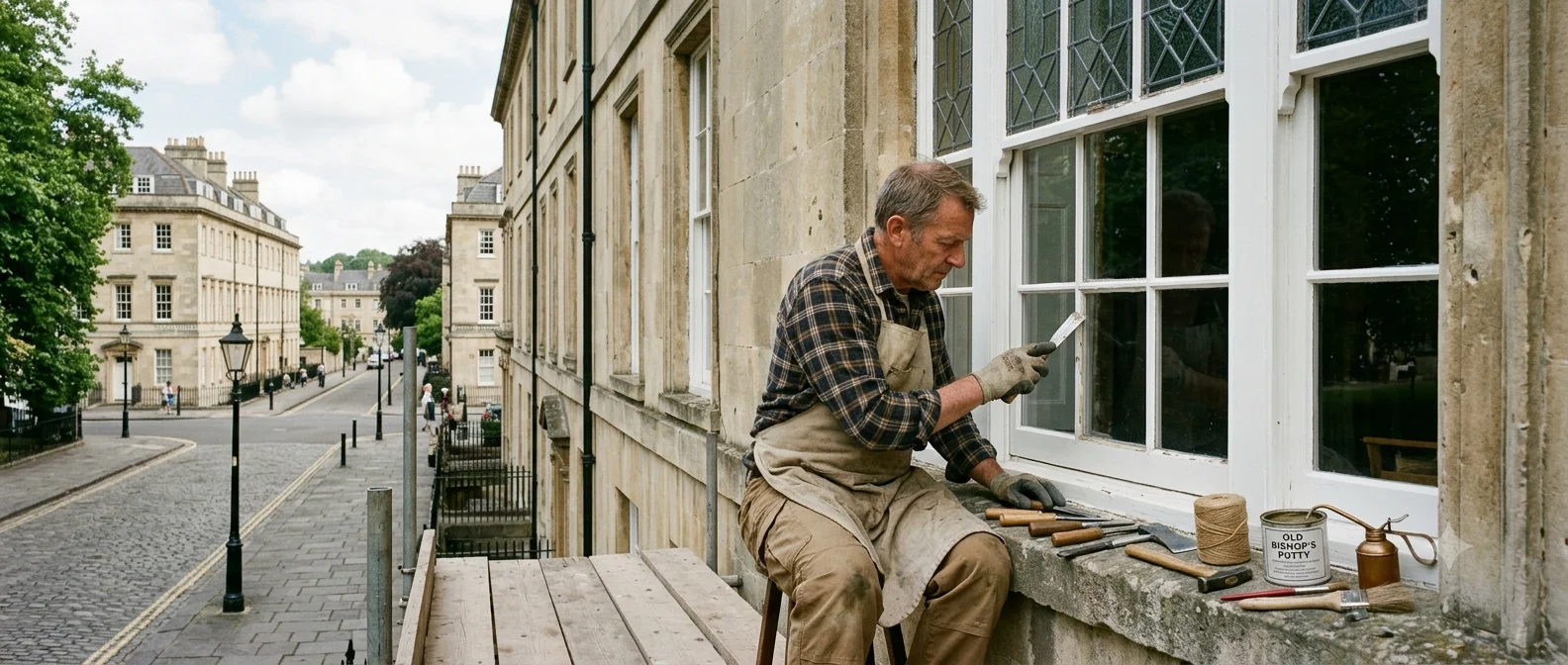
Repair vs Replacement: The Hierarchy
Conservation policy is clear: repair is always preferred over replacement. The NPPF and Historic England's guidance establish a hierarchy for works to listed building fabric:
- Repair in situ - using original or matching materials and methods. Does not normally require LBC if genuinely like-for-like.
- Repair with partial renewal - splicing in new timber to decayed sections while retaining the original frame. Usually does not require LBC if like-for-like.
- Like-for-like replacement - replacement of a window or door with one that exactly matches the original in material, dimensions, profile and glazing. Requires LBC. May be accepted where repair is genuinely not viable.
- Replacement with change - any change in material, profile, glazing type or opening configuration. Requires LBC and is subject to significant scrutiny. UPVC is never acceptable; slimline double glazing in timber may be.
Consent Requirements Table
| Works | LBC needed? | Notes |
|---|---|---|
| Repainting windows same colour | Usually not | Purely cosmetic - no consent if colour unchanged |
| Like-for-like repair (same material, profile) | Usually not | Genuine repair in situ; check with conservation officer |
| Like-for-like replacement (same material, same profile) | Yes - LBC | Affects building fabric; consent required |
| Replacement with slimline timber double glazing | Yes - LBC | May be acceptable; glazing bar profile must match |
| Replacement with UPVC | Yes - LBC + refused | Never acceptable on any listed building |
| Installation of secondary glazing | Likely yes | Affects interior character; check with conservation officer |
| New window opening | Yes - LBC | Affects external appearance and structure |
| Replacing front door with different style | Yes - LBC | Character impact; like-for-like less likely to be refused |
| Draught-proofing (brush seals, no fabric removal) | Usually not | Reversible; does not damage original fabric |
Secondary Glazing: the Conservation Solution
Secondary glazing - adding a separate glazed unit to the room-side of an existing window - is widely used in listed buildings as a way of improving thermal and acoustic performance without affecting the original fabric. It offers several advantages:
- The original window is preserved intact and undamaged
- It is fully reversible - it can be removed without any damage to the building
- It achieves comparable thermal performance to double glazing, especially when combined with draught-proofing of the original window
- Acoustic performance can be better than replacement double glazing
- It does not require listed building consent in most cases (though it is always worth checking with your conservation officer)
Slimline Double Glazing
Where replacement is the only option (for example where a window is beyond repair), slimline double glazing units using 4mm glass with a narrow cavity may be acceptable. The key requirements are:
- The frame must be timber, matching the original in species, profile and dimensions
- Glazing bars must match the original in width, section and position
- The glass must not have visible coatings that change the reflectivity or appearance
- The unit must be manufactured to match the existing opening exactly
This type of glazing cannot achieve the same U-values as modern double glazing in modern frames, but when combined with secondary glazing or draught-proofing, the overall thermal performance of a listed building can be significantly improved.
Building Regulations and Listed Buildings
Replacement windows in domestic buildings normally need to comply with Part L (energy efficiency) of the Building Regulations. However, listed buildings can apply for a relaxation of Part L requirements where compliance would unacceptably alter the character of the building. In practice, the requirement to use appropriate traditional materials almost always means that full Part L compliance is not achievable, and the LPA and Building Control work together to agree a reasonable standard.
Note that Building Regulations consent is separate from Listed Building Consent - both may be required.