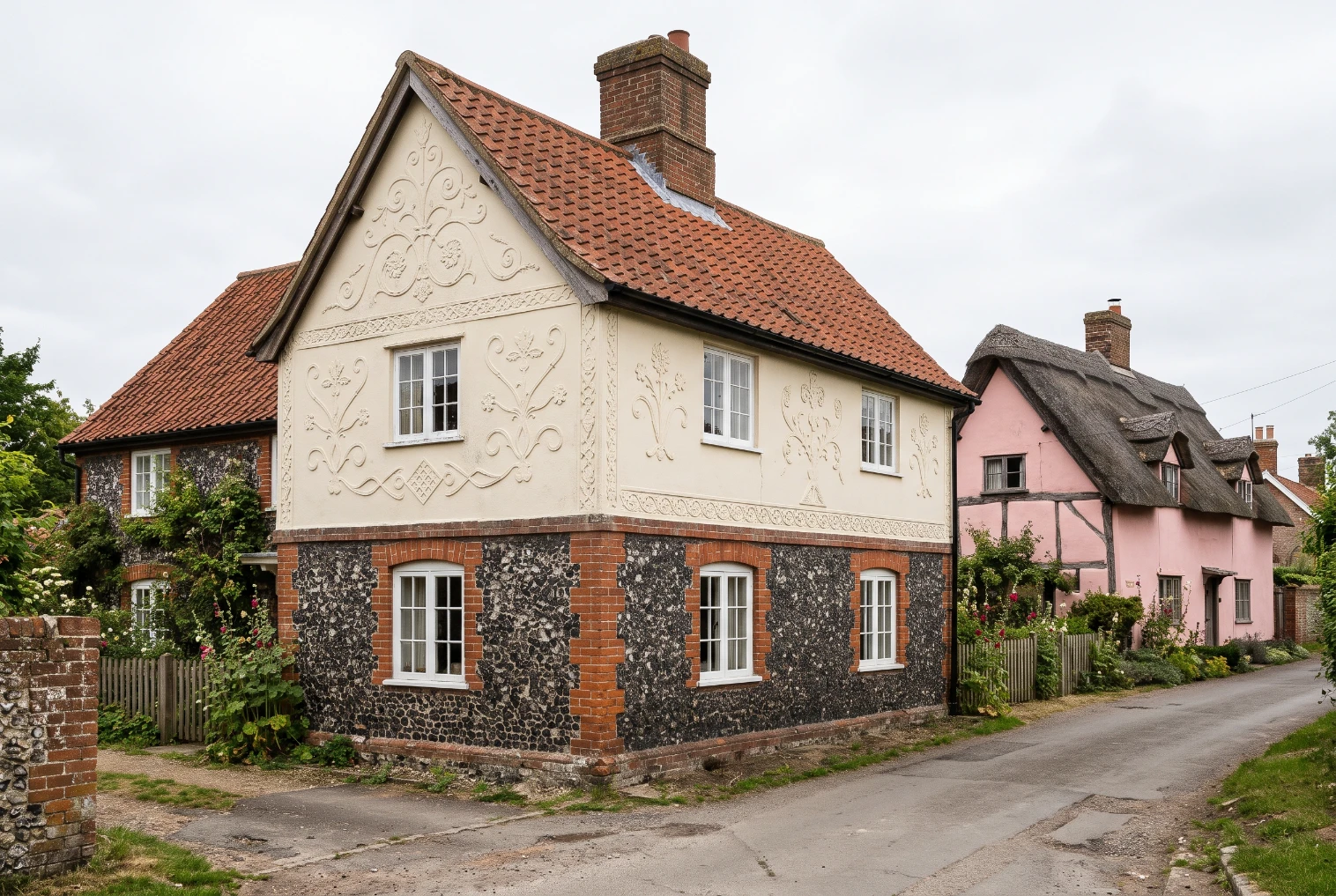
Norfolk and Suffolk flint houses use flints from the chalk, laid in lime mortar, sometimes cut flat on the face (knapped) for a smooth finish. Pargeting is decorative plasterwork, moulded or scratched into wall plaster, and many East Anglian houses are also limewashed in pink and cream.
East Anglia has little building stone, so builders used flint, brick, timber frame and plaster. Suffolk pink is a traditional colour of limewash, and pantile roofs of orange clay are common near the coast.
c. 1500-1900
Regional building traditions have no single start date, so the band shows the main period of building. Periods are drawn at equal width, so the line is not to scale.
How to recognise it
| Feature | What to look for |
|---|---|
| Flint | Rounded or split flint nodules set in lime mortar, often knapped to a flat face and set in neat courses. |
| Quoins and dressings | Brick or stone at corners, windows and doors, which hold the flint wall together. |
| Pargeting | Raised or incised patterns in lime plaster, such as flowers, swirls and figures. |
| Limewash | Colour-washed plaster, often in Suffolk pink, cream or yellow. |
| Roof | Pantiles, plain tiles or thatch of Norfolk reed. |
| Windows | Casement or sash windows in painted timber. |
Not sure what a term means? See our guides to sash and casement windows and render, stucco, roughcast and pebbledash, or browse the full architectural glossary.
Where and when they were built
Flint was the one hard stone found throughout the chalk areas, and it was used for churches and houses alike. Pargeting developed in the 16th and 17th centuries as timber-framed houses were plastered and decorated.
The Historic England guide to vernacular houses discusses regional materials, including the use of flint and plaster in the east of England. Many of the finest pargeted houses are in towns such as Clare, Ipswich and Saffron Walden.
East Anglian flint, clay lump or Wealden timber frames?
- Norfolk and Suffolk flint and pargeting: flint walls and decorated plaster in East Anglia.
- Chalk and clay lump: earth walls found in the same area. See our chalk and clay lump page.
- Box-frame timber house: the timber frame behind much of the plaster. See our box-frame timber house page.
- Thatched cottages: many East Anglian cottages use reed thatch. See our thatched cottages page.
Many flint walls are partly rebuilt or repaired, so check the mortar and the quoins for later work.
What to check when buying one
- Flint walls: check the mortar joints and look for bulging or loose flints. Repoint in lime, not cement.
- Pargeting: decorative plaster is delicate and valuable. Get specialist advice before repairing it.
- Limewash: repaint with limewash, not modern masonry paint, so that walls can breathe.
- Timber frame behind plaster: rot may be hidden. Ask for a survey by someone who knows timber frames.
- Roof: check pantiles, thatch and ridge details. See our roof tile calculator.
- Choose the right survey: use a surveyor with experience of traditional buildings. See our home survey guide.
- Listed status and conservation areas: many surviving traditional houses are listed or lie in conservation areas, and most changes need consent. See our listed buildings guide.
Sources and further reading
- Historic England: Domestic 1, Vernacular Houses Listing selection guide covering traditional regional houses
- Historic England: the National Heritage List for England Check whether a building is listed
External links open in a new tab. Last checked November 2026.
Frequently asked questions
What is pargeting?
Decorative plasterwork on an outside wall, moulded or scratched into the plaster.
What is knapped flint?
Flint that has been split so that the dark glassy inside shows on the face of the wall, giving a smooth finish.
What is Suffolk pink?
A traditional pink limewash colour used on houses in Suffolk and nearby.
Why is flint used in East Anglia?
There is little other hard stone, but flint is plentiful in the chalk.
Are pargeted houses listed?
Many are. Check the National Heritage List for England.