A thatched cottage is a house with a roof of thatch, usually water reed, combed wheat reed or long straw, laid in a thick layer on a timber frame. It is usually low, with deep eaves, small windows and a rounded outline.
Thatch was once the commonest roof in England, and it survives most in southern England, East Anglia and parts of the South West. A thatched roof is long-lasting but needs specialist repair and has special fire risks.
c. 1400-1900
Regional building traditions have no single start date, so the band shows the main period of building. Periods are drawn at equal width, so the line is not to scale.
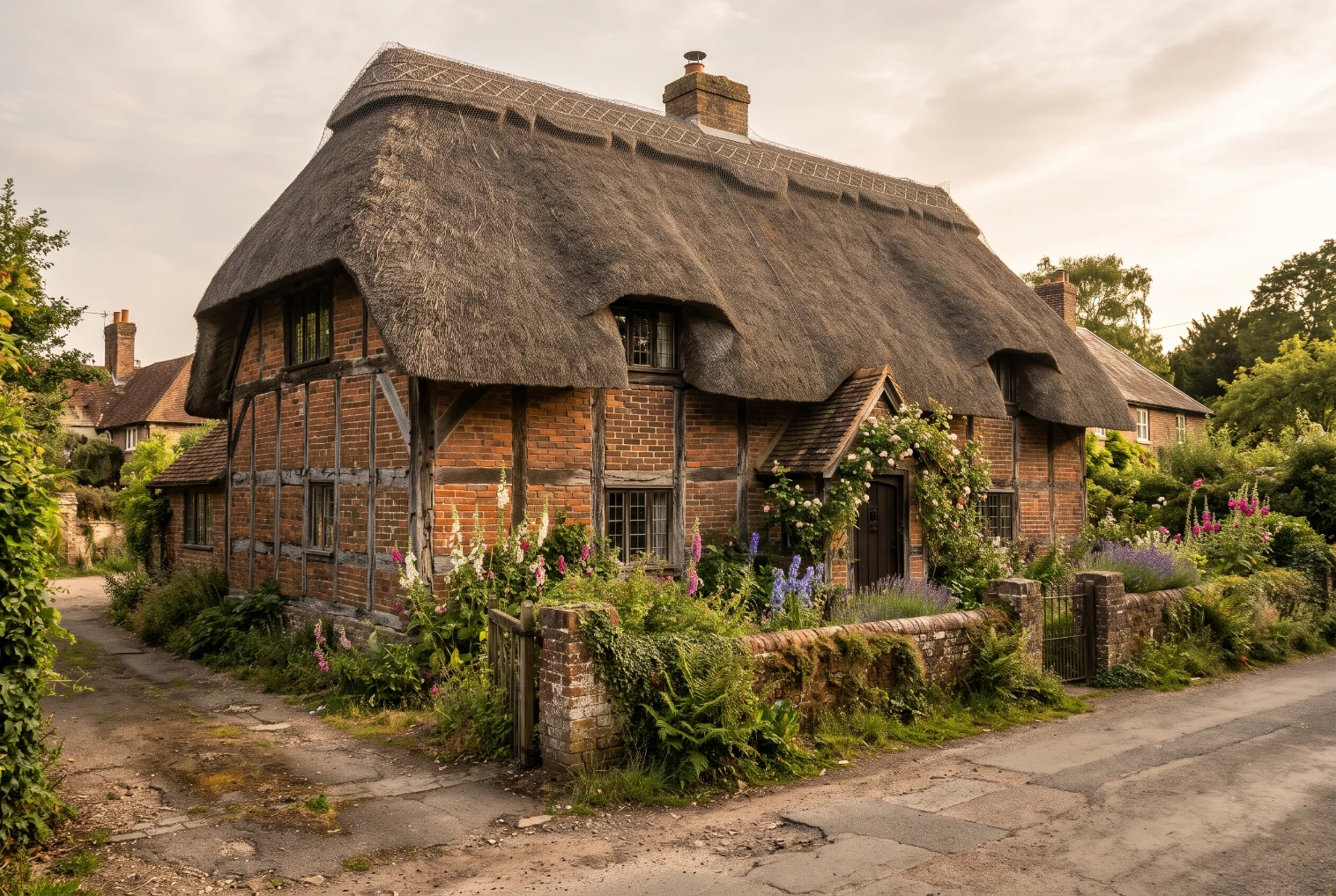
How to recognise it
| Feature | What to look for |
|---|---|
| Roof | A thick roof of reed or straw, rounded over windows and eaves, with a decorative ridge. |
| Eaves | Deep eaves that come low over the walls, giving a hooded look. |
| Walls | Cob, timber frame with plaster, brick or stone, depending on the region. |
| Windows | Small windows, sometimes under eyebrow dormers set into the thatch. |
| Chimneys | Brick or stone chimneys, often with a lead flashing and a spark-arrester. |
| Garden | A cottage garden with a low wall or hedge. |
Not sure what a term means? See our guides to eaves, fascia, soffit and verge and timber frame terms, or browse the full architectural glossary.
Where and when they were built
Thatch is made from local plants such as wheat straw and water reed. Types of thatch vary by region, and some areas have their own styles of finish and ridge.
The Historic England guide to vernacular houses covers regional building materials, and many of the thatched buildings that survive are listed. Thatch needs regular repair and re-ridging, and replacing it needs skilled thatchers.
Thatched, cob or timber-framed?
- Thatched cottages: defined by the roof, over many wall types.
- Devon cob and thatch: thatch over earth walls. See our Devon cob and thatch page.
- Box-frame timber house: a timber frame often carrying thatch. See our box-frame timber house page.
- Medieval hall house: many early halls were thatched. See our medieval hall house page.
Many thatched roofs were replaced with tile or slate in the 19th century, so a thatched cottage today is often a deliberate survival.
What to check when buying one
- Thatch age and type: ask what material the thatch is, how old it is, and when it was last re-ridged. Reed lasts longer than straw.
- Insurance: thatch can be costly to insure. Get quotes before you offer.
- Fire safety: check the chimney, flue lining, and any wiring in the roof space. Fit smoke alarms and consider a fire barrier.
- Rot and moss: check for moss, rot, and rodent damage to the thatch.
- Thatching costs: a full re-thatch can cost many thousands of pounds. Allow for this in your budget.
- Choose the right survey: use a surveyor with experience of traditional buildings. See our home survey guide.
- Listed status and conservation areas: many surviving traditional houses are listed or lie in conservation areas, and most changes need consent. See our listed buildings guide.
Sources and further reading
- Historic England: Domestic 1, Vernacular Houses Listing selection guide covering traditional regional houses
- Historic England: the National Heritage List for England Check whether a building is listed
External links open in a new tab. Last checked November 2026.
Frequently asked questions
What is thatch?
A roof covering made from dried plant stems such as wheat straw or water reed, laid in a thick layer.
How long does thatch last?
It depends on the material and the weather. Straw may last around 15 to 25 years and water reed longer, with ridges needing renewal sooner.
Is it harder to insure a thatched house?
Often yes. Insurers charge more, and some will only cover with extra fire precautions.
Can I replace thatch with tiles?
Usually not if the house is listed, and rarely without consent in a conservation area.
Are thatched cottages listed?
Many are. Check the National Heritage List for England.