A sash window has one or two panels that slide up and down in a frame, and a casement window is hinged at the side and swings open like a door. Sashes are the classic Georgian and Victorian window, and casements are the older and now more common type.
If the window slides, it is a sash. If it swings on hinges, it is a casement. The type matters for ventilation, draughts, repairs and, on a listed building, for what you are allowed to change.
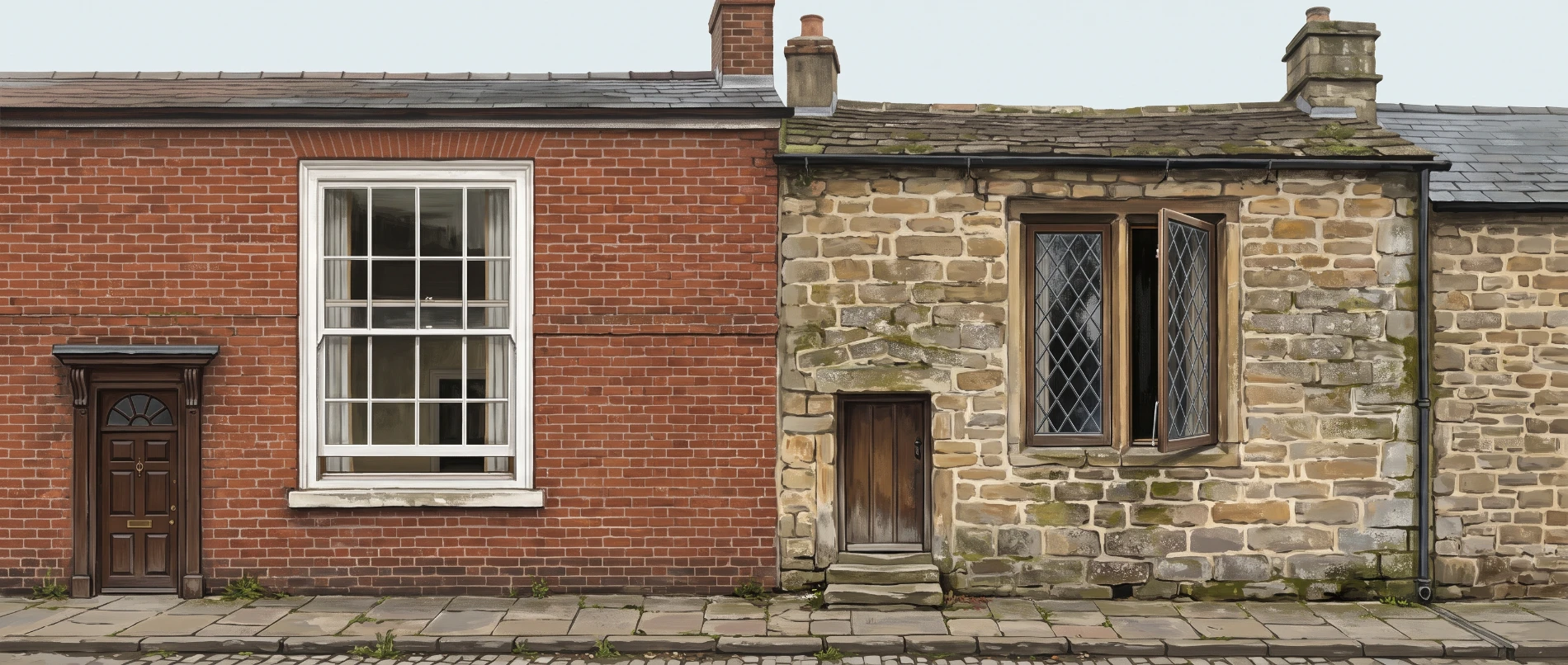
Sash vs casement at a glance
| Feature | Sash window | Casement window |
|---|---|---|
| How it opens | Slides up and down in a frame, with no hinges. | Hinged at the side and swings in or out. |
| Typical period | From the late 17th century. The standard window of the Georgian and Victorian periods. | Older: medieval and Tudor windows are casements. Also the usual window from the 20th century. |
| How it works | Timber panels balanced by cords and weights inside a box frame, or by springs in later windows. | Hinges, a stay to hold it open and a fastener to close it. |
| Ventilation | Opens at the top, the bottom or both, but never more than about half of the window area. | Can open fully, which suits cleaning and escape. |
| Draughts | The sliding joints can leak air, but good draught-proofing works well. | Seals tighter when closed, because the sash presses against the frame. |
| Glazing bars | Slender bars dividing the panes, typical of Georgian windows. | Leaded lights are common in older windows, and bars vary by period. |
| Repair | Cords, weights and timber can be repaired, and the window can be draught-proofed and rebalanced. | Hinges, frames and glazing can be repaired or replaced individually. |
How to tell them apart
- Look for hinges. If you can see hinges on one side and a stay or handle on the other, it is a casement.
- Look for a meeting rail. Two overlapping panels with a horizontal rail in the middle is a double-hung sash.
- Look at the frame. Sash windows sit in a deep box frame that is often set back from the wall face.
- Check the glazing. Small leaded panes usually mean a casement, and slender white bars on a Georgian front usually mean a sash.
Where you will see them
- Queen Anne house: An early home for the sash window.
- Georgian townhouse and terrace: Tall sashes with slender bars.
- Victorian terrace: Sashes with larger panes and bays.
- Tudor house: Casements with leaded lights.
What it means for owners
- Repair before replacing. Old sash windows can usually be repaired, draught-proofed and fitted with secondary glazing, which keeps the original look.
- Listed buildings. Replacing original windows on a listed building normally needs listed building consent. See our listed buildings guide.
- Conservation areas. Many conservation areas have Article 4 directions that control window changes, even for unlisted houses.
- Escape windows. Bedrooms on upper floors may need a window large enough to escape through. Check the building regulations before replacing a sash with a smaller one.
- Damp and condensation. See our damp and mould guide if windows are running with moisture.
For the full set of definitions, see our types of window page and the architectural glossary.
Sources and further reading
- Historic England: the National Heritage List for England Check whether a building is listed
External links open in a new tab. Last checked November 2026.
Frequently asked questions
Which is better, sash or casement windows?
Neither is better in every case. Sash windows suit traditional fronts and can be repaired for generations. Casements seal tighter and open fully.
Are sash windows draughty?
Original sashes can be, but draught-proofing strips and secondary glazing reduce draughts a lot.
Can I replace sash windows with casements?
On an unlisted house outside a conservation area you may be able to, but it can harm the look of a period front. On a listed building you would need consent.
How can I tell the age of a window?
Look at the glazing bars, the glass and the style. Slender bars suggest Georgian, large panes suggest Victorian or later, and leaded lights suggest older or revival work.
What is a casement window made of?
Timber, steel, aluminium or uPVC. Historic ones are timber or steel.