A Queen Anne house is a house built in the reign of Queen Anne, between 1702 and 1714, in a modest, elegant style of red brick, white-painted sash windows, a hipped roof and a central door with a carved hood or pediment.
The style leads straight into Georgian building, and plenty of houses in the same manner were built into the 1720s. In the UK, Queen Anne means this early 18th-century style, not the ornate Victorian houses Americans call Queen Anne.
1702-1714
The band is widened slightly so that it shows, as the reign lasted only 12 years. Periods are drawn at equal width, so the line is not to scale.
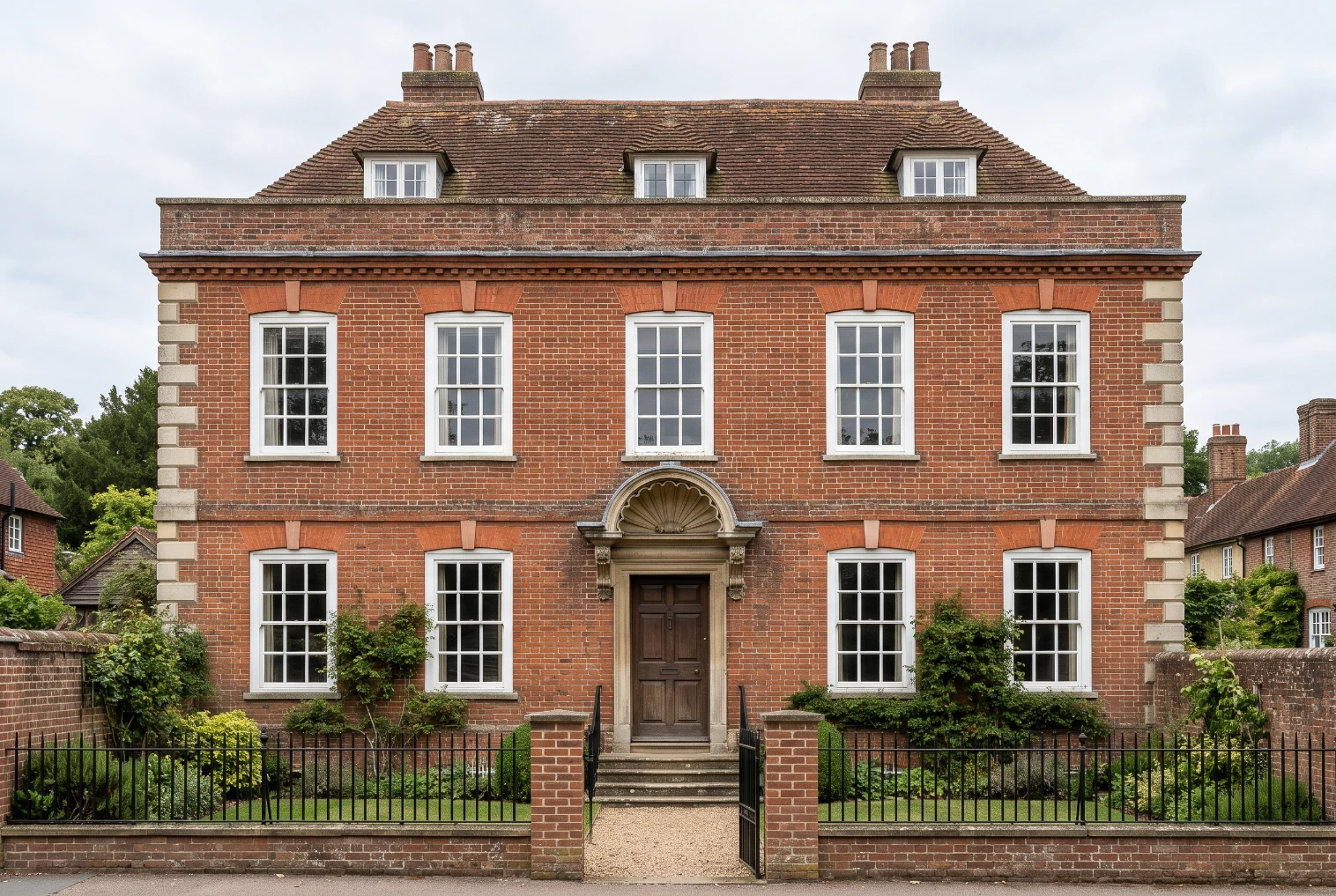
How to recognise it
| Feature | What to look for |
|---|---|
| Walls | Red brick, often with finely cut gauged brick arches over the windows and stone or brick corner quoins. |
| Windows | White-painted timber sash windows with many small panes and thick glazing bars, set back from the face of the wall. |
| Roof | A hipped roof with dormer windows, or a roof half hidden behind a parapet, with tall chimney stacks. |
| Front | Symmetrical, usually five windows wide on two or three storeys, with a central front door. |
| Doorway | A hood or pediment on carved brackets, or a shell hood, above a panelled door. |
| Eaves | A modest brick cornice, a box cornice or a plain parapet, rather than a deep projecting one. |
| Plan | Often a double-pile house, two rooms deep, with a central hall and stair. |
Not sure what a term means? See our guides to sash and casement windows and hipped, gable and mansard roofs, or browse the full architectural glossary.
Where and when they were built
Queen Anne houses are found in towns and villages across England, and the style was especially popular for town houses, rectories and small country houses. Building rules in London in the early 1700s pushed windows back from the face of the wall and discouraged projecting timber eaves, which helped produce the plainer fronts.
Historic England lists Went House in West Malling, dated about 1710, with a stone-coped panelled parapet and sash windows. The Queen Anne House in Deal is described as an early 18th-century red-brick house with a hipped tile roof. The Queen Anne style is not the same as the Queen Anne Revival of the late 19th century.
Queen Anne, Restoration, Georgian or Queen Anne Revival?
- Restoration: slightly earlier, with deeper cornices and cross windows or early sashes. See our Caroline and Restoration house page.
- Queen Anne: 1702 to 1714. Red brick, white sashes and a hooded door.
- Georgian: from 1714, often similar at first but with stricter classical proportions as Palladian design spread.
- Queen Anne Revival: a Victorian style from about 1870 to 1900, with red brick, white sashes and varied rooflines. In the United States, Queen Anne means a different Victorian style.
Houses of the 1720s and 1730s can look very like Queen Anne ones, so expect some overlap.
What to check when buying one
- Sash windows: old sash windows are worth repairing. Check cords, rot at the bottom rail and sill, and glazing bars. Avoid replacement with plastic units.
- Parapet gutters: parapets and hidden gutters leak. Check lead, flashings and downpipes.
- Brickwork: check gauged brick arches and soft old bricks. Use lime mortar for repairs. See our damp and mould guide.
- Doorcase and hood: timber hoods and carved brackets rot where water collects. Check for decay and previous repairs.
- Roof and dormers: check slipped tiles and the lead around dormers.
- Choose the right survey: use a surveyor with experience of old buildings. See our home survey guide.
- Listed status: most surviving houses of this age are listed, and most alterations need consent. See our listed buildings guide.
Sources and further reading
- Historic England: Went House, West Malling A house of about 1710 with a panelled parapet and sash windows
- Historic England: Queen Anne House, Deal An early 18th-century red-brick house with a hipped roof
- Historic England: the National Heritage List for England Check whether a building is listed
External links open in a new tab. Last checked November 2026.
Frequently asked questions
What years is the Queen Anne period?
Queen Anne reigned from 1702 to 1714, and Queen Anne houses are those built in that period or in the same manner shortly afterwards.
What does a Queen Anne house look like?
A symmetrical red-brick house with white sash windows, a hipped roof with dormers, a central door with a hood or pediment, and a modest cornice or parapet.
What is the difference between Queen Anne and Georgian?
Queen Anne is the early 18th-century style, and Georgian covers 1714 to 1830. Early Georgian houses often look much like Queen Anne ones, and strict Palladian proportions come later.
Is Queen Anne the same as Queen Anne Revival?
No. Queen Anne Revival is a Victorian style from about 1870 to 1900 that borrowed from the earlier one.
Are Queen Anne houses listed?
Many are. Most alterations to a listed building need consent, so check the National Heritage List for England and speak to the conservation officer first.