A Jacobean house is a house built in the reign of James I, between 1603 and 1625. It builds on the Elizabethan style with heavier ornament: strapwork, shaped gables, obelisks, carved oak and elaborate porches with columns stacked one above another.
The style is still decorative and Gothic in its overall shape, though it uses more classical details. It was replaced from the 1620s and 1630s by stricter classical design.
1603-1625
The band is very narrow because the period lasted only 22 years. Periods are drawn at equal width, so the line is not to scale.
How to recognise it
| Feature | What to look for |
|---|---|
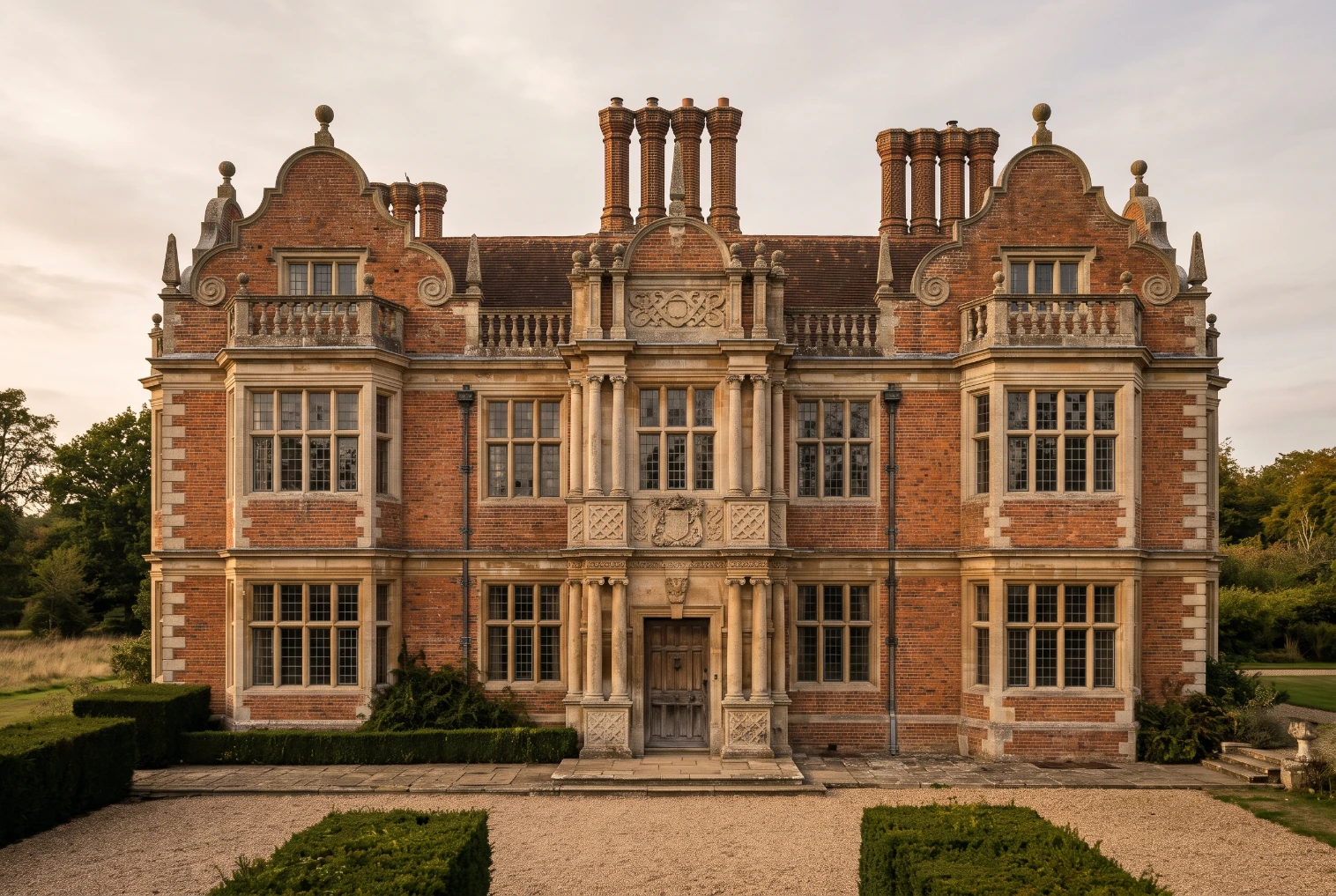
| Gables | Shaped or curved gables, sometimes called Dutch or Flemish gables, topped with finials or balls. |
| Porch | An ornate, often two-storey porch with columns, one order stacked above another, and carved decoration. |
| Strapwork | Flat carved or moulded bands that interlace like leather straps, used on gables, porches, parapets and ceilings. |
| Windows | Still large, with mullions and transoms, sometimes in canted bays. |
| Parapets | Stone parapets with obelisks, balls or open lettering along the roofline. |
| Walls | Brick or stone, often symmetrical, with dressings picked out in contrasting stone. |
| Interiors | Carved oak staircases with heavy balusters, panelling, and ornate plaster ceilings and friezes. |
Not sure what a term means? See our guides to hipped, gable and mansard roofs and English and Flemish bond, or browse the full architectural glossary.
Where and when they were built
The Jacobean period is short, only 22 years, but it produced many fine country houses and town houses. The style shares much with Elizabethan building and many houses were built across both reigns.
Historic England lists Forde House at Newton Abbot in Devon as an E-plan house of 1610 with large semicircular Dutch gables and a two-storey porch, and its interior includes a strapwork plaster ceiling. In the same years Inigo Jones began introducing strict classical design to England, with the Queen's House at Greenwich started in 1616, which would shape the next generation of houses.
Jacobean, Elizabethan or Jacobethan?
- Elizabethan: earlier, 1558 to 1603. Similar plans, with fewer curved gables and less carved ornament. See our Elizabethan house page.
- Jacobean: 1603 to 1625. Heavier ornament, curved gables, strapwork and obelisks.
- Caroline: 1625 onwards. Classical symmetry and simpler brick fronts. See our Caroline and Restoration house page.
- Jacobethan: a 19th-century revival mixing Elizabethan and Jacobean features, often seen on Victorian country houses and schools.
Jacobean carving is deep and hand-made, while revival copies are often sharper and more regular. A conservation specialist can tell them apart.
What to check when buying one
- Shaped gables and parapets: curved gables, stone copings and parapet gutters are common leak points. Check flashings, joints and finials.
- Stone and brick: check for eroded stone, failed repointing and repairs in cement. Use lime for repairs.
- Plasterwork: ornate ceilings and friezes can be damaged by leaks above. Check for cracking, sagging and previous water damage.
- Oak panelling and stairs: these are valuable and often protected. Avoid stripping, painting or altering them without advice.
- Damp: thick masonry holds moisture, so see our damp and mould guide before choosing repairs.
- Choose the right survey: use a surveyor with experience of old buildings. See our home survey guide.
- Listed status: most surviving houses of this age are listed, and most alterations need consent. See our listed buildings guide.
Sources and further reading
- Historic England: Forde House, Newton Abbot An E-plan house of 1610 with Dutch gables and a two-storey porch
- Historic England: the National Heritage List for England Check whether a building is listed
External links open in a new tab. Last checked November 2026.
Frequently asked questions
What years are Jacobean houses?
Jacobean houses were built in the reign of James I, from 1603 to 1625.
What is strapwork?
Strapwork is a decoration of flat bands that cross and interlace, as if made from leather straps, used in carved stone, plaster and wood.
What is a shaped gable?
A gable whose edge is curved or stepped into a decorative outline rather than a plain triangle. Jacobean and Caroline builders took the idea from the Low Countries.
How is Jacobean different from Elizabethan?
Jacobean houses usually have heavier, more elaborate ornament, more classical features and shaped gables, while Elizabethan houses are lighter and more Gothic.
Are Jacobean houses listed?
Nearly all surviving ones are. Most alterations need listed building consent, so check the National Heritage List for England before planning work.