Caroline and Restoration houses were built between 1625 and 1700, in the reigns of Charles I, Charles II and their successors. They are among the first English houses with a strictly symmetrical classical front, usually in brick, with a hipped roof, dormer windows and a deep timber eaves cornice.
Dutch-style curved gables were fashionable, and cross windows gave way to timber sash windows towards the end of the century. After the Great Fire of 1666, London was rebuilt in brick and stone.
1625-1700
The band covers the reigns of Charles I, Charles II, James II and William and Mary. Periods are drawn at equal width, so the line is not to scale.
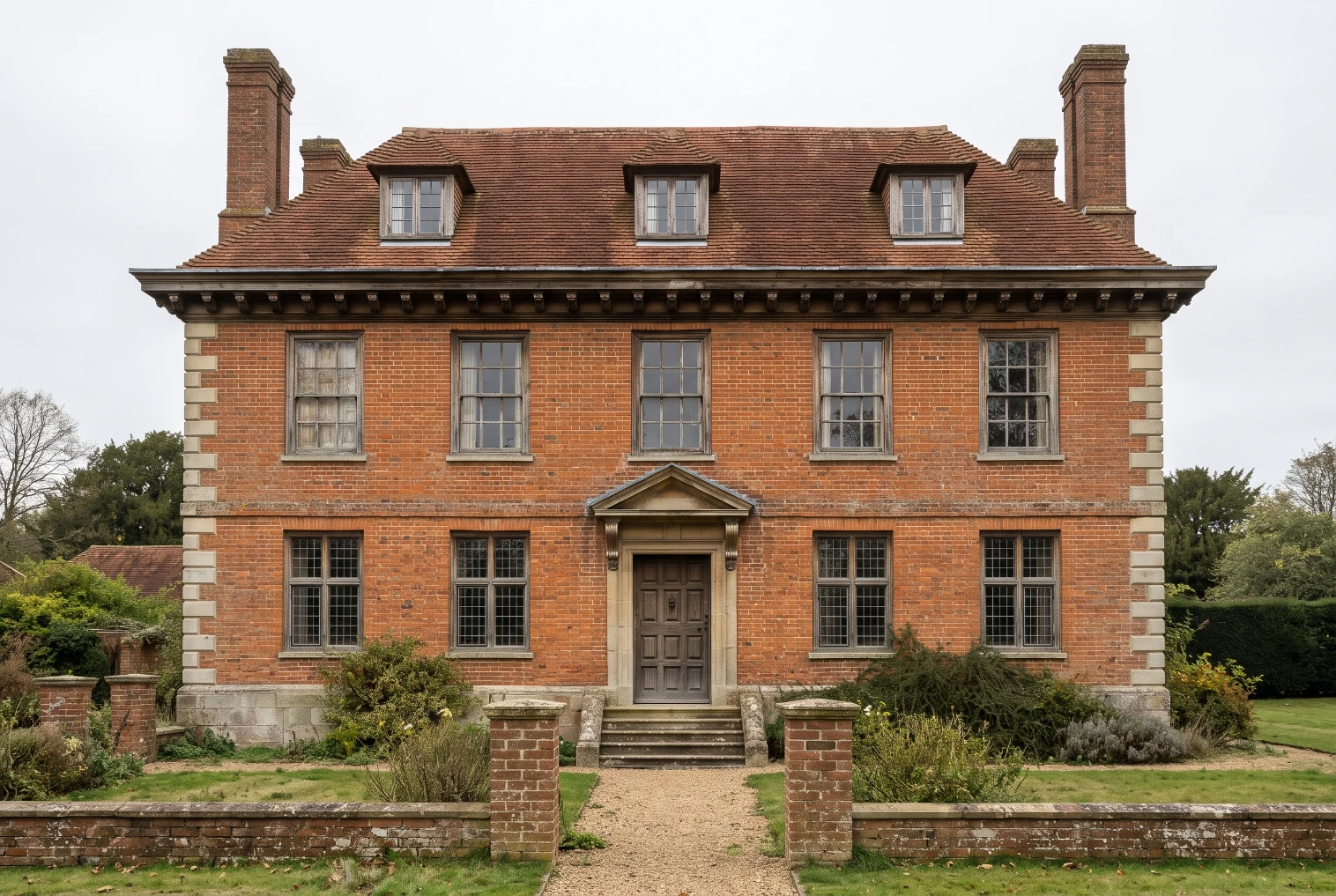
How to recognise it
| Feature | What to look for |
|---|---|
| Plan | A symmetrical front, often five bays wide, with a central door. Many were two rooms deep, called a double-pile plan. |
| Roof | A hipped roof with dormer windows set into the slope, and tall chimney stacks grouped at the ends. |
| Eaves | A deep timber cornice with carved brackets (modillions) running under the eaves. |
| Walls | Red or orange brick, often with stone dressings and pilasters. Flemish bond became more common late in the century. |
| Gables | Curved Dutch gables, sometimes with a pediment on top, were fashionable in the second half of the century. |
| Windows | Cross windows, with timber mullions and transoms, were replaced by timber sash windows from the later 17th century. |
| Doorway | A central doorway, often with a pedimented or hooded doorcase carried on carved brackets. |
Not sure what a term means? See our guides to sash and casement windows and hipped, gable and mansard roofs, or browse the full architectural glossary.
Where and when they were built
Classical design arrived in England through Inigo Jones and the court, and by the Restoration of Charles II in 1660 builders across the country were using symmetrical brick fronts. The Great Fire of London in 1666 led to rebuilding rules that favoured brick and stone, and sash windows came into use in the later decades.
Historic England records several examples. Restoration House in Rochester, remodelled in the mid-17th century, has hipped dormers and a moulded cornice. Hare's Farmhouse in Hampshire, dated late 17th or early 18th century, has a hipped tile roof, hipped dormers and a modillion cornice.
Caroline, Restoration or Queen Anne?
- Caroline: 1625 to 1649. Early classical brick fronts and Dutch gables, still with cross windows and some Jacobean ornament.
- Restoration: 1660 to about 1700. Hipped roofs, dormers, deep cornices and early sash windows.
- Queen Anne: 1702 to 1714. Slightly later, with more refined brickwork and white sash windows. See our Queen Anne house page.
- Neo-Georgian and Wrenaissance: 20th-century revivals of this style, with thinner details and modern brick.
The three styles run together, and many houses were altered later with new windows and roofs, so the boundaries are not sharp.
What to check when buying one
- Eaves cornice: deep timber cornices rot where gutters leak. Check for decay, loose brackets and past repairs.
- Dormers and roof: lead cheeks and valleys around dormers are common leak points. Check the hipped roof for slipped tiles.
- Windows: cross windows and early sashes are often listed fabric. Repair rather than replace, and avoid sealing them with unsuitable modern units.
- Brickwork: old soft bricks need lime mortar. Cement repointing damages them and traps damp. See our damp and mould guide.
- Interiors: panelling, staircases and plaster cornices matter. Check for woodworm and leaks.
- Choose the right survey: use a surveyor with experience of old buildings. See our home survey guide.
- Listed status: most surviving houses of this age are listed, and most alterations need consent. See our listed buildings guide.
Sources and further reading
- Historic England: Restoration House, Rochester A house remodelled in the mid-17th century with hipped dormers
- Historic England: Hare's Farmhouse, Hartley Wintney A late 17th or early 18th-century house with a modillion cornice
- Historic England: the National Heritage List for England Check whether a building is listed
External links open in a new tab. Last checked November 2026.
Frequently asked questions
What is a Caroline house?
A house built in the reign of Charles I, from 1625 to 1649, in an early classical style, often with brick walls and Dutch-style gables.
What is a Restoration house?
A house built after the restoration of the monarchy in 1660, usually of brick, with a symmetrical front, hipped roof, dormers and a deep eaves cornice.
When did sash windows arrive?
Sash windows appear in England in the later 17th century and became standard in the 18th. Many older houses had cross windows or casements replaced with sashes later.
What is a double-pile house?
A house two rooms deep, usually with a central hall or passage, covered by a roof with a valley or by two parallel roofs. It became popular in the late 17th century.
Are these houses listed?
Most surviving ones are. Most alterations need listed building consent, so check the National Heritage List for England before any work.