Render is the general word for a mortar coat on a wall. Stucco is a smooth, painted render designed to look like stone. Roughcast is a rough render with stones mixed in, and pebbledash is a render with pebbles thrown on to the wet surface.
The finish tells you the period, but the mix tells you whether the wall can breathe. Lime-based coatings let moisture out, and hard cement coatings can trap it in an old building.
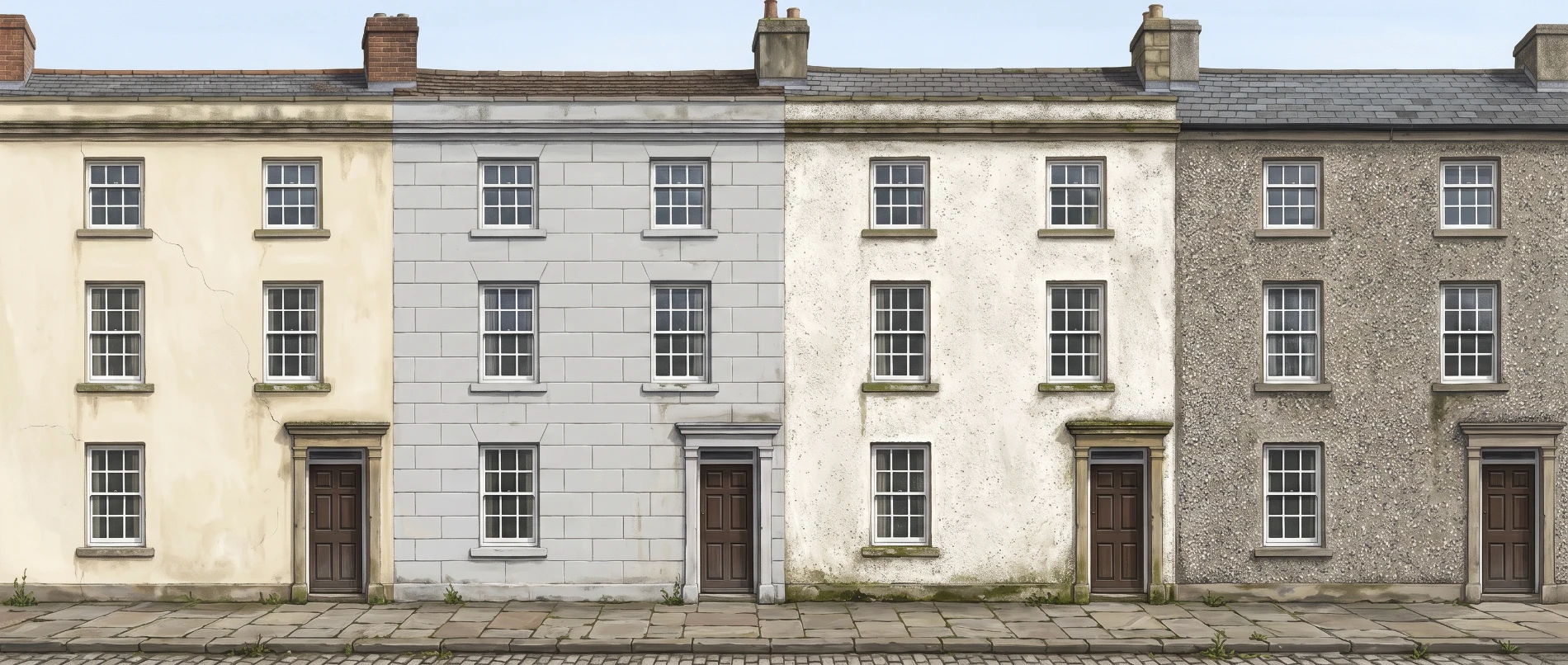
Render, stucco, roughcast and pebbledash at a glance
| Feature | Render | Stucco | Roughcast | Pebbledash |
|---|---|---|---|---|
| What it is | A general term for a mortar coat on a wall. | A smooth render, usually painted, made to look like stone. | A rough render with small stones mixed in and thrown on. | A render with pebbles thrown on to the wet surface afterwards. |
| Finish | Smooth or textured. | Smooth, often scored to look like stone joints. | Rough and pebbly. | Rough, with exposed pebbles. |
| Typical period | Any, and traditionally lime-based. | Regency and early Victorian terraces. | Common in Scotland as harling, and in the 19th and 20th centuries elsewhere. | Interwar and post-war suburban housing. |
| Breathability | Lime render breathes, and cement render does not. | Originally lime-based. | Depends on the mix. | Usually cement-based. |
| Maintenance | Repaint or repair as needed. | Needs regular repainting and crack repair. | Durable but hard to repair neatly. | Durable but hard to remove or patch. |
How to tell them apart
- Look at the surface. Smooth and painted suggests stucco, rough with small stones suggests roughcast, and obvious pebbles suggest pebbledash.
- Look for scored lines. Lines cut into a smooth surface to look like stone joints are a mark of stucco.
- Tap and listen. Hollow-sounding patches suggest the coat has come away from the wall.
- Look for cracks. Fine cracks are common, and wide cracks with damp stains suggest water getting in behind.
Where you will see them
- Georgian townhouse and terrace: Painted stucco fronts.
- Greek Revival house: Stucco imitating stone.
- Interwar suburban semi: Pebbledash and roughcast.
- Edwardian house: Roughcast on gables.
What it means for owners
- Check what is underneath. Old brick and stone walls need breathable lime render. Cement render over them can trap moisture and cause damp.
- Do not seal it. Impermeable paints and sealants can trap moisture. Use breathable paint on old walls.
- Find the cause of damp. See our damp and mould guide if render is blown, cracked or stained.
- Removing pebbledash. Take advice before stripping it, because it can damage the wall underneath.
- Listed buildings. Changing render on a listed building may need consent. See our listed buildings guide.
For the full set of definitions, see our wall materials and brickwork page and the architectural glossary.
Sources and further reading
- Historic England: Conserving Georgian and Victorian Terraced Housing Guidance on terraced houses and how they were built
External links open in a new tab. Last checked November 2026.
Frequently asked questions
What is the difference between render and stucco?
Render is any mortar coat on a wall. Stucco is a smooth, painted render that is made to look like stone.
What is the difference between roughcast and pebbledash?
Roughcast has small stones mixed into the render before it is thrown on. Pebbledash has pebbles thrown on to the wet render afterwards.
Is cement render bad for old houses?
It can be, because it is hard and traps moisture in older solid walls. Lime render is usually the better choice.
What is harling?
A rough lime-based render used in Scotland, similar to roughcast.
Can I paint pebbledash?
Yes, with a masonry paint, but check that it is breathable and that the wall is dry first.