An Edwardian house is a house built between 1901 and 1914, usually in red brick, with larger windows, wider rooms and a lighter feel than a Victorian one. Typical features are a timber porch, a bay window, a tiled roof and stained glass in the front door.
Edwardian houses were built in great numbers in the suburbs of towns and cities. They are often a little wider than Victorian terraces, with wider halls, bigger gardens and less applied decoration.
1901-1914
The band covers the first part of the Edwardian and interwar period. Periods are drawn at equal width, so the line is not to scale.
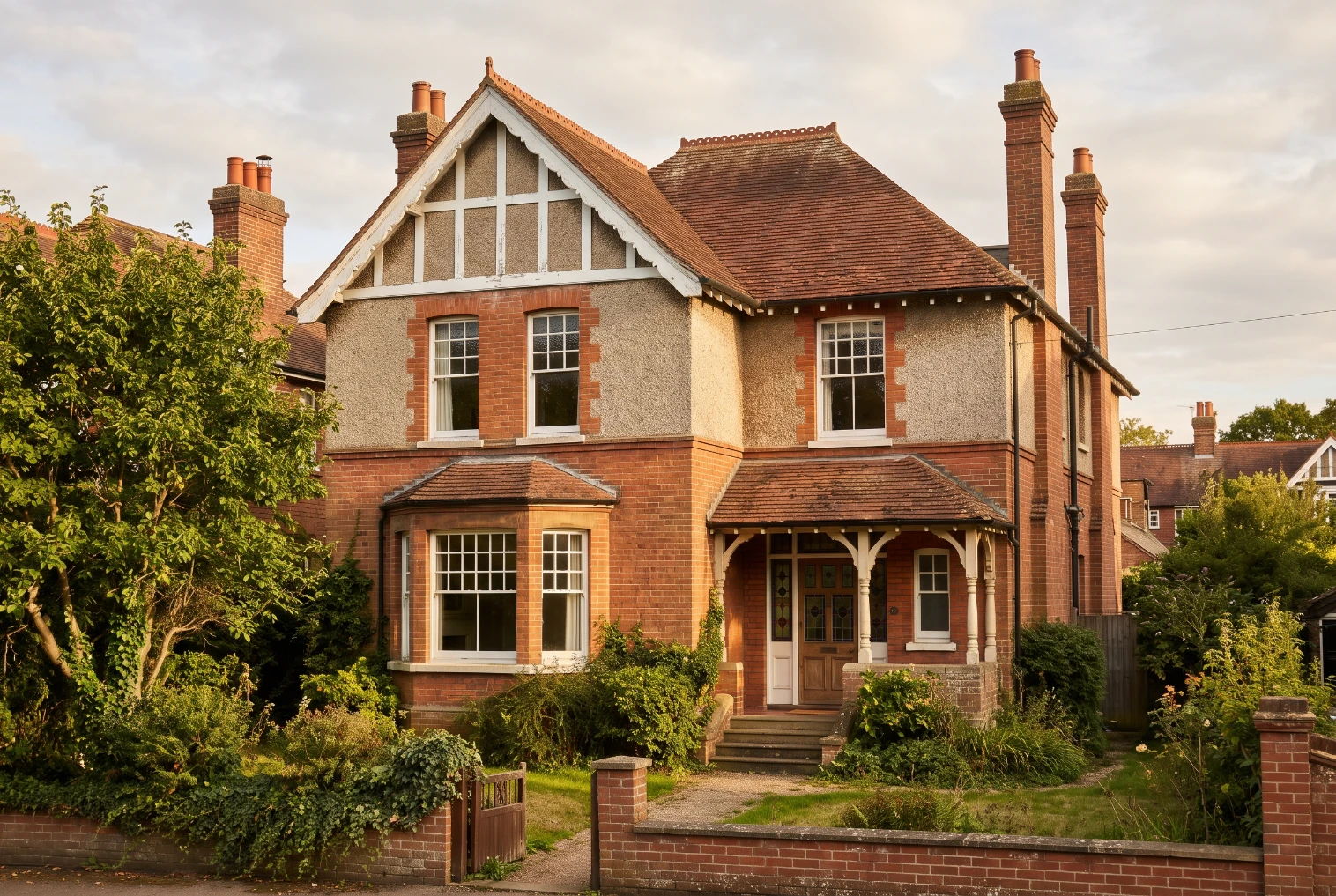
How to recognise it
| Feature | What to look for |
|---|---|
| Walls | Red brick, often with roughcast or tile hanging on the upper floor or gable, and stone or terracotta details. |
| Windows | White-painted timber sashes, often with small panes in the upper sash and one large pane below, and wide bay windows. |
| Porch | A timber porch with turned posts, and a door with stained or etched glass. |
| Roof | A steep clay-tile roof, with front gables and tall brick chimneys. |
| Plan | Wider hallways and larger rooms than a Victorian house, with more light and a bathroom designed in from the start. |
| Detail | Less heavy ornament than the Victorian period, with Arts and Crafts influence in the joinery and glass. |
| Setting | A bigger plot, a front garden with a low wall, and often a wider street. |
Not sure what a term means? See our guides to sash and casement windows and bay, bow and oriel windows, or browse the full architectural glossary.
Where and when they were built
Edwardian design grew out of the Queen Anne Revival and Arts and Crafts movements of the late Victorian period. The look is lighter and more open, with more glass, more air and a bigger garden.
The Historic England listing guide on suburban and country houses covers the period of the early 20th century when suburban house design was changing. Many Edwardian houses are not listed but form part of conservation areas.
Edwardian, Victorian or interwar?
- Edwardian: 1901 to 1914. Red brick, bigger windows, timber porches and more light.
- Victorian terrace: earlier, with heavier decoration. See our Victorian terrace page.
- Arts and Crafts: handcrafted and informal. See our Arts and Crafts house page.
- Interwar semi: later, with bays and hipped roofs. See our interwar suburban semi page.
The dates overlap, so check the glass and the porch. Edwardian houses usually have lighter joinery and more coloured glass than earlier ones.
What to check when buying one
- Timber porch: timber porches rot at the base and where the roof joins the wall. Check the posts and the decorative woodwork.
- Solid walls and damp: most still have solid brick walls. See our damp and mould guide.
- Sash windows: original sashes are worth keeping. Check sills, cords and paint.
- Roof: clay tiles last long but need checking for slipped tiles and weak ridges. See our roof tile calculator.
- Stained glass: original glass is valuable. Look at cracks and failed lead.
- Choose the right survey: a surveyor who knows 20th-century construction will spot the problems typical of the period. See our home survey guide.
- Listed status and conservation areas: most houses of this period are not listed, but some are, and many lie in conservation areas with controls on fronts and windows. See our listed buildings guide.
Sources and further reading
- Historic England: Domestic 3, Suburban and Country Houses Listing selection guide covering houses to the early 20th century
- Historic England: the National Heritage List for England Check whether a building is listed
External links open in a new tab. Last checked November 2026.
Frequently asked questions
What years is the Edwardian period?
Strictly 1901 to 1910, the reign of Edward VII, but the term is often used up to 1914 for building.
How can I tell an Edwardian house?
Look for red brick, a tiled roof, a timber porch, a bay window, stained glass in the door and larger windows than a Victorian house.
What is the difference between Edwardian and Victorian houses?
Edwardian houses are usually lighter and wider, with larger windows and less applied decoration.
Are Edwardian houses solid wall?
Most are, with solid brick walls and no cavity, so damp control and insulation need a breathable approach.
Are Edwardian houses listed?
Some are, especially work by well-known architects, and many lie in conservation areas. Check the National Heritage List for England.