Chalk and clay lump houses have walls made of earth. In Wessex, chalk cob is a mix of chalk, clay and straw built in layers. In East Anglia, clay lump uses large unfired blocks of clay and straw laid like bricks. Both are usually covered in lime render or limewash.
These building methods used local soil and needed little transport. They work well when kept dry from above and below, with a good roof, a brick or flint plinth and breathable lime finishes.
c. 1700-1900
Regional building traditions have no single start date, so the band shows the main period of building. Periods are drawn at equal width, so the line is not to scale.
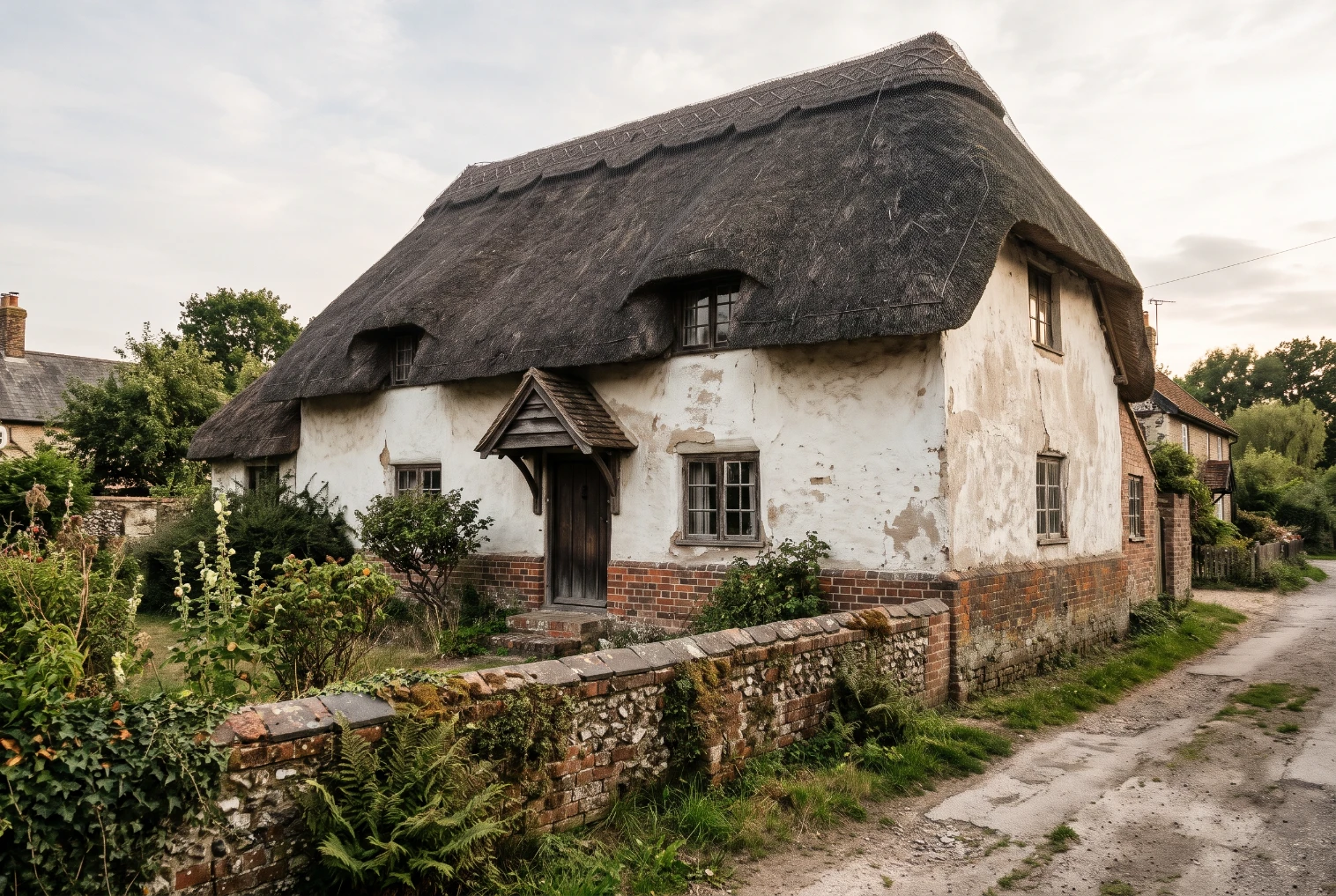
How to recognise it
| Feature | What to look for |
|---|---|
| Walls | Chalk cob or clay lump blocks, 300mm to 500mm thick, often rounded at the corners. |
| Plinth | A brick or flint plinth, which lifts the earth above ground splash. |
| Render | Lime render or limewash, which protects the wall and lets it breathe. |
| Roof | Thatch, pantile or slate, with wide eaves to keep rain off the walls. |
| Windows | Small windows in timber frames, with deep reveals. |
| Setting | Villages in chalk and clay areas of Hampshire, Wiltshire and Dorset, and Norfolk and Suffolk. |
Not sure what a term means? See our guides to eaves, fascia, soffit and verge and render, stucco, roughcast and pebbledash, or browse the full architectural glossary.
Where and when they were built
Earth building was cheap and used local soil. In East Anglia, clay lump was especially common in the 19th century, partly because brick was expensive. In the chalk counties of the south, chalk cob walls were used for cottages and farm buildings.
Historic England advice on earthen structures says that cob and other unbaked earth walls are vulnerable to water damage, and that repairs should use compatible, permeable materials. Its listing guide notes that earth walls alone do not justify listing but add interest with intactness and age.
Chalk and clay lump, cob or flint?
- Chalk and clay lump: earth walls in Wessex and East Anglia.
- Devon cob and thatch: earth walls with a stronger cob tradition. See our Devon cob and thatch page.
- Norfolk and Suffolk flint and pargeting: flint and plaster in East Anglia. See our Norfolk and Suffolk page.
- Thatched cottages: many earth houses are thatched. See our thatched cottages page.
Many earth walls are hidden under render or cladding, so a surveyor with experience of earth buildings is needed to identify them.
What to check when buying one
- Moisture and flooding: earth walls fail if kept wet. Check drainage, ground levels and flood risk.
- Cement and impermeable finishes: cement render and modern paint trap moisture. Repair with lime.
- Cracks and bulges: earth walls move over time. Ask a surveyor about any cracks or bulges.
- Plinth and base: check the brick or flint plinth for decay and rising damp.
- Insulation: only use breathable materials, and take specialist advice before insulating.
- Choose the right survey: use a surveyor with experience of traditional buildings. See our home survey guide.
- Listed status and conservation areas: many surviving traditional houses are listed or lie in conservation areas, and most changes need consent. See our listed buildings guide.
Sources and further reading
- Historic England: Earthen Structures Advice on cob and other earth walls
- Historic England: Domestic 1, Vernacular Houses Listing selection guide covering traditional regional houses
- Historic England: the National Heritage List for England Check whether a building is listed
External links open in a new tab. Last checked November 2026.
Frequently asked questions
What is clay lump?
A walling material made from large unfired blocks of clay and straw, common in Norfolk and Suffolk.
What is chalk cob?
A mixture of chalk, clay and straw built up in layers to form walls, used in Wessex.
Are earth houses damp?
Not if they are kept dry and repaired with lime. Damp problems usually come from water getting in.
Can I extend an earth house?
Yes, but the new work must not damage the old, and breathable materials are best.
Are chalk and clay lump houses listed?
Many are, especially older ones. Check the National Heritage List for England.