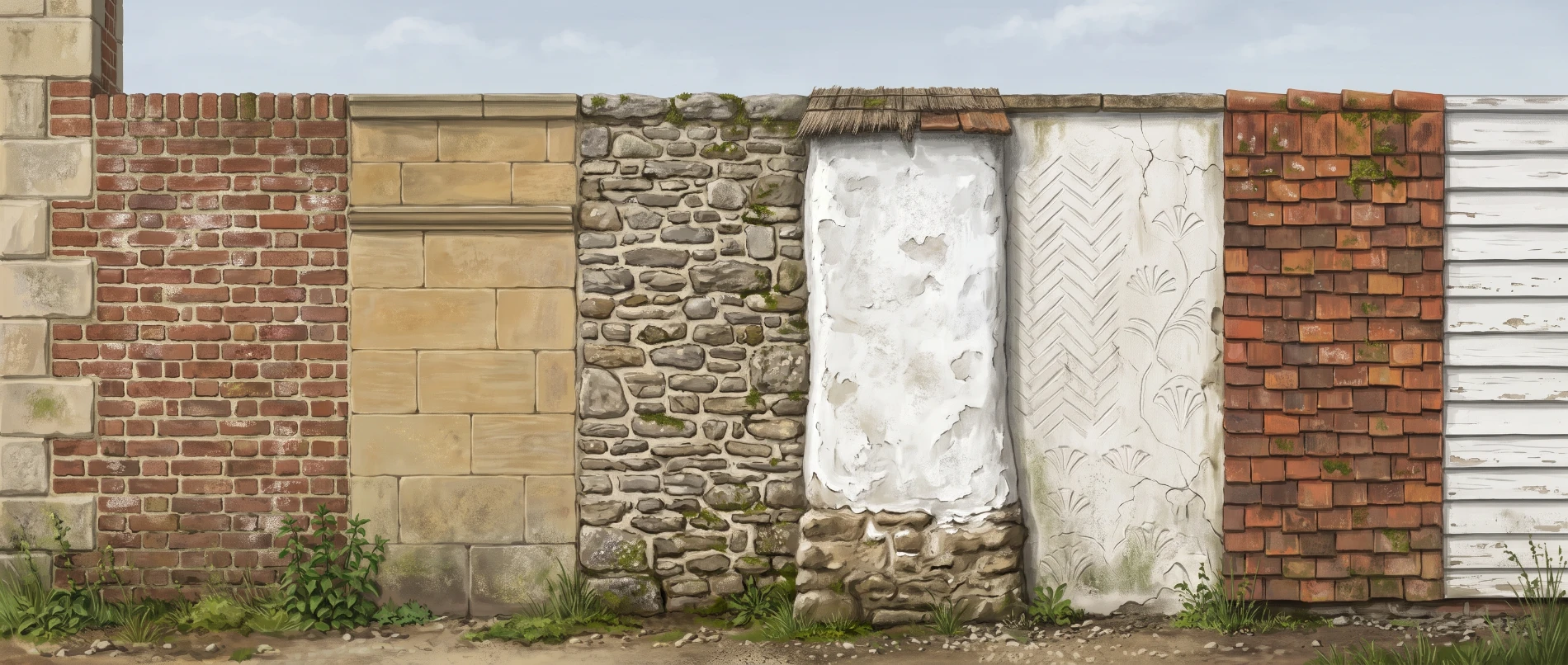
Pargeting is decorative plasterwork on the outside of a building, made by moulding or incising patterns into lime plaster while it is still soft. It is a traditional craft in Suffolk, Essex, Norfolk and Cambridgeshire.
Patterns include fans, flowers, birds, scrolls and geometric combs. Pargeting is often seen on timber-framed houses, where plaster covers the frame.
How to spot it
- Patterns in the plaster. Shapes are raised or cut into the wall surface, often in panels.
- Lime plaster walls. The surface is smooth lime plaster, usually painted in a pale colour.
- East Anglia. It is most common in Suffolk, Essex, Norfolk and parts of Cambridgeshire and Hertfordshire.
- Raised or incised. Raised pargeting is modelled in relief. Incised pargeting is scratched in with a comb or tool.
Where you will see it
- Norfolk and Suffolk flint and pargeting: the home of pargeting.
- Tudor house: plastered timber frames.
- Box-frame timber house: plastered frames across East Anglia.
- Mock Tudor house: revival versions in plaster.
What to know about pargeting
- Lime only: Pargeting is lime plaster, and cement or gypsum repairs fail and can damage the surrounding fabric.
- Specialist repairs: Repairs need a skilled plasterer who can match the pattern, mix and finish.
- Painting: Use breathable limewash or mineral paint, and avoid masonry paint that seals the surface.
- Listed buildings: Historic pargeting is protected fabric. See our listed buildings guide and ask the conservation officer before work.
For more definitions, see our wall materials and brickwork page and the architectural glossary.
Sources and further reading
- Historic England: Domestic 1, Vernacular Houses Listing guide covering traditional house types and materials
- Historic England: the National Heritage List for England Check whether a building is listed
External links open in a new tab. Last checked November 2026.
Frequently asked questions
What is the difference between pargeting and render?
Render is a general plaster coat on a wall. Pargeting is render that has been decorated with a pattern.
What does the word pargeting mean?
It comes from an old word for plastering. Today it means decorative plaster patterns on outside walls.
How is pargeting made?
A plasterer applies lime plaster to the wall, then models it or presses a comb, stamp or tool into the surface while it is soft.
Can pargeting be repaired or recreated?
Yes. A specialist can repair damaged areas and recreate lost patterns using lime plaster and traditional tools.