Cob is a traditional building material made from clay-rich subsoil mixed with sand, straw and water, which is built up in thick layers to form a solid wall. It is found mainly in Devon, Cornwall and parts of the South West and Wales.
Cob walls are thick, soft-edged and usually limewashed or lime-rendered. They work well when kept dry and breathable, and fail when covered with hard cement or when rain gets in at the top or bottom.
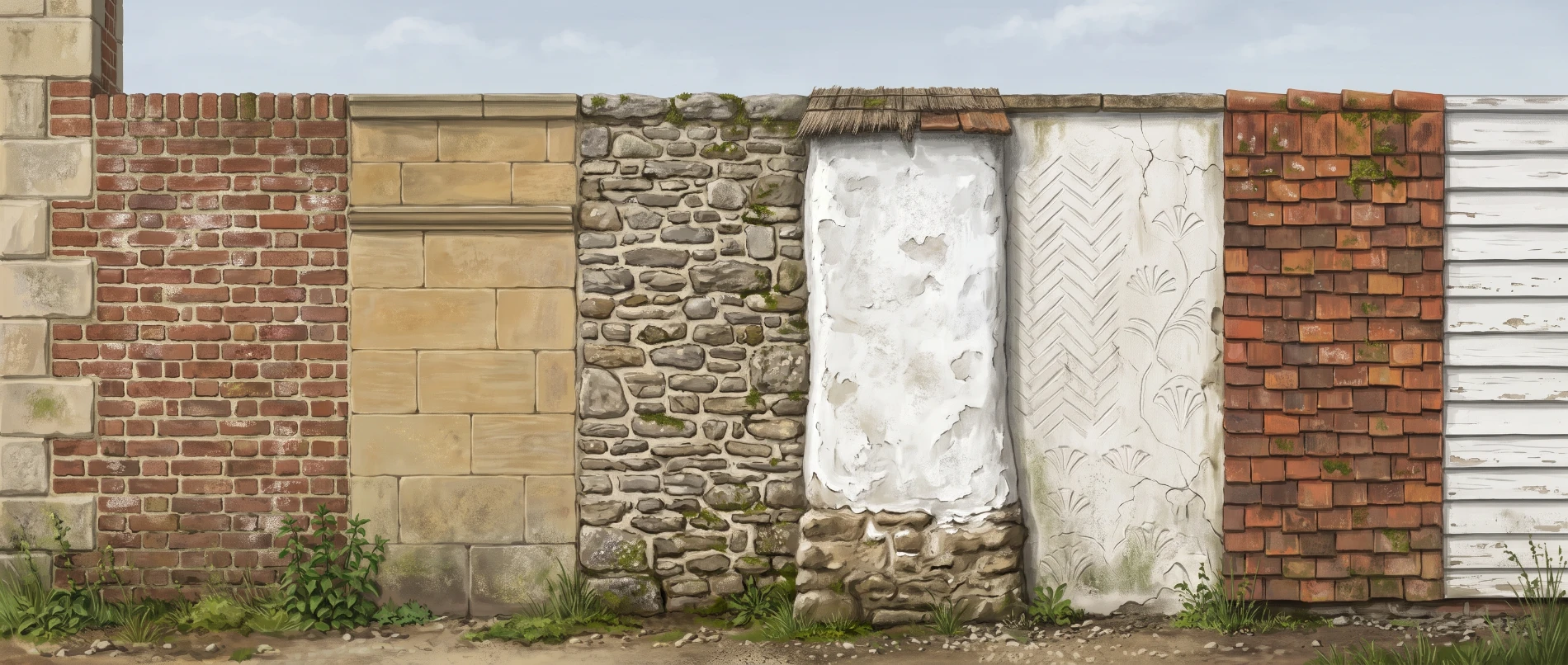
How to spot it
- Very thick walls. Cob walls are often 500mm thick or more, with deep window reveals.
- Rounded corners and soft lines. Walls look hand-shaped, with rounded edges and no sharp arrises.
- Limewash or lime render. The surface is usually painted or rendered white or pale, and rarely left bare.
- A stone plinth. Cob walls stand on a plinth, often stone, to keep the base out of the damp.
Where you will see it
- Devon cob and thatch house: the classic cob cottage.
- Thatched cottages: cob walls with thatched roofs.
- Chalk and clay lump: other earth-walled buildings.
- Cornish tin miners cottages: cob and stone in the far South West.
What to know before buying or repairing cob
- Keep it dry: A good roof with a generous overhang and a stone plinth are the main protection. Check gutters, drains and ground levels.
- No cement: Cement render and modern paint trap moisture and cause the cob to soften and fall. Use lime-based finishes.
- Survey it properly: Use a surveyor who knows earth buildings. See our home survey guide.
- Insurance and mortgage: Lenders and insurers can be wary of cob. Ask early, and get a specialist report.
For more definitions, see our wall materials and brickwork page and the architectural glossary.
Sources and further reading
- Historic England: Domestic 1, Vernacular Houses Listing guide covering traditional house types and materials
- Historic England: the National Heritage List for England Check whether a building is listed
External links open in a new tab. Last checked November 2026.
Frequently asked questions
What is cob made of?
Clay-rich subsoil, sand, straw and water. The straw binds the mix and helps it dry without cracking.
How long does a cob house last?
Many surviving cob houses are several hundred years old. They last as long as the roof and plinth keep the water out.
Is cob breathable?
Yes. Cob absorbs and releases moisture, so it needs breathable lime finishes rather than cement or plastic paint.
Can I extend a cob house?
Yes, but building control and a structural engineer will want to see how the new work interacts with the cob. Seek advice from someone who knows earth buildings.