A sash window has one or two frames, called sashes, that slide up and down inside a fixed frame. In the usual double-hung type both the upper and lower sash can move.
Sash windows became the standard British window from the late 17th century and define Georgian and Victorian houses. Traditional ones are balanced by cords and weights hidden in the frame.
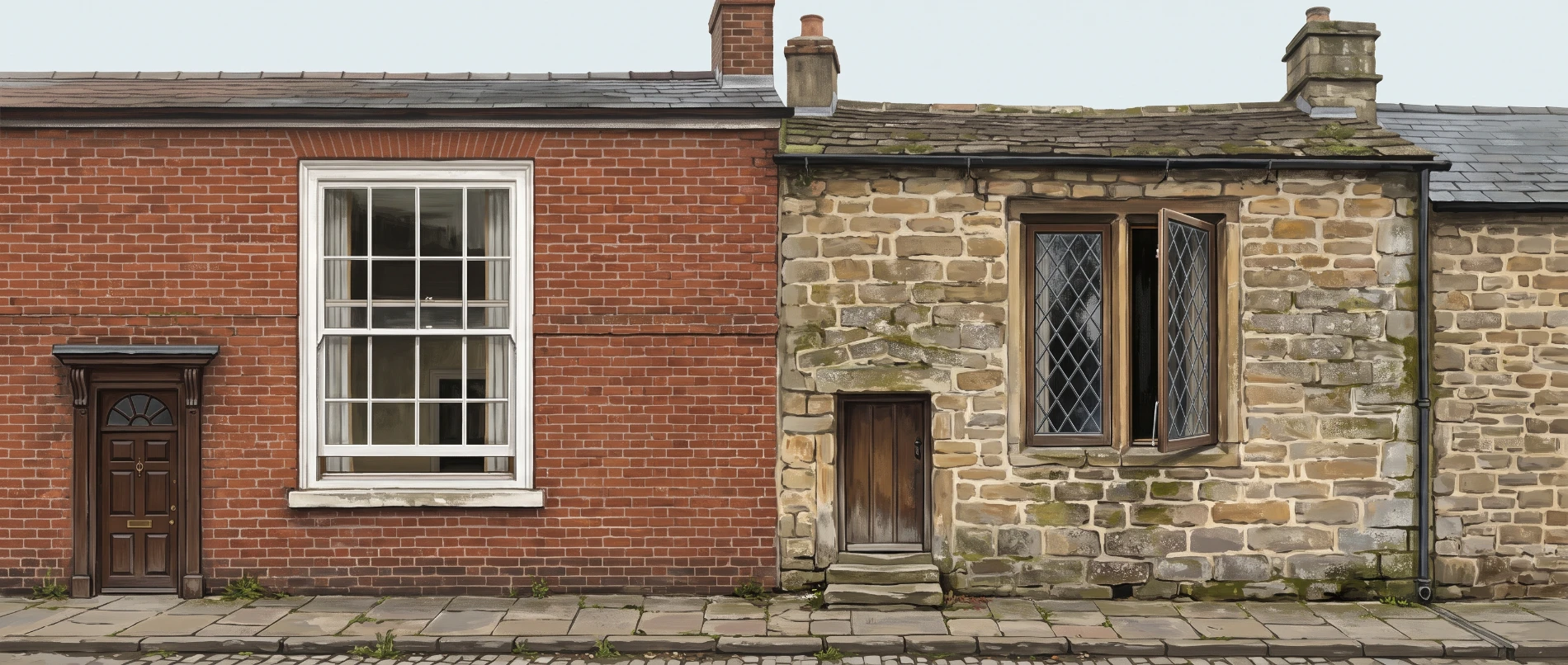
How to spot it
- It slides, it does not swing. A sash has no side hinges. It moves vertically in grooves.
- Glazing bars. Thin timber bars divide the glass into panes. Georgian sashes usually have many small panes, and Victorian ones often have larger panes with fewer bars.
- A thick box frame. Traditional sashes sit in a hollow box frame that holds the weights, so the frame sides look deep.
- Horns. Many Victorian sashes have small stubs, called horns, at the corners of the upper sash. They strengthen the joint under heavier glass.
Where you will see it
- Georgian townhouse and terrace: the classic setting, with small panes that shrink towards the top floor.
- Queen Anne house: early sashes with thick glazing bars.
- Victorian terrace: larger panes and horns.
- Edwardian house: sashes mixed with casements and bays.
What to know before repairing one
- Repair before replacing: Most sash problems are rotten sills, broken cords or paint-bound sashes, and all can be repaired. Original timber is often better quality than modern replacements.
- Draughts and noise: Draught-proofing strips and secondary glazing can improve comfort without changing the window, which suits listed buildings.
- Listed buildings and conservation areas: Replacing sash windows usually needs consent. See our listed building windows and doors guide.
- Building Regulations: Replacement windows in an existing home in England must meet energy rules and be certified or approved by building control.
For more definitions, see our types of window page and the architectural glossary.
Sources and further reading
- Historic England: Conserving Georgian and Victorian Terraced Housing Guidance on repairing and altering Georgian and Victorian terraces
- Historic England: the National Heritage List for England Check whether a building is listed
External links open in a new tab. Last checked November 2026.
Frequently asked questions
How does a sash window work?
In a traditional sash, each sash is attached by cords running over pulleys to a weight hidden in the box frame. The weight balances the sash, so it stays where you leave it.
Can sash windows be draught-proofed or double glazed?
Yes. Brush or compression strips cut draughts, and secondary glazing adds a second pane inside. Slimline double glazing can sometimes be fitted into existing sashes, but a listed building may not allow it.
Why do my sash windows stick or rattle?
Sticking is usually paint build-up, swollen timber or a broken cord. Rattling is usually worn beads or a loose fit. Both can normally be fixed by a joiner without replacing the window.
What is the difference between sash and casement windows?
A sash slides up and down and a casement swings on hinges. Our guide compares them side by side.