A mullion is a vertical bar, in stone, timber or metal, that divides a window into separate openings called lights. It is a structural part of the window, not just decoration.
A horizontal bar across the window is a transom. A glazing bar is different again, because it is a thin bar that holds panes of glass within a single sash or light.
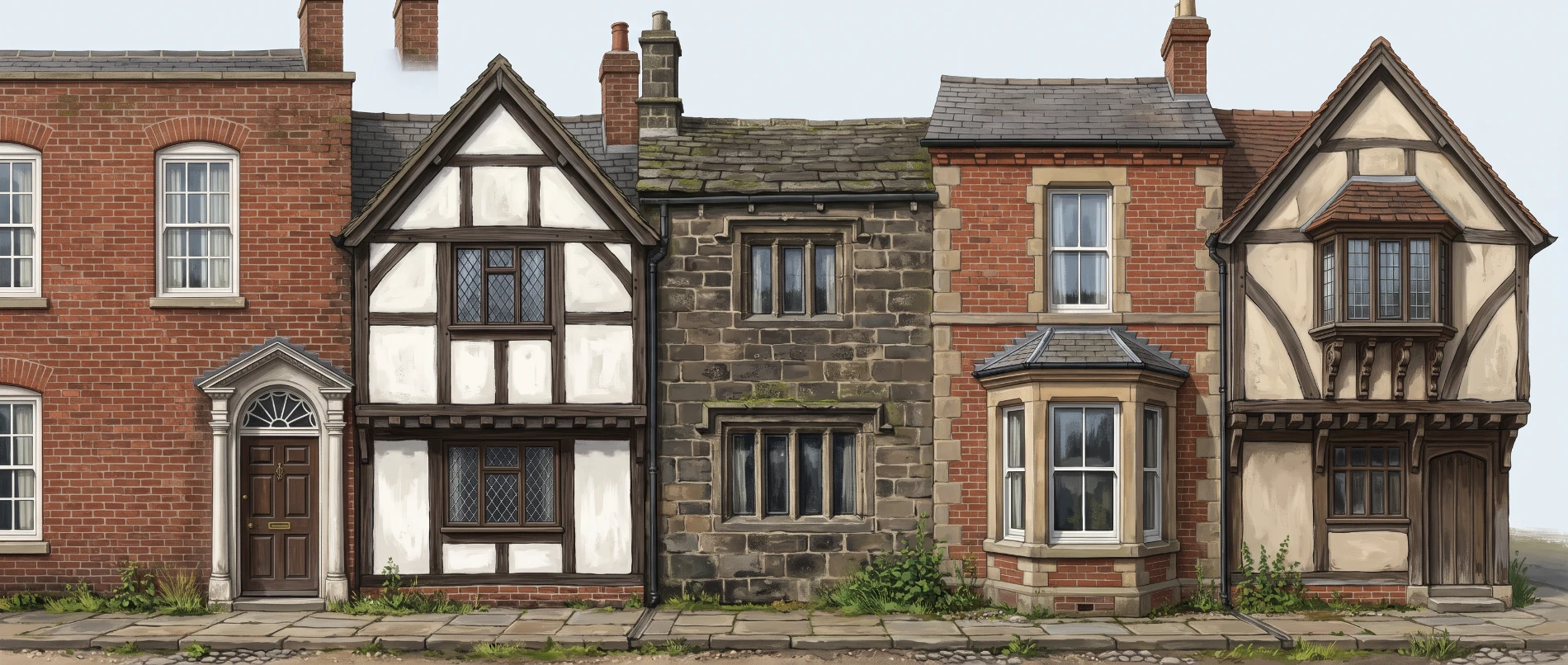
How to spot it
- A thick vertical divider. A mullion is wide enough to be part of the frame, unlike a thin glazing bar.
- Stone or timber. In stone buildings the mullions are carved from the same stone as the surround. In timber buildings they are oak or similar.
- Several lights in a row. The windows are often grouped in twos, threes or more, separated by mullions.
- A transom crossing it. Where a horizontal transom crosses a mullion, the window is called mullioned and transomed.
Where you will see it
- Tudor house: timber or stone mullioned windows.
- Elizabethan house: large mullioned and transomed windows.
- Jacobean house: stone mullions in grand houses.
- Yorkshire Dales stone house: stone-mullioned windows in local gritstone.
What to know about mullions
- Structural role: Stone mullions carry some of the load from above and hold the lights in position. Broken or leaning mullions need specialist repair.
- Weathering: Soft stone mullions erode at the bottom and joints. Repairs should use matching stone and lime mortar.
- Mullion, transom or glazing bar: Mullions are vertical, transoms are horizontal and glazing bars are thin dividers within a pane.
- Listed buildings: Original mullions are an important historic feature. Repairs and any replacements need care and may need consent.
For more definitions, see our types of window page and the architectural glossary.
Sources and further reading
- Historic England: Domestic 1, Vernacular Houses Listing guide covering traditional house types and materials
- Historic England: the National Heritage List for England Check whether a building is listed
External links open in a new tab. Last checked November 2026.
Frequently asked questions
What is the difference between a mullion and a transom?
A mullion is vertical and a transom is horizontal. Both are part of the frame of a larger window.
What is the difference between a mullion and a glazing bar?
A mullion is a structural divider between lights. A glazing bar is a thin bar that holds panes of glass within a light.
What does mullioned mean?
A mullioned window is divided into lights by mullions. Many Tudor, Elizabethan and Jacobean houses are described as having mullioned windows.
Why do old houses have mullioned windows?
Before large panes of glass were available, wide windows were built up from small lights held between mullions, and stone and oak could be used to make strong openings.