A casement window is hinged at one side and swings open like a door, usually outwards. It is held open by a stay and closed by a fastener.
It is the oldest window type that is still widely used. Medieval and Tudor windows are casements, and so are most windows fitted to houses from the 20th century onwards.
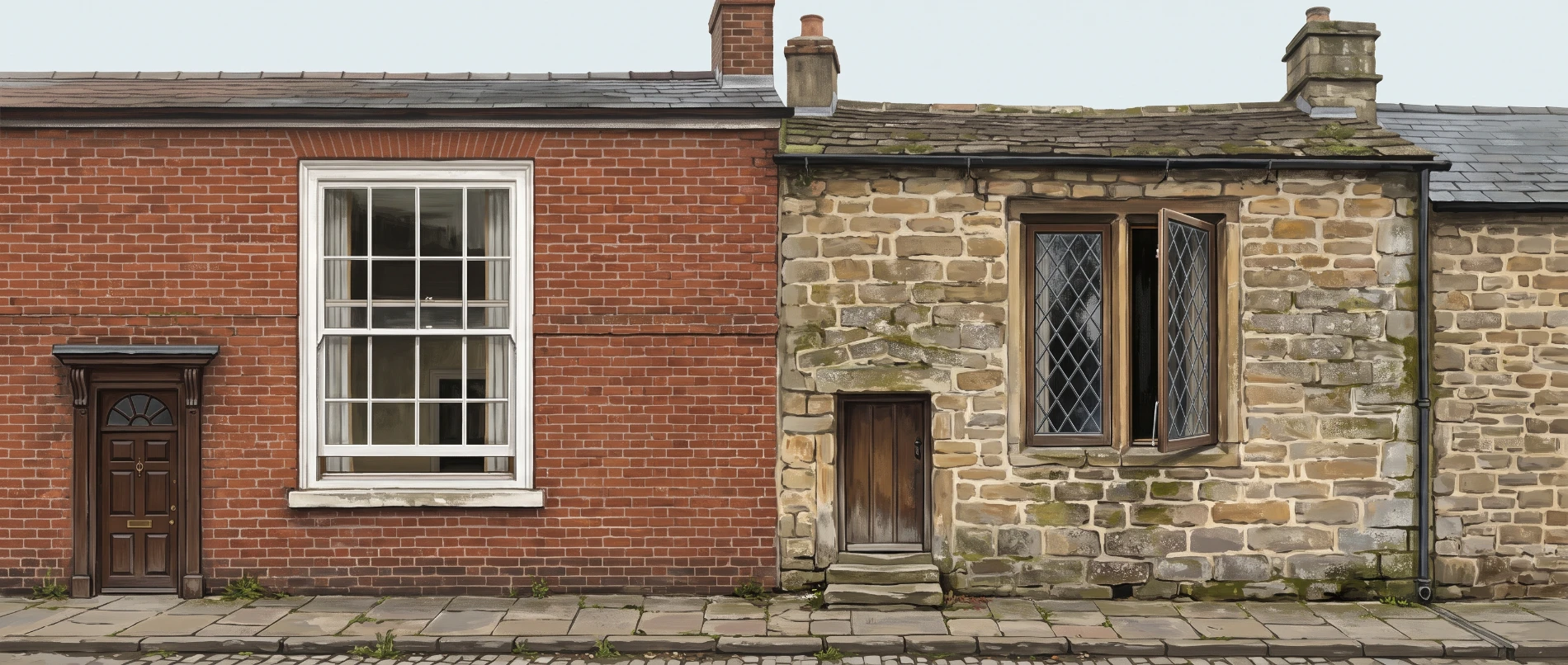
How to spot it
- It swings on hinges. The whole sash swings out or in. A top-hung casement hinges at the top, and the stay holds it open.
- Metal or timber frames. Older casements are timber or steel, and modern ones are often uPVC or aluminium.
- Leaded lights. Small panes held in lead strips are typical of older casements, particularly in stone cottages and Tudor-style houses.
- Stays and fasteners. A metal stay with holes, and a cockspur or similar fastener, are the usual ironmongery.
Where you will see it
- Tudor house: casements with leaded lights.
- Cotswold stone house: stone-mullioned casements.
- Arts and Crafts house: casements in timber or metal frames.
- Interwar suburban semi: the usual window of the period.
What to know before repairing one
- Timber and steel: Old timber casements rot at the bottom rail and sill, and steel casements rust. Both can usually be repaired, which suits old buildings better than replacing them.
- Fit and draughts: A casement closes against its frame, so a good seal is easy to achieve with modern draught strips.
- Escape and cleaning: A casement opens fully, which is useful for cleaning and as an escape route from a bedroom.
- Listed buildings: Changing the style, material or glazing pattern of casements usually needs consent. See our listed building windows and doors guide.
For more definitions, see our types of window page and the architectural glossary.
Sources and further reading
- Historic England: Domestic 1, Vernacular Houses Listing guide covering traditional house types and materials
- Historic England: the National Heritage List for England Check whether a building is listed
External links open in a new tab. Last checked November 2026.
Frequently asked questions
What is the difference between a casement and a sash window?
A casement swings on hinges and a sash slides up and down. Our comparison guide shows how to tell them apart.
What is a casement window used for?
It is a general-purpose window. It gives full ventilation when open, a good seal when closed and an unobstructed opening for cleaning or escape.
Are casement windows older than sash windows?
Yes. Casements were the usual window in medieval and Tudor buildings, and sashes came into use in Britain in the late 17th century.
Can I replace casement windows on a listed building?
Usually only with consent, and like-for-like timber replacements are the most likely to be approved. Check with the conservation officer first.