A Victorian villa is a detached or semi-detached house built from about 1850 to 1900 for the growing middle class, usually with gables, bay windows, decorative brickwork and a slate roof. It sits in its own garden on a suburban street.
Villas spread along new railway suburbs and around town edges. They often borrow details from other styles, such as Gothic windows or Italianate eaves, so villas vary widely in appearance.
c. 1850-1900
The band covers the middle and later Victorian period. Periods are drawn at equal width, so the line is not to scale.
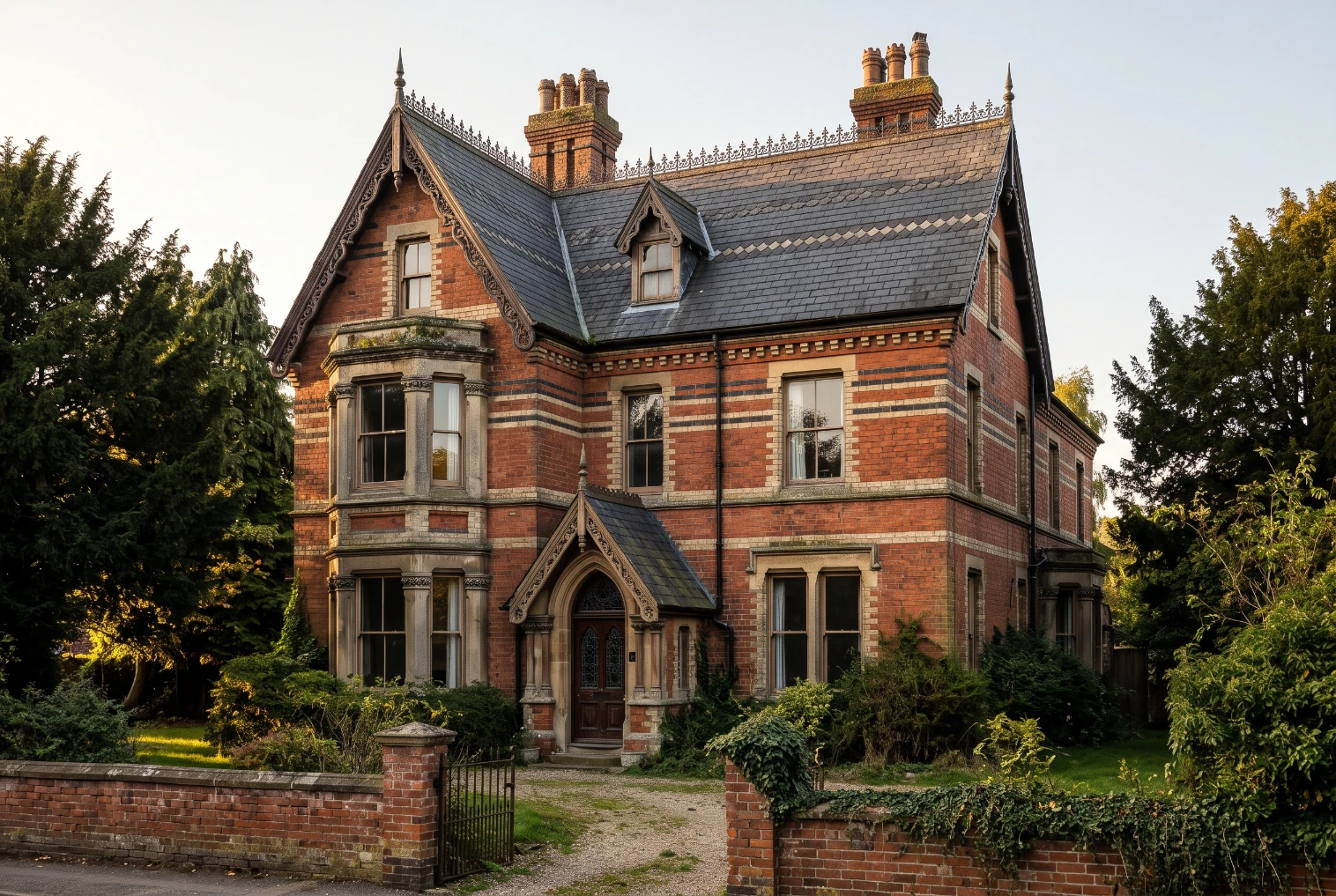
How to recognise it
| Feature | What to look for |
|---|---|
| Plan | A detached or semi-detached house with a hall, two or three reception rooms, bedrooms above and often servants rooms or a basement. |
| Walls | Brick, often with bands of buff or black brick, stone dressings and sometimes stucco on the ground floor. |
| Gables | Front-facing gables, often with decorative bargeboards and finials. |
| Windows | Tall sash windows with large panes, and two-storey bay windows with stone detail. |
| Roof | A slate roof, sometimes with patterned bands, and tall chimneys with ornamental pots. |
| Doorway | A porch with a pointed or round arch and a door with coloured glass. |
| Setting | A front garden, boundary wall and gateposts, with coach house or outbuildings in larger plots. |
Not sure what a term means? See our guides to sash and casement windows and bay, bow and oriel windows, or browse the full architectural glossary.
Where and when they were built
Villas were built for professionals, merchants and managers who could afford more space than a terrace. Pairs of semi-detached villas were common on suburban estates because they made good use of land while giving each house a garden.
The Historic England listing guide on suburban and country houses notes that the Victorian suburban house took many forms, from Italianate and Gothic to Queen Anne, which is why villas are so varied. Look at the design as a whole, not just one feature.
Victorian villa, terrace or Edwardian house?
- Victorian villa: about 1850 to 1900. A detached or semi-detached house with gables, bays and decorative brick.
- Victorian terrace: a row of smaller houses. See our Victorian terrace page.
- Gothic Revival: steeper and more consistently Gothic. See our Gothic Revival page.
- Queen Anne Revival: red brick with white sashes and varied rooflines. See our Queen Anne Revival page.
A villa often mixes styles, so use the date and the overall form, not one detail, to place it.
What to check when buying one
- Roof: patterned slate roofs and tall chimneys need regular maintenance. Check valleys and flashings.
- Bay windows: two-storey bays can move or leak. Check lintels, sills and the roof over the bay.
- Brickwork: decorative bands suffer from bad repointing. Use lime mortar and matching bricks.
- Basements and cellars: many have damp or flooding risk. See our damp and mould guide.
- Size and alterations: many villas have been split into flats or extended, so check consents and structure.
- Choose the right survey: use a surveyor who knows solid-wall Victorian buildings. See our home survey guide.
- Listed status and conservation areas: some Victorian houses are listed and many lie in conservation areas, where windows, roofs and fronts may be controlled. See our listed buildings guide.
Sources and further reading
- Historic England: Domestic 3, Suburban and Country Houses Listing selection guide covering Victorian and later houses
- Historic England: the National Heritage List for England Check whether a building is listed
External links open in a new tab. Last checked November 2026.
Frequently asked questions
What is a Victorian villa?
A detached or semi-detached house built between about 1850 and 1900 for the middle class, with gables, bay windows and decorative brickwork.
How big is a Victorian villa?
They vary, but most have two or three reception rooms, several bedrooms and sometimes servants rooms or a basement.
What is the difference between a villa and a terrace?
A villa is detached or semi-detached and sits in its own garden, while a terrace is a row of joined houses.
Are Victorian villas solid wall?
Yes. Most have solid brick or stone walls and no cavity.
Are Victorian villas listed?
Some are, and many lie in conservation areas. Check the National Heritage List for England.