Estate cottages and tied farm cottages are houses built by a landowner or farmer to house workers, usually in pairs or short rows and in a matching style. A tied cottage went with the job, so the worker lost the home when the job ended.
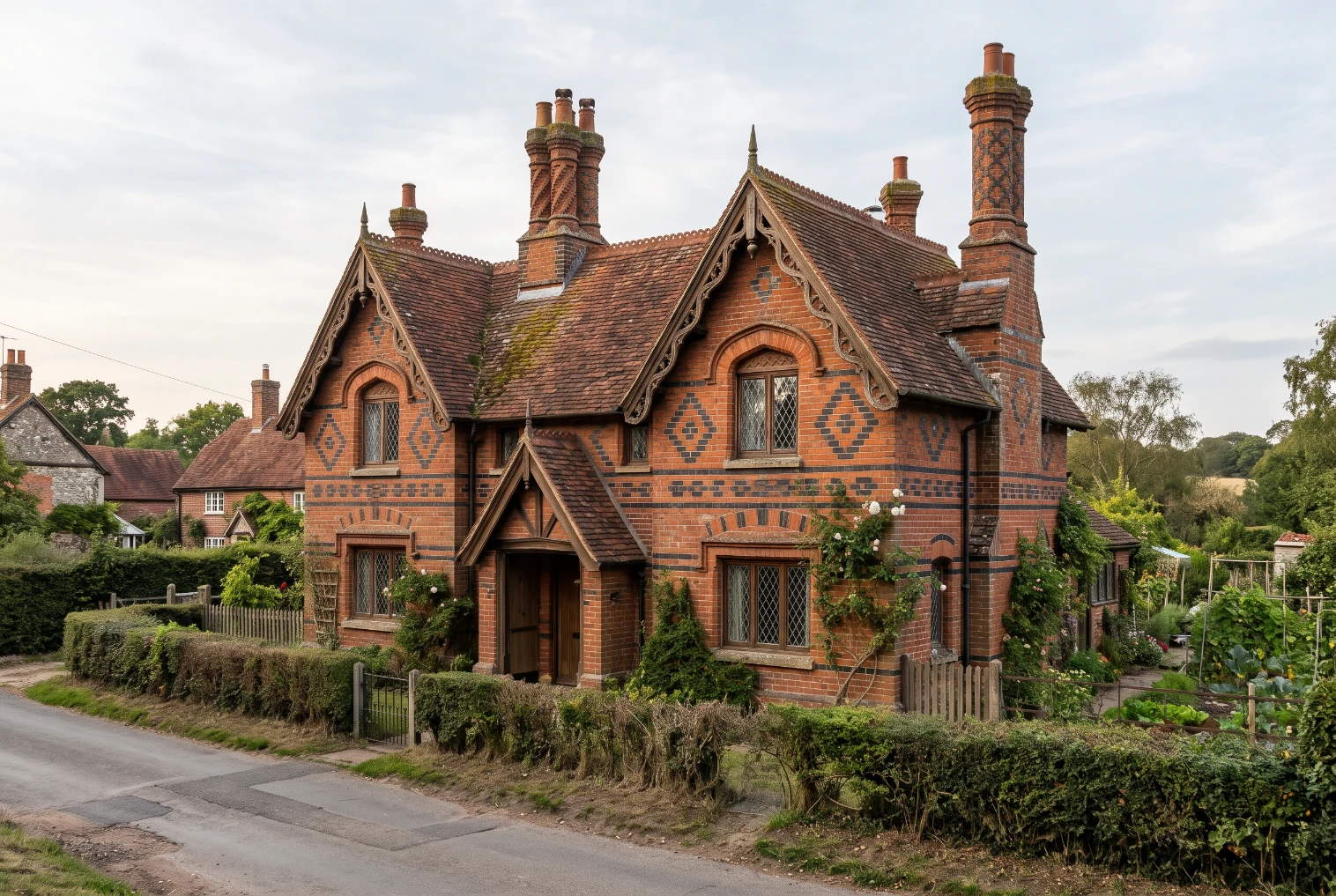
Many estates built picturesque cottages in the 19th century, with decorative brickwork, gables and tall chimneys, to show their good taste and care. Some, such as Blaise Hamlet near Bristol, were designed by well-known architects.
c. 1800-1914
Regional building traditions have no single start date, so the band shows the main period of building. Periods are drawn at equal width, so the line is not to scale.
How to recognise it
| Feature | What to look for |
|---|---|
| Form | Pairs or short rows built to one design, often symmetrical. |
| Walls | Brick, stone or flint, often with patterned or coloured brick and stone details. |
| Roof | Steep tile or slate roofs, with gables and tall decorative chimneys. |
| Windows | Casement windows, often with diamond panes, and carved bargeboards. |
| Garden | A garden or allotment for growing food, and sometimes a pigsty or privy. |
| Estate marks | A crest, initials or a date plaque for the estate. |
Not sure what a term means? See our guides to sash and casement windows and hipped, gable and mansard roofs, or browse the full architectural glossary.
Where and when they were built
Landowners built cottages to attract and keep workers, to improve conditions, and to show their status. Many estates followed picturesque designs that mixed Tudor, Gothic and cottage styles.
The Historic England listing guide on vernacular houses covers many types of rural housing, including estate cottages. Where a cottage was built by a notable architect or forms part of a planned estate village, it is more likely to be listed.
Estate cottage, model village or coastguard cottage?
- Estate cottages: pairs and rows built by a landowner for workers.
- Model villages: whole planned villages. See our model villages page.
- Coastguard cottages: matching rows built by the coastguard service. See our coastguard cottages page.
- Old English and Tudorbethan revival: a style often used for estate cottages. See our Old English revival page.
Many tied cottages were sold off as farms changed, and many are now ordinary private homes.
What to check when buying one
- Agricultural occupancy conditions: some cottages have a planning condition that limits occupation to people working in agriculture. Check the planning history.
- Shared services: water, drainage and access may be shared with the farm or estate. Check the rights and costs.
- Solid walls and damp: most have solid walls. See our damp and mould guide.
- Small rooms and extensions: rooms are small, and extensions may need consent. Check the planning rules.
- Pairs and party walls: check the party wall with the neighbour and who maintains shared parts.
- Choose the right survey: use a surveyor with experience of traditional buildings. See our home survey guide.
- Listed status and conservation areas: many surviving traditional houses are listed or lie in conservation areas, and most changes need consent. See our listed buildings guide.
Sources and further reading
- Historic England: Domestic 1, Vernacular Houses Listing selection guide covering traditional regional houses
- Historic England: the National Heritage List for England Check whether a building is listed
External links open in a new tab. Last checked November 2026.
Frequently asked questions
What is a tied cottage?
A house that goes with a job, usually in farming, so the worker had to leave when the job ended.
What is an estate cottage?
A cottage built by a landowner for estate workers, often in a matching, picturesque style.
Can I buy a former estate cottage?
Yes, many are now sold as private homes, though some have planning conditions that limit who can live in them.
What is an agricultural occupancy condition?
A planning condition that restricts a house to people working or last working in agriculture.
Are estate cottages listed?
Many are, especially by known architects or in planned estate villages. Check the National Heritage List for England.