Weatherboarding is a wall cladding made of horizontal timber boards that overlap each other, so rain runs off. It is also called clapboard, and it is common in Kent, Sussex and Essex.
It is usually painted white or a pale colour, and it covers a timber frame or a brick or block wall. It is a light, cheap, repairable finish that suits a damp climate.
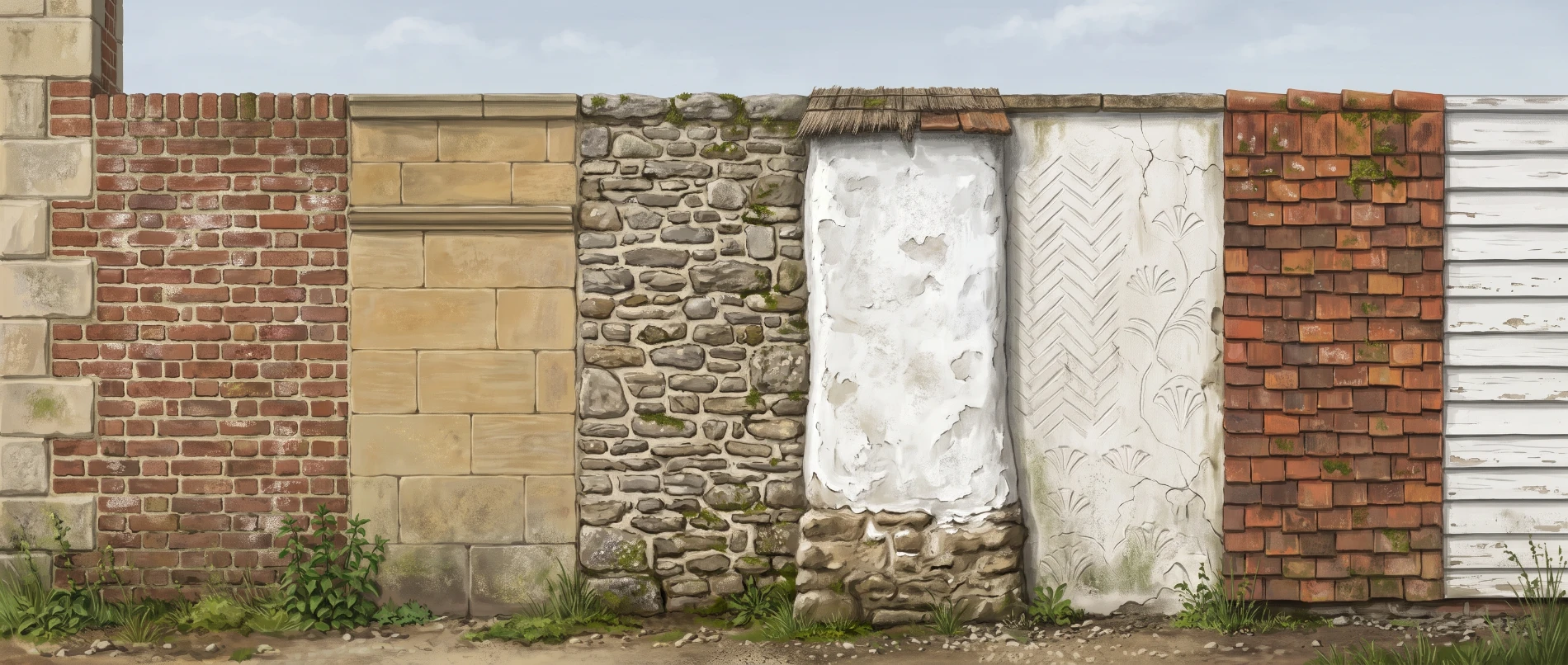
How to spot it
- Overlapping horizontal boards. Each board overlaps the one below, creating regular shadow lines.
- Painted or tarred. It is traditionally white, cream or black.
- On barns and cottages. Weatherboarding is common on barns, mills, oast houses and cottages in the south-east.
- Feather edge. The most common boards are thicker at one edge and thin at the other, laid so the thick edge overlaps.
Where you will see it
- Kentish weatherboard and oast: the classic weatherboarded house.
- Sussex and Weald tile-hung house: weatherboard and tile hanging together.
- Railway cottages: weatherboarded station buildings and cottages.
- Plotland and railway carriage homes: cheap timber cladding.
What to know about weatherboarding
- Rot at the base: Boards at the bottom of the wall rot where they touch the ground or splash from rain. Check low boards and sills.
- Repainting: Weatherboard needs regular painting or staining, usually every 5 to 8 years, to stay sound.
- Fire and insulation: Timber cladding may need fire consideration near boundaries, and the wall behind may need insulation.
- Replacing boards: Individual boards can be replaced without taking the whole wall down. Use timber of the same profile and species.
For more definitions, see our wall materials and brickwork page and the architectural glossary.
Sources and further reading
- Historic England: Domestic 1, Vernacular Houses Listing guide covering traditional house types and materials
- Historic England: the National Heritage List for England Check whether a building is listed
External links open in a new tab. Last checked November 2026.
Frequently asked questions
What is the difference between weatherboarding and cladding?
Weatherboarding is a type of cladding. It is made of overlapping horizontal boards, and other cladding can be vertical boards, tiles or panels.
Is weatherboarding the same as clapboard?
In the UK it is usually called weatherboarding, and in the USA clapboard. They are the same type of overlapping board.
How long does weatherboarding last?
With regular painting and repair it can last a hundred years or more. Without care, the bottom boards can rot in a few decades.
Do I need planning permission to replace weatherboarding?
Like-for-like repair usually does not. Changing the material or colour on a listed building or in a conservation area can need consent.