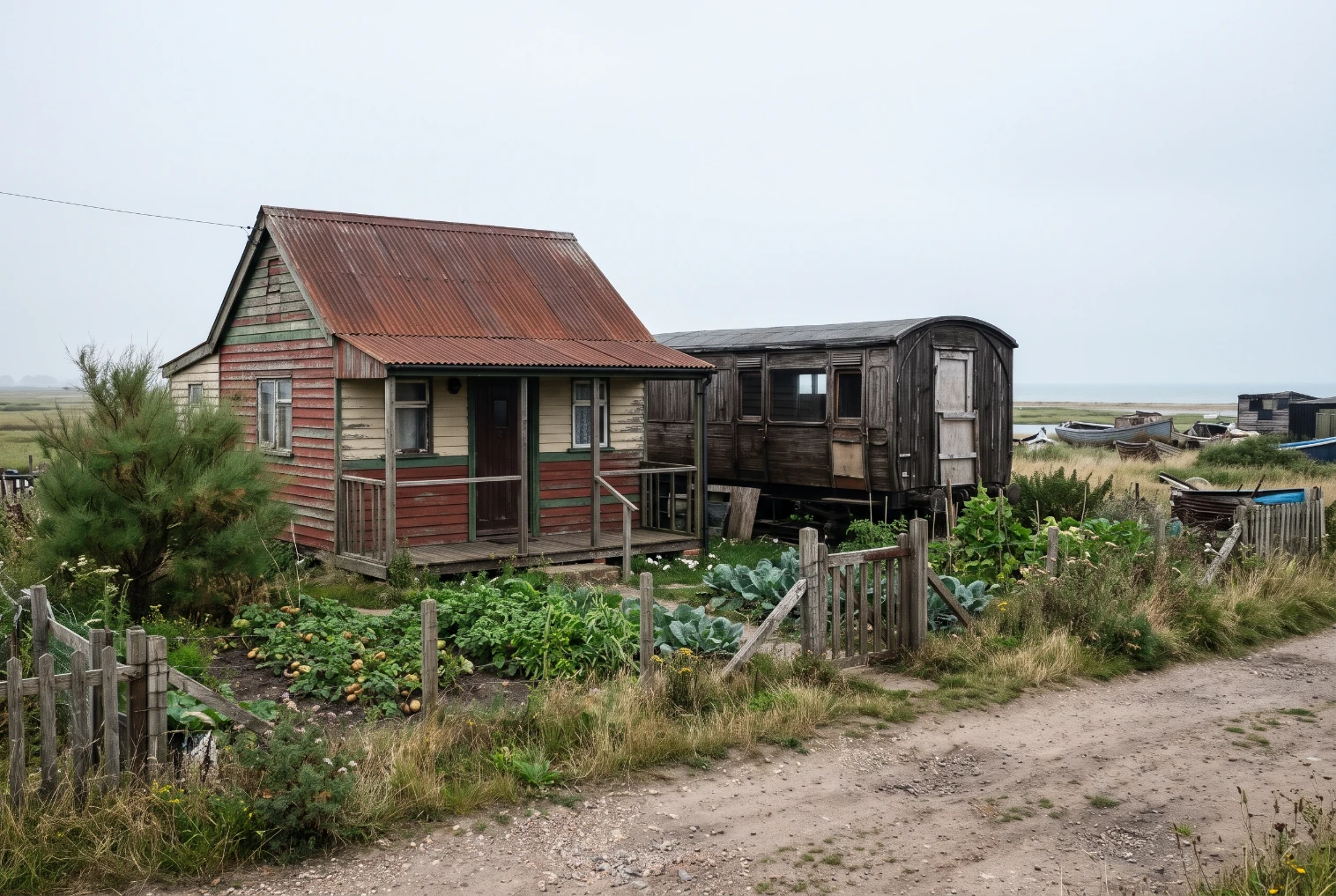
Plotland homes are small, self-built houses, huts and bungalows put up from about 1900 to 1945 on cheap plots of farmland, mainly in Essex and Sussex. Some were made from old railway carriages, timber, corrugated iron and reclaimed materials.
Land was sold cheaply in small plots, often to Londoners who wanted a place by the sea or in the country. Most began as holiday shacks, and many later became permanent homes. Few were built to normal standards, and many were later cleared.
c. 1900-1945
Regional building traditions have no single start date, so the band shows the main period of building. Periods are drawn at equal width, so the line is not to scale.
How to recognise it
| Feature | What to look for |
|---|---|
| Materials | Timber boards, corrugated iron, asbestos sheets and reclaimed materials. |
| Railway carriages | Old railway carriages set on plots, sometimes with an extension added. |
| Roof | Corrugated iron, felt or tiles, often low-pitched. |
| Plan | Small, simple, and added to over the years as the owner could afford. |
| Plot | A small unmade plot with a garden, fruit trees and a shed. |
| Setting | Unmade tracks and marshy land, with no mains services in the early years. |
Not sure what a term means? See our guides to parts of a roof, or browse the full architectural glossary.
Where and when they were built
Plotlands were an unplanned form of housing, and the post-war Town and Country Planning Act of 1947 brought them under planning control. Many were cleared or redeveloped, but some survive, such as the Langdon Hills plotlands in Essex and railway-carriage homes at Shoreham Beach in Sussex.
Plotland housing was built outside normal planning, so its legal status can be complicated. Buyers need to check the planning and building regulations history of any plotland-era property.
Plotland, bungalow or caravan?
- Plotland homes: self-built shacks, bungalows and carriage homes from 1900 to 1945.
- Interwar suburban semi: the planned, mortgaged version of the same period. See our interwar suburban semi page.
- Post-war prefab: a factory-made emergency home. See our post-war prefab page.
- Self-build contemporary: a modern form of building your own home. See our self-build contemporary page.
Very few plotland homes remain in their original form, and many have been replaced by modern bungalows and houses.
What to check when buying one
- Planning and building regulations history: check whether the building has planning permission or a lawful development certificate, and whether alterations were approved.
- Flood risk and coastal erosion: many plots are low-lying. Check flood maps and insurance.
- Condition and asbestos: thin timber, corrugated iron and asbestos sheets age badly. Get a thorough survey.
- Services and access: check mains water, drainage and electricity, and the condition of unmade tracks.
- Mortgage and insurance: some lenders will not lend on plotland homes. Ask early.
- Choose the right survey: use a surveyor with experience of traditional buildings. See our home survey guide.
- Listed status and conservation areas: many surviving traditional houses are listed or lie in conservation areas, and most changes need consent. See our listed buildings guide.
Sources and further reading
- Historic England: the National Heritage List for England Check whether a building is listed
External links open in a new tab. Last checked November 2026.
Frequently asked questions
What is a plotland?
A small plot of cheap land, usually bought for a holiday home or smallholding, on which a simple self-built house was put up.
Where are plotlands?
Mainly in Essex and Sussex, but also in other parts of the south-east and the coast.
What are railway-carriage homes?
Homes made from old railway carriages, set on plots and sometimes extended.
Can I get a mortgage on a plotland home?
It can be hard, and depends on the construction and the lender.
Are plotland buildings listed?
Very few are. Some plotland areas are conservation areas or nature reserves.