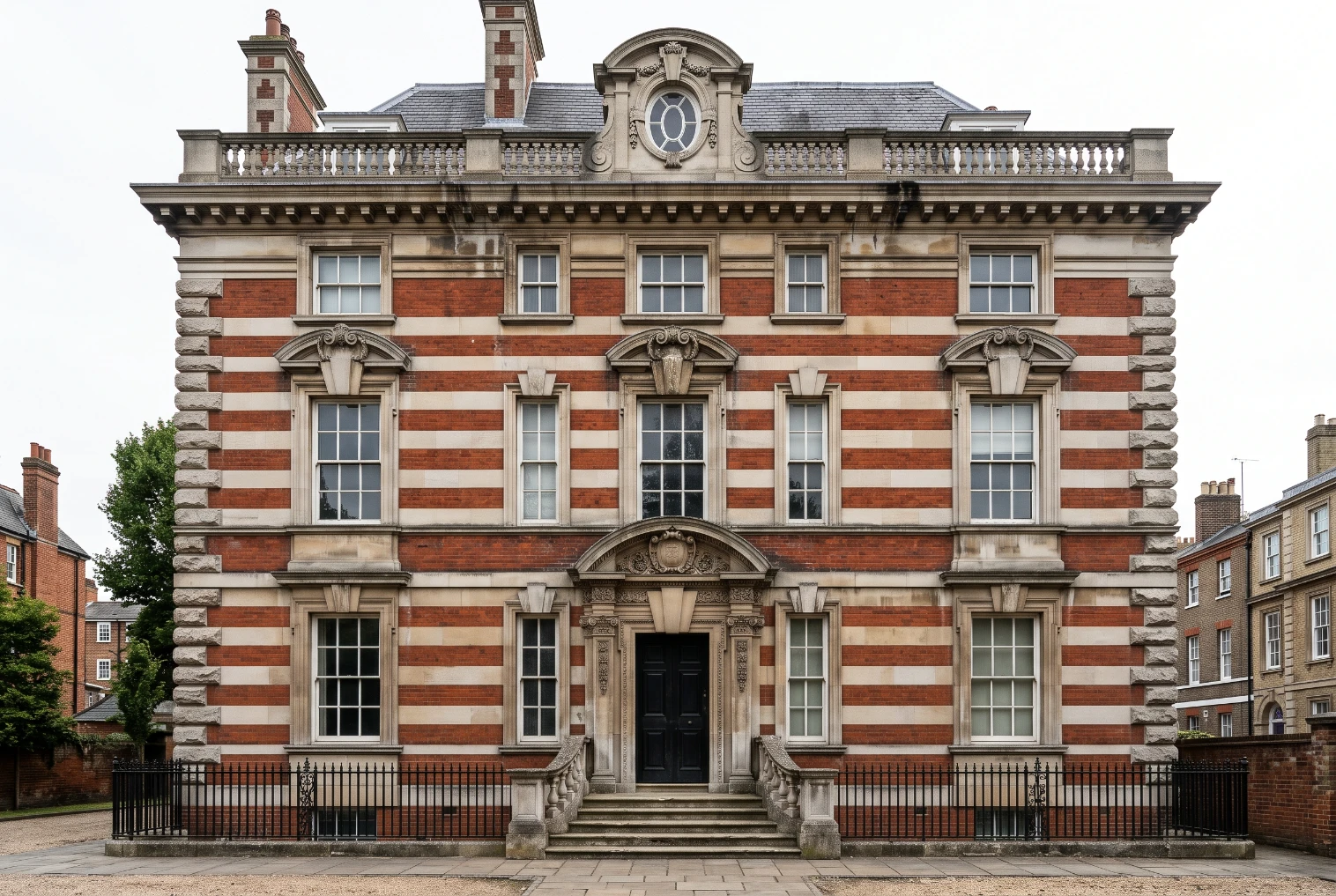
Edwardian Baroque is a grand, heavy classical style of about 1900 to 1915, with banded stonework, large keystones, broken pediments and strong cornices. It is mainly found on town halls, banks and offices, but a few large town and country houses use it.
It was sometimes called Wrenaissance because it drew on the English Baroque of Christopher Wren and his successors. It is more theatrical and more monumental than Georgian and Edwardian domestic design.
c. 1900-1915
The band starts at the end of the Victorian period and runs through the Edwardian years. Periods are drawn at equal width, so the line is not to scale.
How to recognise it
| Feature | What to look for |
|---|---|
| Banded masonry | Horizontal bands of stone and brick, or heavily rusticated stone, giving a strong striped effect. |
| Doorcase | A large stone doorcase, often with columns and a broken or curved pediment. |
| Keystones | Oversized keystones over windows and doors, often carved. |
| Cornice | A heavy projecting cornice and sometimes a balustraded parapet. |
| Roof features | Cupolas, domes, round oval windows and tall chimneys. |
| Windows | Sash windows with small panes, often with heavy surrounds and sometimes a large central window. |
| Scale | A monumental, theatrical front on a large house or a civic building. |
Not sure what a term means? See our guides to sash and casement windows and classical architecture terms, or browse the full architectural glossary.
Where and when they were built
Edwardian Baroque suited the confidence of the period, and was used for town halls, hotels, banks, offices and department stores. Domestic examples are rarer and are usually large houses for wealthy owners.
The Historic England list entry for Hoyle Court in Baildon describes an Edwardian Baroque house of 1912 for a mill owner, built in stone, and the entry for West India House in Bristol describes an Edwardian Baroque building in red brick with limestone dressings. West India House is a commercial building, but it shows the style well.
Edwardian Baroque, Palladian or Neo-Georgian?
- Edwardian Baroque: about 1900 to 1915. Heavy, theatrical and monumental, with banded masonry and big keystones.
- Palladian: earlier, calmer and more strictly symmetrical. See our Palladian house page.
- Neo-Georgian: plainer and quieter than Baroque. See our Neo-Georgian house page.
- Edwardian house: the common domestic type, lighter and more modest. See our Edwardian house page.
Because this style is mainly civic, a house in the style is rare. Many buildings you might see are former offices, banks or hotels.
What to check when buying one
- Stone and brick bands: banded masonry weathers differently and cracks where metal cramps rust. Check joints and carvings.
- Heavy cornices: projecting cornices and parapets are exposed and may need repair.
- Roof features: domes, cupolas and flat sections rely on lead and need regular maintenance.
- Size and conversion: many buildings in this style have been converted to offices or flats, so check consents and structure.
- Damp: large solid walls need breathable repairs. See our damp and mould guide.
- Choose the right survey: a surveyor who knows 20th-century construction will spot the problems typical of the period. See our home survey guide.
- Listed status and conservation areas: most houses of this period are not listed, but some are, and many lie in conservation areas with controls on fronts and windows. See our listed buildings guide.
Sources and further reading
- Historic England: Hoyle Court, Baildon A Grade II Edwardian Baroque house of 1912
- Historic England: West India House, Bristol A Grade II Edwardian Baroque building in red brick with limestone dressings
- Historic England: the National Heritage List for England Check whether a building is listed
External links open in a new tab. Last checked November 2026.
Frequently asked questions
What is Edwardian Baroque?
A grand classical style of about 1900 to 1915, with heavy detail, banded masonry, big keystones and broken pediments.
Why is it called Wrenaissance?
Because it looked back to the English Baroque of Christopher Wren, and mixed it with Renaissance ideas.
Are there Edwardian Baroque houses?
A few, usually large town houses and country houses for wealthy owners. Most examples are civic or commercial.
What is banded masonry?
Walls with horizontal bands of stone, or alternate stone and brick, giving a striped look.
Are Edwardian Baroque buildings listed?
Many are, especially town halls and banks. Check the National Heritage List for England.