An early Modernist house is a house of the 1930s with plain white walls, a flat roof, large steel-framed windows and no decoration. The design is based on function and clean geometry, not on historical styles.
Modernist houses were rare in Britain and often designed by architects for clients who wanted something new. Many were built in concrete or brick with white render, and some were designed by architects who had come from Europe.
1930s
The band covers the 1930s, at the end of the interwar years. Periods are drawn at equal width, so the line is not to scale.
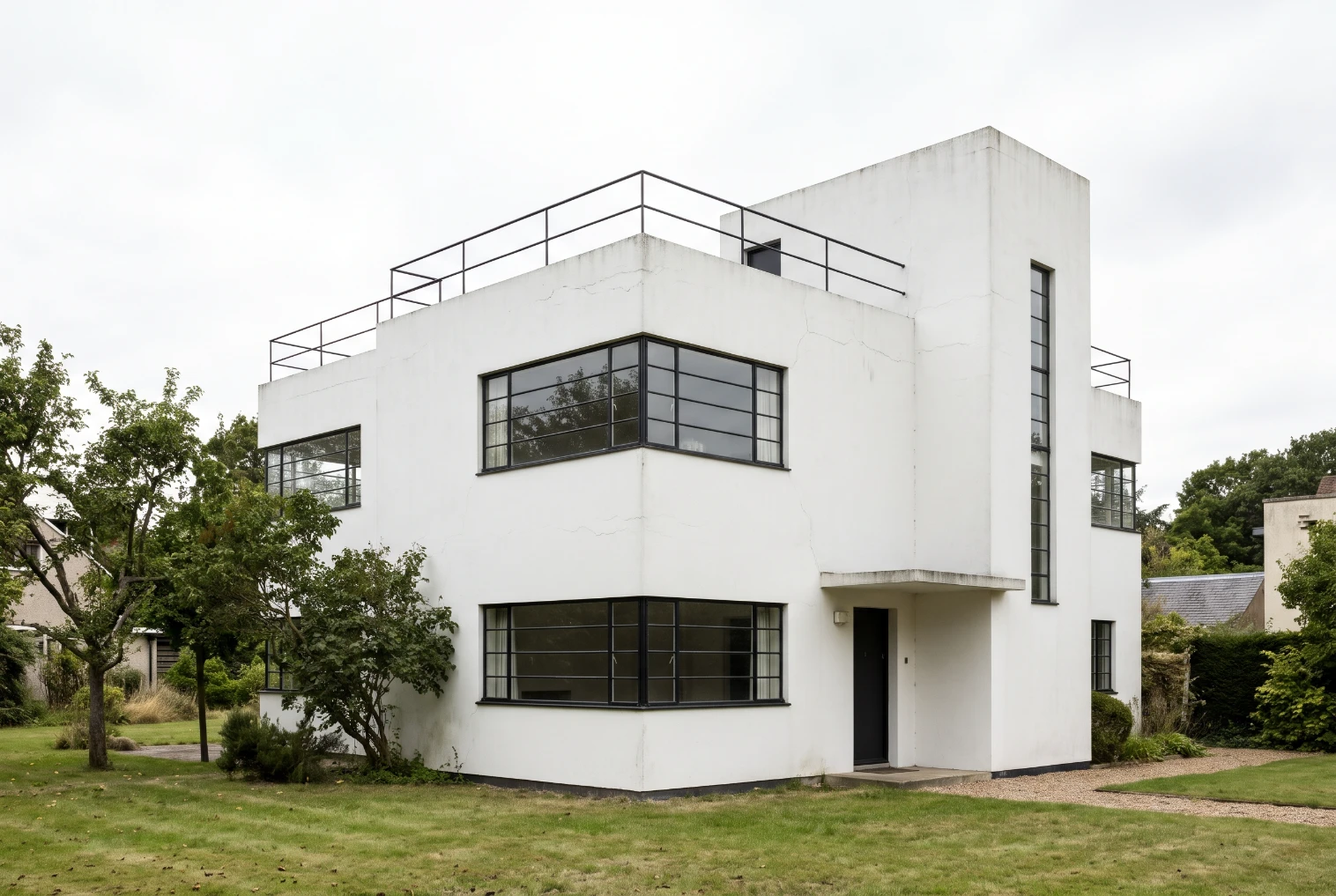
How to recognise it
| Feature | What to look for |
|---|---|
| Form | Simple cubic blocks, often stacked or set at different heights, with no pitched roof. |
| Walls | Plain white render over brick, blockwork or concrete, with no cornice or ornament. |
| Roof | A flat roof, often used as a terrace with a thin railing. |
| Windows | Large steel-framed windows, in horizontal bands or whole-wall glazing. |
| Entrance | A flat concrete canopy over a plain door, sometimes with a curved stair tower. |
| Plan | Open and flexible interiors, built for light, air and a link with the garden. |
| Construction | Reinforced concrete, steel or brick with render, which was new and unusual for houses. |
Not sure what a term means? See our guides to render, stucco, roughcast and pebbledash and classical architecture terms, or browse the full architectural glossary.
Where and when they were built
Modernism in Britain was influenced by European architects and was promoted by a small group of architects in the 1930s. The Crittall company built a group of cubist houses at Silver End in Essex between 1927 and 1930, and architects such as Berthold Lubetkin and Serge Chermayeff designed other early examples.
The Historic England listing guide on modern houses and housing explains how early Modernist houses are assessed for listing and notes the importance of intact examples. Many have been altered over time, which is why the survivors are valuable.
Early Modernism, Streamline Moderne or Art Deco?
- Early Modernism: the 1930s. Plain white boxes, flat roofs, steel windows and no ornament.
- Streamline Moderne: rounder and more like a ship. See our Streamline Moderne page.
- Art Deco: more decorative. See our Art Deco house page.
- Modern houses after the war: later, with more varied materials. See the later sections of our architectural styles hub.
Many early Modernist houses have been extended, re-roofed and given new windows, so the original form may be partly hidden.
What to check when buying one
- Flat roof: early flat roofs often leak. Check the covering, the drainage and the condition of the structure below.
- Steel windows: original steel windows rust and distort, and are hard and costly to repair. Check them closely.
- Concrete and render: check for concrete carbonation, rusting reinforcement and cracked or blown render.
- Condensation and insulation: thin walls and large windows make these houses hard to heat. See our damp and mould guide.
- Specialist advice: use a surveyor and builders with experience of 1930s Modernist houses.
- Choose the right survey: a surveyor who knows 20th-century construction will spot the problems typical of the period. See our home survey guide.
- Listed status and conservation areas: most houses of this period are not listed, but some are, and many lie in conservation areas with controls on fronts and windows. See our listed buildings guide.
Sources and further reading
- Historic England: Domestic 4, Modern Houses and Housing Listing selection guide covering 20th-century houses and housing
- Historic England: the National Heritage List for England Check whether a building is listed
External links open in a new tab. Last checked November 2026.
Frequently asked questions
What is an early Modernist house?
A house of the 1930s with plain white walls, a flat roof, large steel windows and no ornament.
Are Modernist houses common in Britain?
No. They are rare, and most were one-off houses for individual clients.
Why do flat roofs cause problems?
Early flat roofs used materials and details that wear out, and drainage was often poor.
What was Silver End?
A village in Essex built by the Crittall company, which includes a group of Modernist cubist houses built between 1927 and 1930.
Are early Modernist houses listed?
Many are, because they are rare and important. Check the National Heritage List for England.