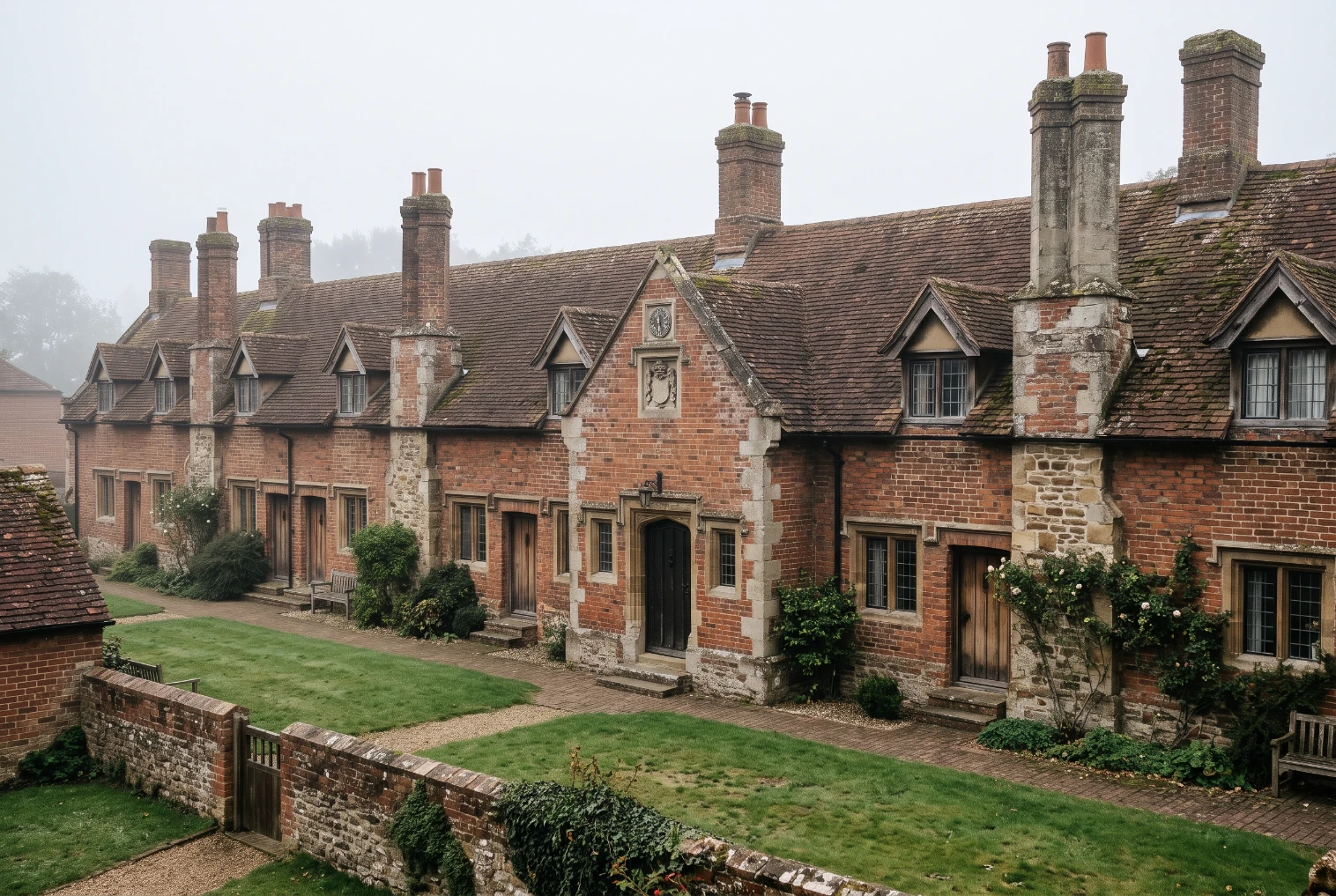
Almshouses are small homes built by a charity, guild or benefactor to house poor or elderly people, usually in a row or around a courtyard with a chapel or central building. They have been built in England and Wales from the Middle Ages to the present day.
Most are still run by charities, which let the homes to residents, usually older people on low incomes. Because of this, almshouses are rarely sold on the open market, and most are listed buildings.
c. 1500-1900
Regional building traditions have no single start date, so the band shows the main period of building. Periods are drawn at equal width, so the line is not to scale.
How to recognise it
| Feature | What to look for |
|---|---|
| Plan | A row or three sides of a courtyard, with a small home for each resident. |
| Walls | Brick or local stone, depending on the region, with a plain, uniform look. |
| Roof | Tile, stone slate or slate, with a tall chimney for each home. |
| Windows | Mullioned or casement windows, small and regular. |
| Chapel or hall | A central chapel, hall or gatehouse, often with a clock or coat of arms. |
| Setting | A courtyard with lawns and a path, in or near a town or village. |
Not sure what a term means? See our guides to sash and casement windows and parts of a roof, or browse the full architectural glossary.
Where and when they were built
Almshouses were founded by wealthy individuals, guilds and religious bodies to care for the poor or old. Many carry the name and arms of their founder, and the buildings were often designed to be attractive and dignified.
Historic England has published advice on historic almshouses and managing change. It notes that almshouses of all types have been listed since the start of listing, and the Gamlingay almshouses, a terrace of ten, are listed Grade II*.
Almshouses, estate cottages or model villages?
- Almshouses: charity homes for older people, usually around a courtyard.
- Tied farm cottages and estate cottages: workers' homes owned by landowners. See our estate cottages page.
- Model villages: whole planned villages for employees. See our model villages page.
- Tudor house: many early almshouses are in Tudor style. See our Tudor house page.
You cannot usually buy an almshouse. If you want to live in one, you apply to the charity, and eligibility rules apply.
What to know about living in or near one
- Applying to live in one: apply to the almshouse charity, which sets the rules about age, income and local connection.
- Listed status: most almshouses are listed, and the charity manages repairs and changes.
- Buying a converted almshouse: some historic almshouses have been sold and converted. Check the listing, the covenants and any restrictions on use.
- Small homes and layout: homes are small, with steep stairs or limited access. Check that the layout suits you.
- Charity governance: ask how the charity is run and funded, and how repairs are managed.
- Choose the right survey: use a surveyor with experience of traditional buildings. See our home survey guide.
- Listed status and conservation areas: many surviving traditional houses are listed or lie in conservation areas, and most changes need consent. See our listed buildings guide.
Sources and further reading
- Historic England: Historic Almshouses, a Guide to Managing Change Guidance on almshouses and their care
- Historic England: Almshouses, Gamlingay A Grade II* terrace of ten almshouses
- Historic England: the National Heritage List for England Check whether a building is listed
External links open in a new tab. Last checked November 2026.
Frequently asked questions
What is an almshouse?
A home provided by a charity for poor or elderly people, usually in a row or around a courtyard.
Are almshouses still built?
Yes. Many charities still run almshouses, and some new ones have been built.
Who can live in an almshouse?
It depends on the charity, but usually older people with limited means and often a link to the local area.
Can I buy an almshouse?
Usually not. Most are owned by charities and let to residents.
Are almshouses listed?
Most are, many at Grade II or II*. Check the National Heritage List for England.