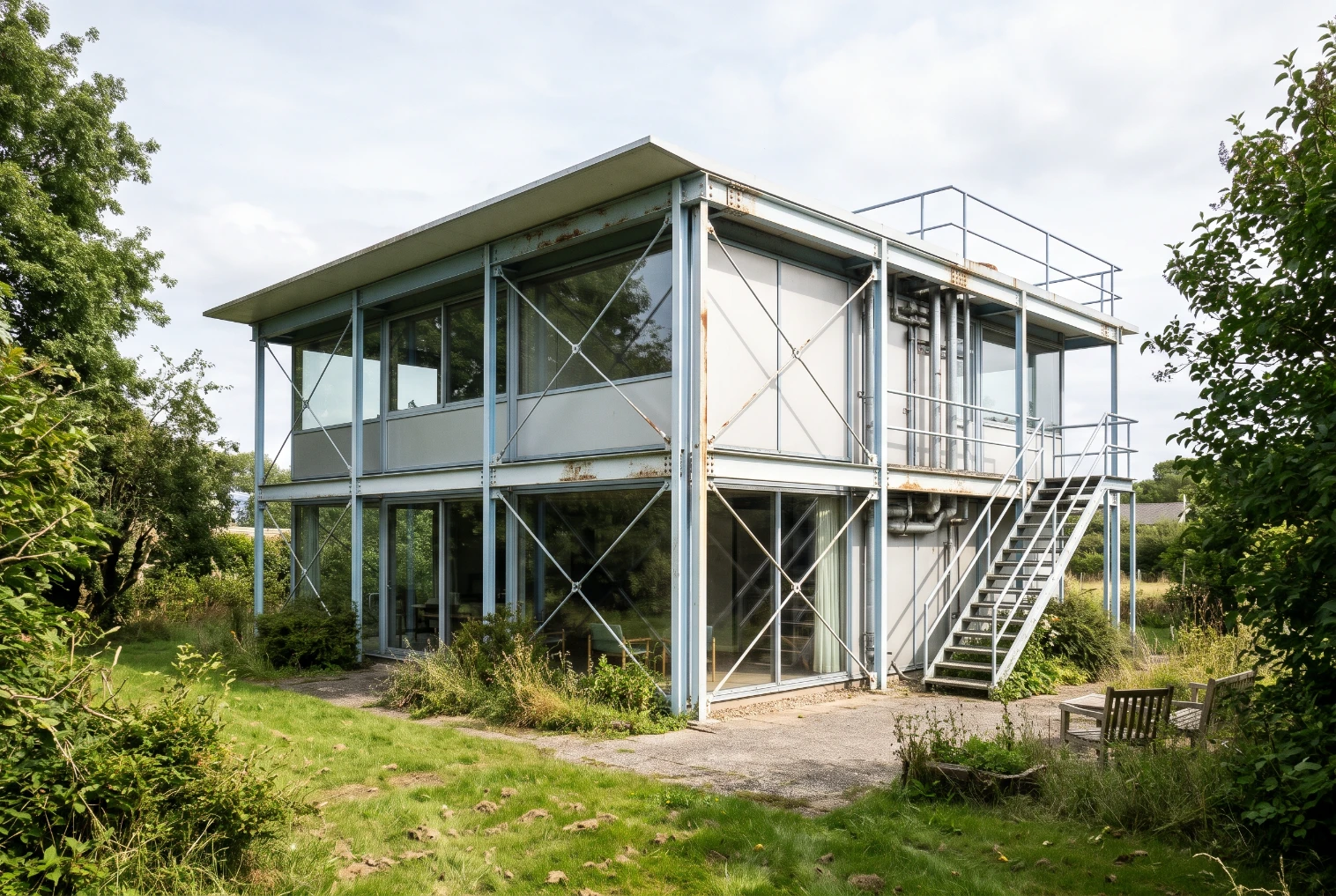
A High-tech house is a house that celebrates its structure and technology, with exposed steel frames, large areas of glass, factory-made parts and visible services. The style began in the 1970s and is still used for modern houses and extensions.
High-tech architecture grew from the work of architects such as Norman Foster, Richard Rogers and Michael Hopkins. It was used mainly for offices, museums and airports, but a few houses, and many extensions to older homes, use the same ideas.
1970s onwards
The band starts in the later post-war period and runs to today. Periods are drawn at equal width, so the line is not to scale.
How to recognise it
| Feature | What to look for |
|---|---|
| Structure | A steel or aluminium frame, left visible and often painted in a pale colour. |
| Glass | Large panels of glass between the frame, often full height. |
| Roof | A flat or lightly pitched roof, often with a thin edge and sometimes rooflights. |
| Services | Pipes, ducts and stairs shown on the outside or inside as part of the design. |
| Materials | Steel, glass, aluminium and lightweight panels, with a precise, factory-made finish. |
| Plan | Open, flexible interiors, with few fixed walls. |
| Construction | Often built from standard components, put together on site. |
Not sure what a term means? See our guides to parts of a roof and wall and brickwork terms, or browse the full architectural glossary.
Where and when they were built
High-tech architecture followed the idea that buildings should be flexible and honest about how they work. The best-known examples are public and commercial buildings, but the same language appeared in a small number of houses and in many glass and steel extensions to older houses.
The Historic England listing guide on modern houses and housing explains how late 20th-century houses are assessed for listing. Houses by well-known architects, such as the Team 4 house at Creek Vean in Cornwall of the 1960s, show the early roots of this approach.
High-tech, Modernist or contemporary self-build?
- High-tech: 1970s onwards. Exposed steel structure and factory-made parts, shown as a feature.
- Early Modernism: white boxes with plain walls, not exposed frames. See our Early Modernism page.
- Mid-century modern: warmer and more domestic. See our mid-century modern page.
- Self-build contemporary: individual modern houses, often with a more minimal look. See our self-build contemporary page.
Few houses are pure High-tech. Many have a few of its features, such as an exposed steel frame or a glazed extension.
What to check when buying one
- Steel frame: check for corrosion, especially at joints and where the steel meets the ground or walls. Ask about the paint and protection.
- Glazing and seals: large panes of glass, seals and gaskets wear out. Check for leaks, condensation and failed units.
- Flat roofs: check the covering, the drainage and the edge details.
- Heating and overheating: a lot of glass can be hard to heat in winter and overheat in summer. Ask about shading and heating.
- Specialist parts: unusual components can be hard to repair or replace. Ask who made them.
- Choose the right survey: use a surveyor who understands the type of construction. See our home survey guide.
- Building regulations and warranties: ask for completion certificates, a structural warranty or architect's certificate, and energy performance information.
Sources and further reading
- Historic England: Domestic 4, Modern Houses and Housing Listing selection guide covering 20th-century houses and housing
- Historic England: the National Heritage List for England Check whether a building is listed
External links open in a new tab. Last checked November 2026.
Frequently asked questions
What is High-tech architecture?
A style from the 1970s that shows a building's structure and services as part of the design, using steel, glass and factory-made parts.
Who started High-tech architecture?
Architects such as Norman Foster, Richard Rogers and Michael Hopkins were leading figures.
Are there High-tech houses?
A few, plus many High-tech-style extensions. Most High-tech buildings are offices and public buildings.
Are High-tech houses energy efficient?
It depends on the design. Large areas of glass and thin walls may need good glazing and shading.
Are High-tech buildings listed?
Some are, especially important work by well-known architects. Check the National Heritage List for England.