Wattle and daub is a traditional infill for timber-framed walls. Wattle is a woven lattice of thin wooden strips, and daub is a sticky mixture of clay, sand, straw and sometimes dung that is spread over it.
The panels were then covered with lime plaster or limewash. Wattle and daub is light, breathable and flexible, and it still survives in many medieval and Tudor houses.
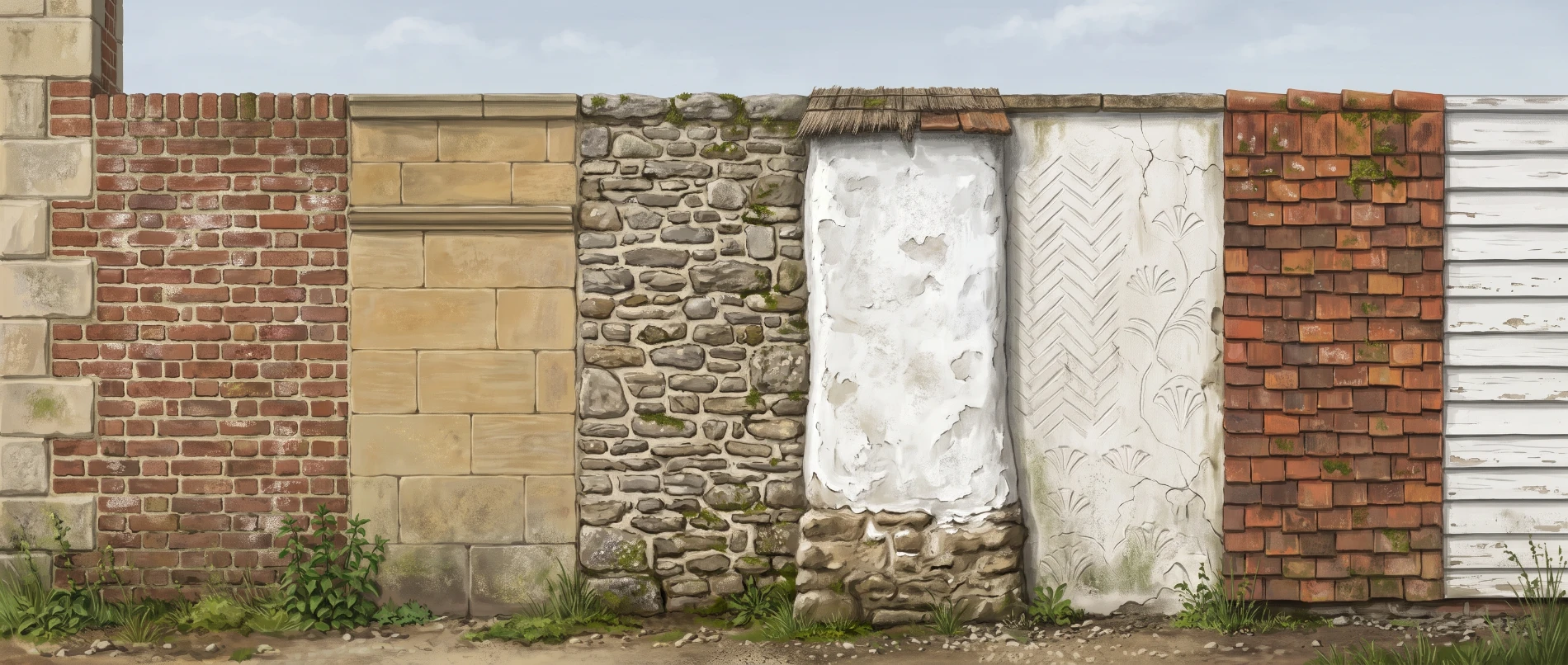
How to spot it
- Panels between timbers. It fills the spaces in a timber frame, so you see it where the frame is exposed.
- A woven structure. Where a panel has fallen, thin hazel or oak rods can be seen, woven around upright sticks.
- A rough, slightly uneven surface. Lime plaster or limewash gives a soft, uneven finish.
- Gaps at the frame. The panels move slightly and shrink away from the timbers, so there are often hairline cracks.
Where you will see it
- Tudor house: timber frames filled with wattle and daub.
- Medieval hall house: early timber-framed halls.
- Wealden hall house: framed houses in Kent and Sussex.
- Black and white Marches: timber-framed buildings with lime-washed panels.
What to know about wattle and daub
- Do not seal it: Cement, gypsum plaster and modern paint trap moisture against the timbers and wattle. Use lime plaster and limewash.
- Repair like for like: Damaged panels can be patched with new wattle and daub or lime-based infill by a specialist.
- Look at the frame: Damp in the infill and frame often means leaking gutters or a poor ground drainage.
- Listed buildings: Original wattle and daub is historic fabric. Seek advice before removing it. See our listed building repairs guide.
For more definitions, see our wall materials and brickwork page and the architectural glossary.
Sources and further reading
- Historic England: Domestic 1, Vernacular Houses Listing guide covering traditional house types and materials
- Historic England: the National Heritage List for England Check whether a building is listed
External links open in a new tab. Last checked November 2026.
Frequently asked questions
What is the daub in wattle and daub made from?
Clay-rich soil, sand and straw or other fibre, and sometimes animal dung. It is mixed wet and pressed into the wattle.
What replaced wattle and daub?
Brick nogging, laths and plaster, and later plasterboard and modern infill panels replaced it in many buildings.
Is wattle and daub breathable?
Yes. It absorbs and releases moisture, which is why it needs lime finishes, not cement.
Can wattle and daub be repaired?
Yes. Specialists can repair or replace panels with new wattle and daub, or with lime-based alternatives that match the original.