A fanlight is a glazed panel above a door that lets daylight into the hall. The name comes from the fan-like pattern of glazing bars in the classic semicircular type.
Fanlights are a hallmark of Georgian town houses and terraces, where the hall had no other source of light. Today the word is used for any window over a door, although purists reserve it for the semicircular form.
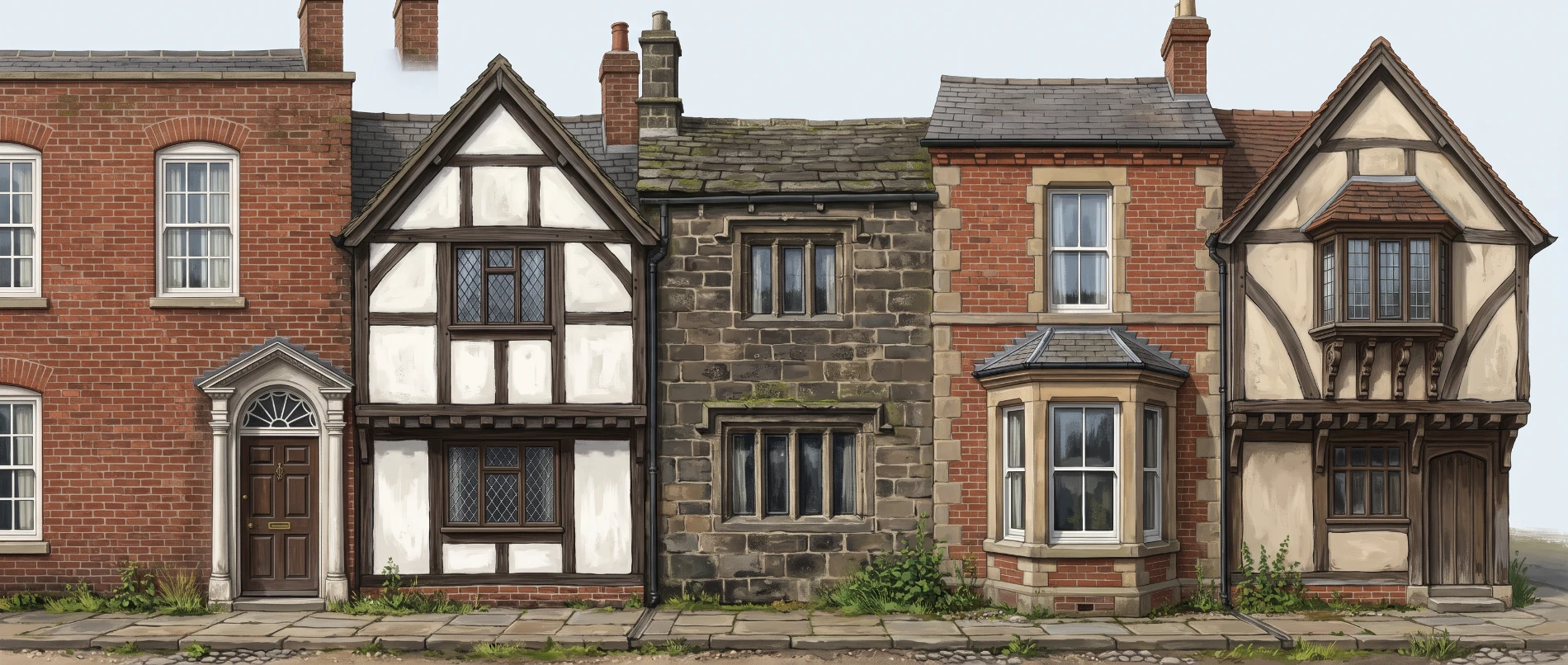
How to spot it
- It sits above the door. It is fixed or hinged glass directly over the front door, within the same opening.
- Fan or semicircle. Bars radiate out like the ribs of a fan. Some are semicircular, some elliptical and some are rectangular.
- A transom bar below. A horizontal bar usually separates the fanlight from the door.
- Decorative glazing bars. Early ones may be iron or lead, and later ones may be timber with a cast pattern.
Where you will see it
- Georgian townhouse and terrace: the classic fanlight over a panelled door.
- Regency house: delicate fanlights with fine bars.
- Neo-Georgian house: later copies of the Georgian type.
- Victorian terrace: rectangular overlights.
What to know about fanlights
- A sign of age: An original Georgian fanlight is a significant feature and a mark of an older building. Keep it where it survives.
- Rectangular overlights: A rectangular light over a door is usually called a transom light or overlight. Fanlight is strictly the fan or semicircle type.
- Safety and security: Glass above a door can be a weak point, and replacement glass may need to be toughened or laminated. Check before replacing.
- Listed buildings: Original doors and fanlights are often part of the listing, so changing them can need consent. See our listed building windows and doors guide.
For more definitions, see our types of window page and the architectural glossary.
Sources and further reading
- Historic England: Conserving Georgian and Victorian Terraced Housing Guidance on repairing and altering Georgian and Victorian terraces
- Historic England: the National Heritage List for England Check whether a building is listed
External links open in a new tab. Last checked November 2026.
Frequently asked questions
What is the difference between a fanlight and a transom?
A transom is the horizontal bar between a door and the light above it, and the light above is called a transom light or overlight. A fanlight is the fan or semicircular type of overlight.
Why did Georgian houses have fanlights?
Hall doors opened into a passage with few windows, so a glazed panel above the door let in daylight while the door stayed closed.
Can a fanlight be repaired?
Yes, in most cases. Loose bars and cracked panes can be repaired, and a joiner or glazier can copy missing sections.
Does a fanlight need to be safety glass?
Glass in doors and close to them is subject to safety rules, and a fanlight high above the floor is often outside the critical area. A glazier or building control can confirm for your case.