A chimney stack is the part of a chimney that rises above the roof. It contains one or more flues, which carry smoke and gases away from fireplaces and boilers, and it is usually topped with pots.
The stack is one of the most exposed parts of a house. Rain, frost and wind attack the brick or stone, and the joint where the stack meets the roof is a common source of leaks.
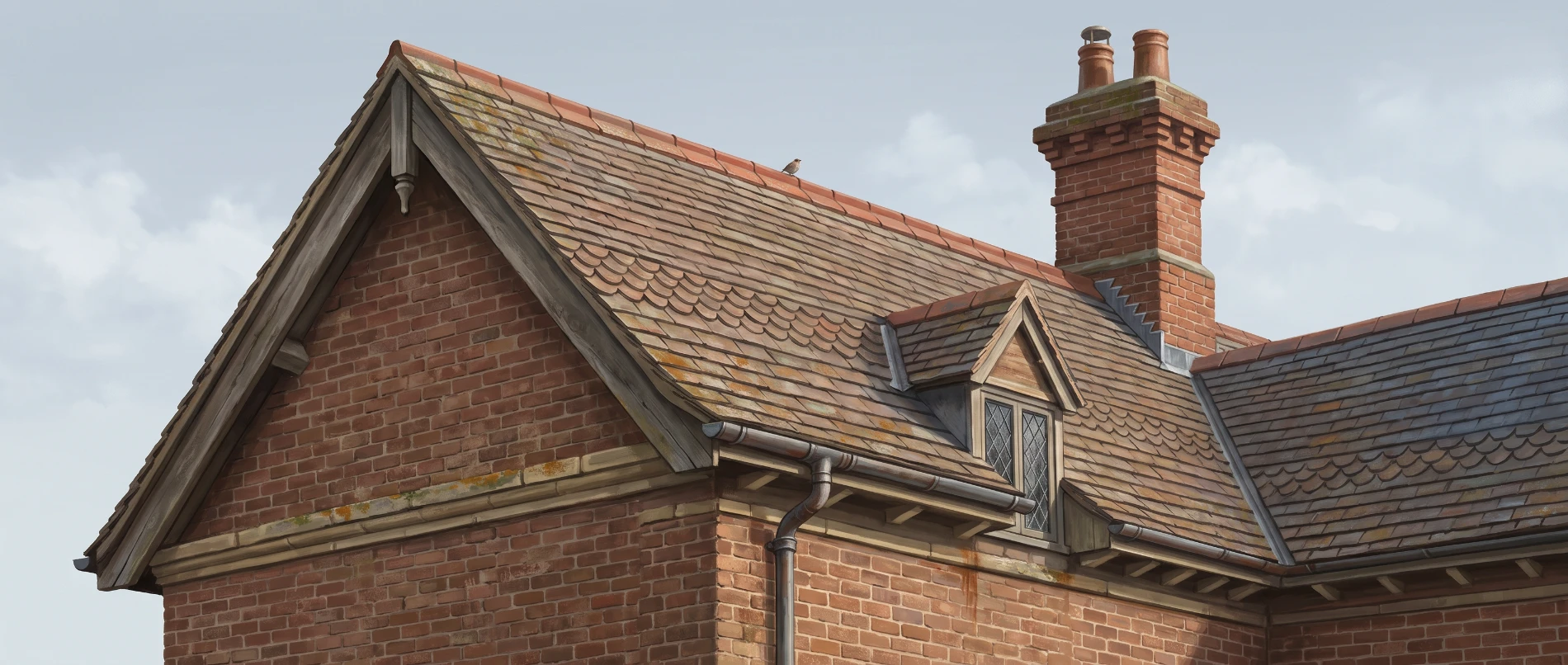
How to spot it
- Brick or stone above the roof. It stands on the ridge, at the end gable or through the slope.
- Chimney pots. Clay or metal pots on top shelter each flue and improve the draw.
- A flaunching. A sloping mortar bed on top of the stack holds the pots in place and throws water off.
- Lead flashings. Sheets of lead seal the junction between the stack and the roof. See our dictionary entry on <a href="/building-terms-explained/flashing/">flashing</a>.
Where you will see it
- Tudor house: tall, decorated brick stacks.
- Elizabethan house: clustered and twisted chimneys.
- Victorian terrace: stacks at the party walls.
- Cotswold stone house: stone stacks on gable ends.
What to check on a chimney stack
- Leaning or cracked stacks: Sulphate attack from old flue gases can make mortar expand, so the stack leans away from the wind.
- Flaunching and pots: Cracked flaunching and loose pots let water in, and they are inexpensive to fix compared with rebuilding a stack.
- Flashings: Failed lead flashings cause damp on chimney breast walls and ceilings below.
- Disused flues: Unused flues should be capped and ventilated. See our damp and mould guide.
For more definitions, see our parts of a roof page and the architectural glossary.
Sources and further reading
- Historic England: Conserving Georgian and Victorian Terraced Housing Guidance on repairing and altering Georgian and Victorian terraces
- Historic England: the National Heritage List for England Check whether a building is listed
External links open in a new tab. Last checked November 2026.
Frequently asked questions
What is the difference between a chimney stack and a chimney breast?
The stack is the part above the roof, and the chimney breast is the part inside the house that projects into a room. Both carry the flue.
Why is my chimney stack leaning?
Often because of sulphate attack on the mortar, or from rain washing out the joints on the windward side. A structural or roofing specialist should inspect it.
Can a chimney stack be removed?
Yes, but the work must be supported and approved by building control, and the roof and chimney breast below must be made good. A structural engineer should be consulted.
Do chimney stacks need a damp-proof course?
Many have a lead tray or slate layer near the roof line to stop water running down the stack. Check this when inspecting the roof.