The Contemporary style is the optimistic, light design of the 1950s and early 1960s, named after the look of the 1951 Festival of Britain. In houses it means butterfly or shallow roofs, bright panels of colour, slim details, big windows and open interiors.
The Festival of Britain in 1951 showed a cheerful, modern Britain after the war. Its style influenced architects, builders and furniture designers, and appeared on houses, flats, shops and public buildings.
c. 1951-1965
The band covers the middle of the post-war period. Periods are drawn at equal width, so the line is not to scale.
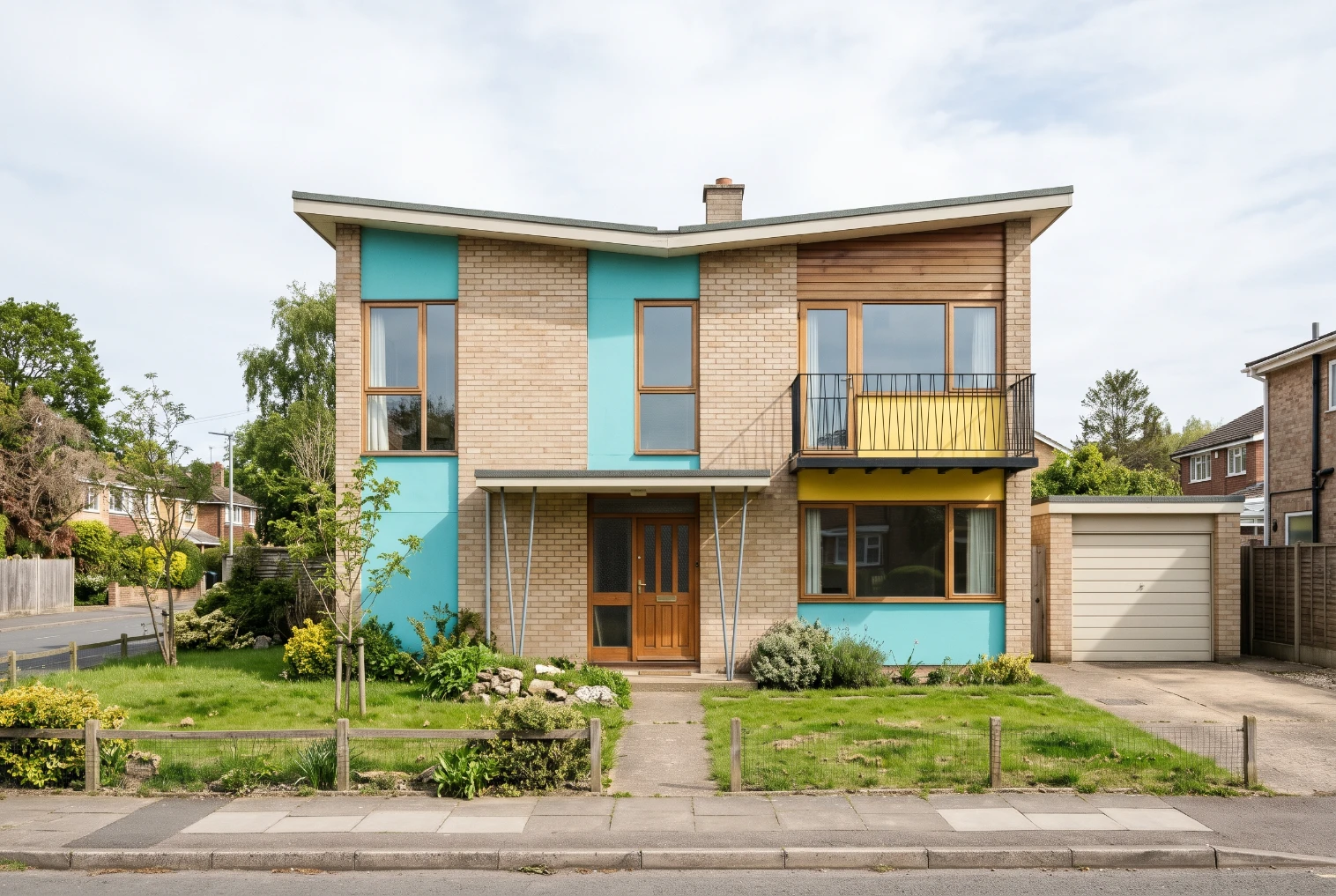
How to recognise it
| Feature | What to look for |
|---|---|
| Roof | A butterfly roof, two slopes tilting down to the middle, or a shallow mono-pitch or flat roof. |
| Colour | Bright panels of colour, such as yellow, turquoise or red, set against brick or white render. |
| Windows | Tall or wide windows with slim frames, sometimes in a band, and glazed doors to the garden. |
| Canopy | A thin flat canopy over the door, held up by slender metal legs. |
| Walls | A mix of materials, such as brick, stone, timber boarding, render and tile. |
| Details | Thin tapering legs, spiky shapes, spindly railings and abstract patterns. |
| Interior | Open and flexible, with large windows, built-in storage and bright colours. |
Not sure what a term means? See our guides to render, stucco, roughcast and pebbledash and parts of a roof, or browse the full architectural glossary.
Where and when they were built
The style grew from the Festival of Britain in 1951, from European modernism and from a wish to put the war behind. It appears in housing estates, in private houses and in schools, and in many small details.
The Historic England list entry for Brooke Court in Ham, part of the Parkleys estate and listed Grade II, describes a courtyard of flats built in 1954 and 1955 by Eric Lyons for Span. Lyons and Span developed a modern vernacular approach with landscaping, which is closely related to this period.
Contemporary, mid-century modern or Early Modernism?
- Contemporary: about 1951 to 1965. Light, colourful and optimistic, with butterfly roofs and slim details.
- Mid-century modern: a wider term for 1950s to 1970s modern design. See our mid-century modern house page.
- Early Modernism: the 1930s, plainer and whiter. See our Early Modernism page.
- Post-war council housing: plainer and more traditional. See our post-war council housing page.
Few houses are pure Contemporary in style. Many have a few features, such as a butterfly roof or a coloured panel, added to an ordinary design.
What to check when buying one
- Butterfly and flat roofs: the valley in a butterfly roof is a weak point. Check the gutter, the covering and the ceilings below.
- Single glazing and thin walls: houses of this period are often cold and prone to condensation. See our damp and mould guide.
- Original features: built-in furniture, windows and details are worth keeping where they survive.
- Metal windows: check frames for rust and failed glass.
- Cladding: timber and panel cladding can rot or contain asbestos. Check before disturbing it.
- Choose the right survey: use a surveyor who knows post-war construction, because the problems are different from those of older houses. See our home survey guide.
- Mortgage and insurance: some post-war construction types are harder to mortgage or insure. Check with a lender and insurer before you commit.
Sources and further reading
- Historic England: Brooke Court, Ham Grade II flats of 1954 to 1955 by Eric Lyons for Span
- Historic England: Domestic 4, Modern Houses and Housing Listing selection guide covering 20th-century houses and housing
- Historic England: the National Heritage List for England Check whether a building is listed
External links open in a new tab. Last checked November 2026.
Frequently asked questions
What is the Contemporary style?
The light, optimistic design style of the 1950s and early 1960s, linked to the Festival of Britain.
What is a butterfly roof?
A roof with two slopes that tilt down to a valley in the middle, so it looks like a butterfly's wings.
When was the Festival of Britain?
1951, on London's South Bank and in other places across the country.
Is Contemporary the same as mid-century modern?
They overlap. Contemporary is the British name for the style of the 1950s, while mid-century modern covers a wider period.
Are Contemporary houses listed?
A few are, and more have been recognised in recent years. Check the National Heritage List for England.