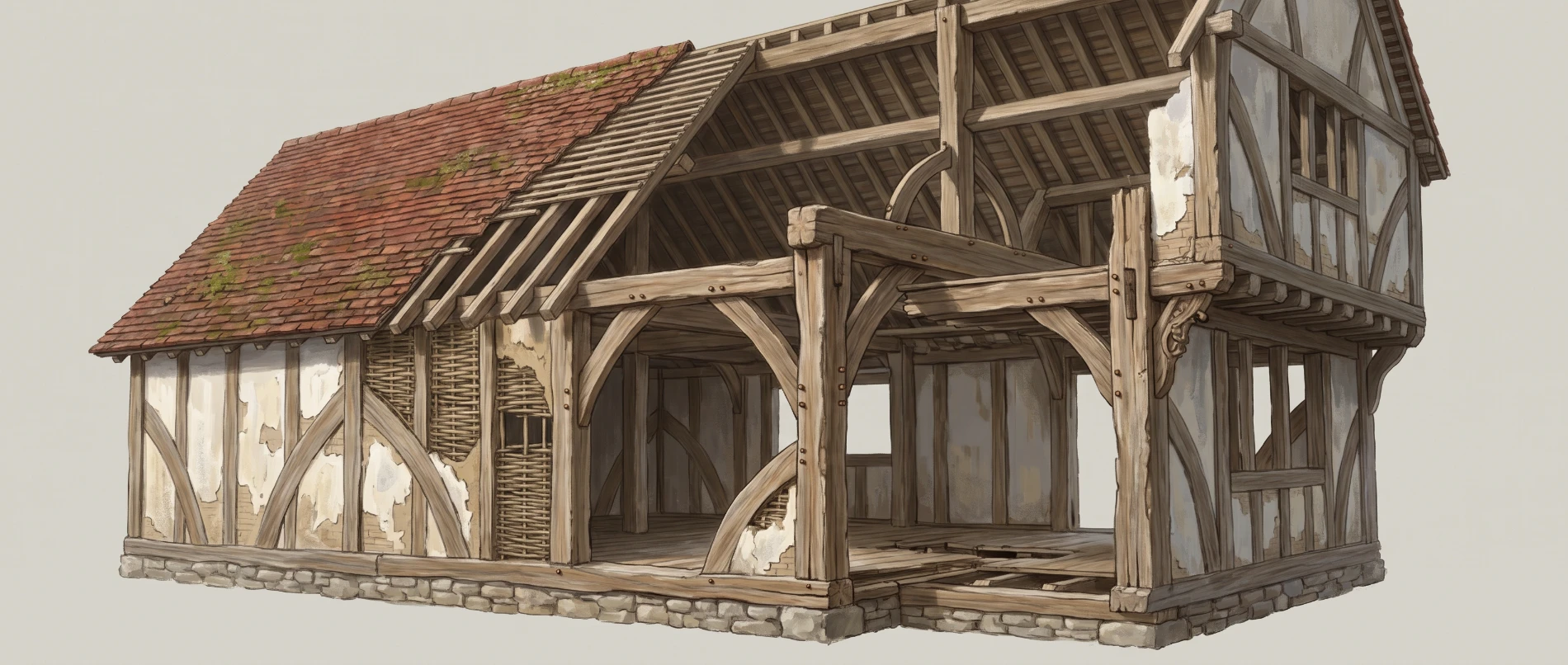
A jetty is an upper storey that projects beyond the wall of the storey below. It is common in timber-framed town houses of the 15th to 17th centuries.
The upper floor is carried on the ends of the floor joists, which extend out beyond the wall below. Jetties gave extra floor space on a narrow street plot and kept rain off the walls beneath.
How to spot it
- An overhang. The first floor sticks out, usually by 300mm to 600mm, over the ground floor.
- Visible joist ends. The ends of the floor joists may be seen under the overhang, with a beam called a jetty plate along the front.
- Timber frame. Jettied buildings are almost always timber-framed.
- Sloping or leaning. Old jettied houses often lean or sag with age.
Where you will see it
- Tudor house: jettied town houses.
- Wealden hall house: a jetty at each end wing.
- Box-frame timber house: overhanging upper storeys.
- Black and white Marches: jettied houses in Shrewsbury and Hereford.
What to know about jettied houses
- Movement: Overhangs and old frames move. Check for sagging floors, leaning walls and past repairs.
- Weather and decay: The joist ends and jetty plate are exposed to the weather. Rot there can be serious.
- Repairs: Use specialist carpenters and traditional methods. Replacing timber should match the original.
- Listed buildings: Jettied buildings are likely to be listed. See our listed buildings guide.
For more definitions, see our timber frame and roof structure page and the architectural glossary.
Sources and further reading
- Historic England: Domestic 1, Vernacular Houses Listing guide covering traditional house types and materials
- Historic England: the National Heritage List for England Check whether a building is listed
External links open in a new tab. Last checked November 2026.
Frequently asked questions
Why did medieval houses have a jetty?
It gave more floor space in the upper rooms without taking more space on the street, and it protected the walls below from rain.
What is a double jetty?
It is a house where two upper storeys each project further than the one below, which is called a double or multiple jetty.
Is a jettied house structurally sound?
Many have stood for centuries. Check for sag, rot at the joist ends and past alterations, and use a surveyor who knows timber frames.
What is a dragon beam?
It is a diagonal beam at the corner of a jettied building. It carries the joists of two jettied sides.