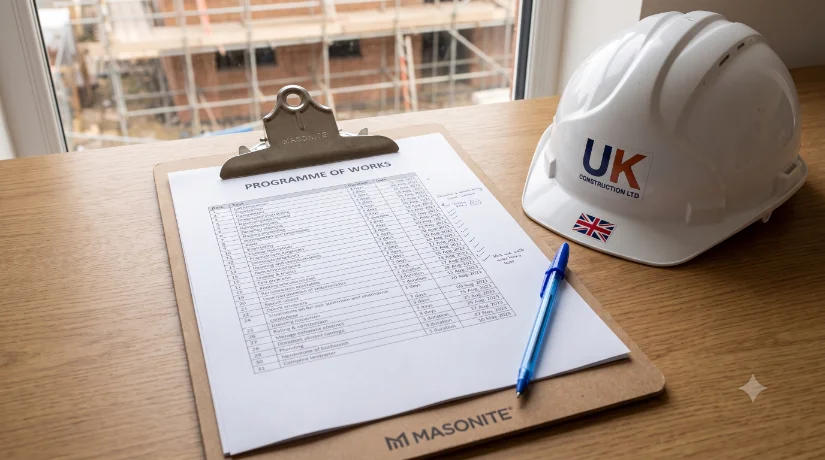
What is a Programme of Works?
A Programme of Works is a formal document, agreed and signed by both the client and the main contractor at the start of a project, that records the key project details, planned milestone dates and contractual responsibilities. It forms part of the contract documentation and provides a reference point if the programme needs to be revised or if a dispute arises.
Unlike a Gantt chart (which shows detailed task sequences), a Programme of Works focuses on key milestones and phases - making it readable for clients who do not need to see individual task breakdowns.
What's included in the template
- Project details section - title, address, client, contractor, project manager, contract value
- Planned start and target completion dates
- 15-row milestone programme table with columns for phase, responsible party, start date, duration, end date, status and notes
- Pre-filled with typical residential construction phases (pre-construction through to end of defects period)
- Site rules and working hours section
- H&S / CDM duty holder field
- Programme revision history table (tracks changes agreed during the project)
- Client, contractor and project manager signature blocks
When to issue a Programme of Works
The programme should be completed and signed before work starts on site - ideally at the pre-start meeting along with the contract documents. On JCT Minor Works or Intermediate Form contracts, the programme forms Appendix 1 or is referenced in the contract particulars.
On informal or letter-form contracts, a signed Programme of Works is often the main documentary evidence of what both parties agreed. Courts and adjudicators treat a signed programme as a strong indicator of the intended completion date and the responsibility for delays.
Programme revision and extension of time
The revision history table at the bottom of the document allows you to record any agreed changes to the programme during the project - for example, where a client variation, adverse weather event or delayed decision has caused a legitimate delay. Each revision should record the date, who agreed it, and the number of days' extension granted.
Any extension of time should be agreed in writing before the revised completion date passes - not after the project is finished.