The Basic Position: No Permitted Development for Listed Buildings
For unlisted dwellings in England, solar panels installed on a roof are usually Permitted Development (subject to size and position conditions). For listed buildings, these Permitted Development rights are entirely removed. Any solar panel installation on a listed building, whether roof-mounted or ground-mounted in the curtilage, requires both Listed Building Consent and planning permission.
There is no blanket ban on solar panels on listed buildings. But the bar is high: the panels must cause minimal harm to the building's significance, and the heritage case for refusal must be weighed against the public benefit of renewable energy generation. Grade II buildings with less prominent sites have the best chance of approval.
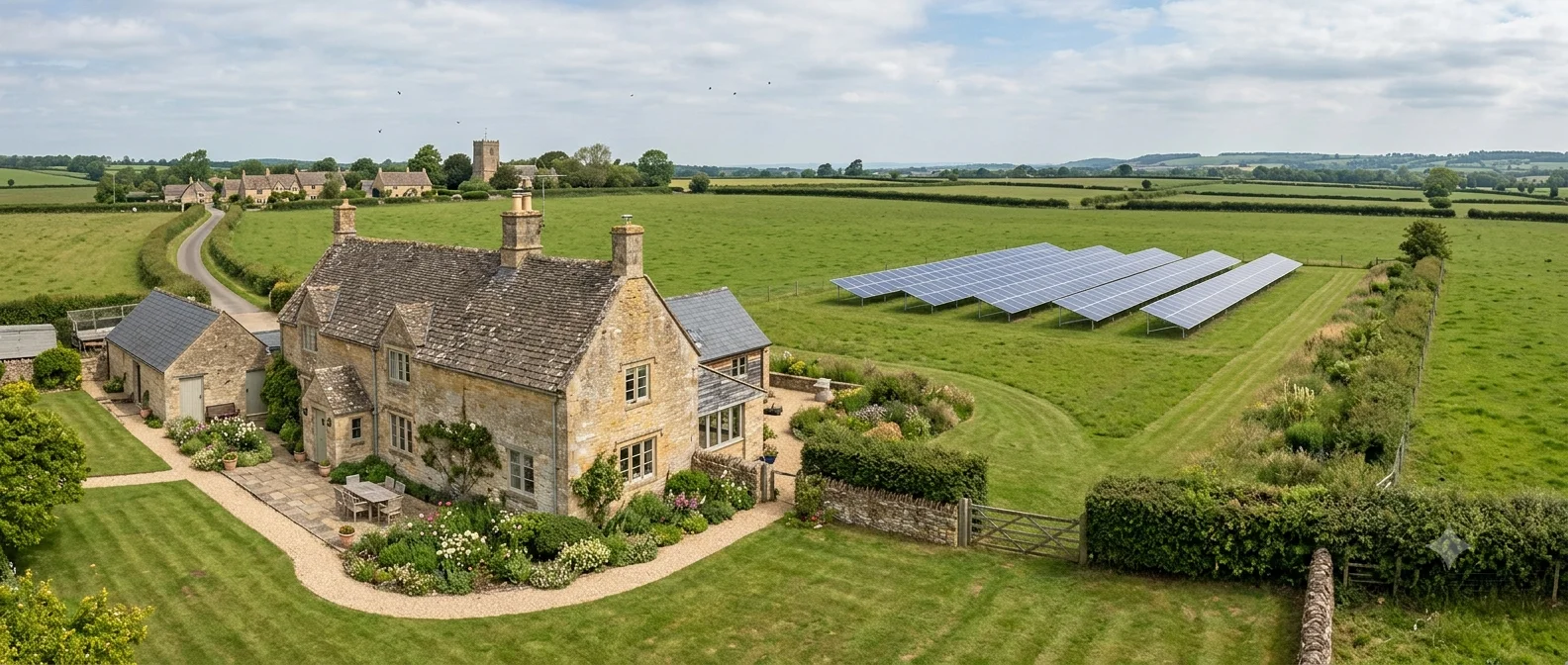
Factors That Affect the Outcome
Whether a solar panel application for a listed building will succeed depends on several factors:
- Grade of listing: Grade II applications are more likely to succeed than Grade II* or Grade I, where historic significance is highest
- Visibility of the roof: Panels on rear roof slopes out of public view are more likely to be approved than those on prominent principal elevations
- Type of roof covering: Panels fixed to a traditional clay or slate roof will require penetrations and fixings into historic fabric - this is a significant concern. Flat roofs may offer more scope.
- Whether fixing damages original fabric: Can the panels be fixed without damaging historic roof structure or covering? This is often very difficult on a traditional roof.
- Reversibility: Can the panels be removed without leaving permanent damage? Rails and fixings through historic tiles are generally not fully reversible.
- Local authority approach: Some conservation officers are more positive about renewable energy on listed buildings than others. Pre-application advice is essential.
Ground-Mounted Panels: Often a Better Option
For many listed buildings, ground-mounted solar panels - positioned in the curtilage but away from the main building - offer a better heritage outcome than roof-mounting. Key considerations:
- Panels must not be visible from the listed building itself (avoiding harm to its setting)
- Panels must not be visible from public vantage points from which the building is seen
- The installation must not affect any listed curtilage structures or scheduled archaeological remains
- The scale must be domestic and proportionate to the site
- Ground-mounted panels require LBC + planning permission even when out of sight of the building
A walled garden, stable yard, or outbuilding roof (if the outbuilding is not itself of significance) may offer suitable locations for ground-mounted or outbuilding-roof-mounted arrays that have less impact on the main listed building.
Making the Heritage Case
A successful solar panel application for a listed building must include a Heritage Statement that addresses:
- The significance of the listed building and its elements, including the roof
- The impact of the proposed installation on that significance
- How the design minimises harm - positioning, fixing method, materials
- The public benefit of the renewable energy generation
- Why alternative positions (including ground-mounting) are not feasible or have been considered
The NPPF is clear that harm to a designated heritage asset must be weighed against public benefits. Renewable energy generation is a recognised public benefit - but it must demonstrably outweigh the harm, which for a prominent roof installation on a high-grade building will be very difficult to achieve.
Solar Thermal vs Solar PV
Solar thermal collectors (for hot water heating) are assessed under the same consent regime as solar PV panels. They are generally smaller and less visually prominent than a full PV array, which may make consent more achievable. However, they still require LBC and planning permission on a listed building.
Practical Alternatives for Listed Buildings
If solar panels are refused or not practical, consider:
- Air source heat pump - reduces reliance on fossil fuel heating; requires LBC + planning permission but ground-based units are often more approvable than roof-mounted panels
- Ground source heat pump - highly efficient; ground works in the curtilage need LBC but the visible impact is minimal once installed
- Green electricity tariff - purchase renewable electricity from the grid without any planning or heritage issues
- Battery storage fed by off-site generation - no planning issues for internal battery installation